 1 hour ago
4
1 hour ago
4
July 16, 2026 — 5:00am
One of the gifts actor Sam Neill bequeathed to us beyond his wonderful films was the clarity with which he understood his mortality without being resigned to it.
In 2023, the year after his diagnosis with blood cancer, Neill told ABC TV’s Australian Story: “I’m not in any way frightened of dying. That has never worried me from the beginning. But I would be annoyed because there are things I still want to do.”
It was a terrific attitude that reflected an acceptance of death and desire to stay purposeful in life.
It is an attitude the Victorian government could learn a thing or two from as it confronts its own political morbidity.
No one knows what will happen at the November state election. Not the parties. Not the pollsters. Not political journalists. But we are likely nearing the end, in one way or another, of a long-serving, highly consequential and deeply flawed Labor government.
We are also well past the need for a serious, well-resourced, independent examination of how this government allowed organised crime to infiltrate its major infrastructure projects and more broadly, why it prioritised political self-interest above public interest in its expenditure of taxpayer money.
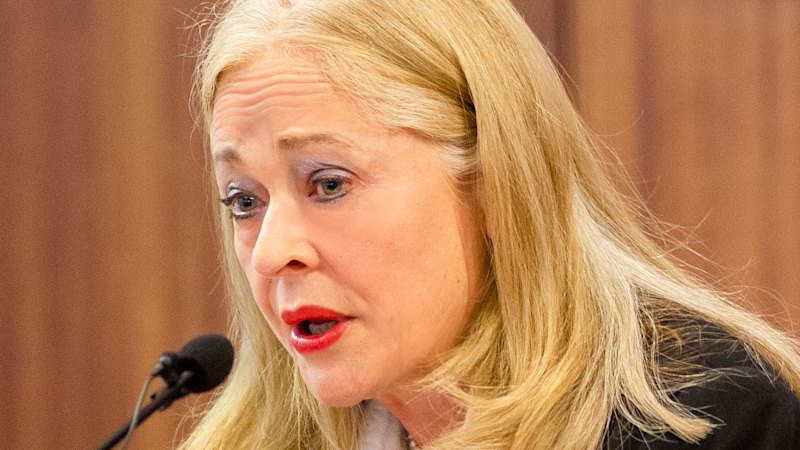
A royal commission into Big Build corruption would provide some of these answers but, in truth, Victoria needs a full-blown, WA Inc-style inquiry of the kind that Carmen Lawrence, a trailblazing Labor figure who became the first and so far, only woman to serve as premier of Western Australia, commissioned into the governing culture of her predecessor Brian Burke.
Victorian Premier Jacinta Allan’s insistence, one expressed publicly and privately to her cabinet colleagues, that a royal commission is not the best means of bringing about important cultural change, is risible.
As Ray Finkelstein, the royal commissioner whose inquiry into Crown forced the casino operator to fundamentally change how it does business, told this masthead, this is what royal commissions are for.
ANU professor Colleen Lewis, an expert in public sector accountability, was incredulous. “Hasn’t the premier heard of the Fitzgerald inquiry, which changed the police, public service and political culture in Queensland or the Wood royal commission in NSW, which changed the powerful police culture for the better?”
It is neither dignified nor helpful to Labor’s long-term cause to promote the fiction that the cartel-like behaviour of the CFMEU and the criminals they partnered with on the Big Build to control the flow of work and government money had much to do with providing good pay for a fair day’s work.
Labor, by providing the CFMEU an industrial monopoly in which to operate, created the conditions for corruption to thrive and costs to soar. The government’s greatest failure was its willingness to indulge this so long as big things got built.
Building Bad is the extreme manifestation of a culture that can also be traced to the secret, off-book development of the Suburban Rail Loop, and the reckless approach taken towards hosting and then abandoning this year’s Commonwealth Games.
If Labor loses government in four months’ time, its epitaph should read – “2014-2026: Whatever it cost.”
Within the Victorian caucus and cabinet room, there is a growing acceptance among MPs that, if there is to be a royal commission into the Big Build and all that entails, Labor should be the party that establishes it.
Some see it in terms of protecting legacy. Others are already talking about the 2030 election and the need for Labor to belatedly take responsibility for a scandal that has the potential to dog the party for a generation, as Burke’s association with corporate crooks did in WA.
A precedent for this in Victoria is Joan Kirner, who within one month of becoming premier established a royal commission into the collapse of the Tricontinental merchant bank, which punctuated the financial mismanagement of the Cain government.
Labor MPs understand why Allan, a premier whose previous ministerial responsibilities included the Big Build and whose leadership is underpinned by building unions fiercely opposed to a royal commission, is reluctant to call an inquiry.
There is no one within the party, not even Allan’s most strident critics, who thinks that she is corrupt or somehow in on the giggle. But this is the charge now being levelled at Labor MPs when they encounter angry voters.
Barrister Geoffrey Watson’s “very rough” estimate that Big Build corruption cost taxpayers in the order of $15 billion is firmly lodged in Victoria’s political conscience.
As one Labor figure observed this week, Watson and this masthead’s journalistic force of nature Nick McKenzie have together managed to distil a decade of malfeasance into a single, simple number. It is big enough to be outrageous yet not so big to appear preposterous.
If Labor loses the election it will be a Sesame Street result, brought to you by the number 15.
As Allan quibbles with the fairness or otherwise of this, there are signs that some of her ministers are no longer willing to toe the line.
Deputy Premier Ben Carroll has privately expressed to colleagues his view that a royal commission, while deeply uncomfortable for Labor, is necessary and the right thing to do.
This week, within hours of Allan dismissing as “baseless” one of McKenzie’s well-sourced reports about the government pressuring a senior public servant to cow to an industrial demand of the CFMEU, another minister, Melissa Horne, took the unusual step of seeking assurances from the state’s infrastructure authority that such practices were not ongoing.
Horne’s letter was not a direct challenge to the premier’s authority but, unusually for this government, an expression of individual, ministerial responsibility at odds with the official narrative.
Perhaps she and other government MPs have started to reflect, not only on the election campaign ahead, but how their service will be remembered after they are gone from office.
Chip Le Grand is state political editor.
The Opinion newsletter is a weekly wrap of views that will challenge, champion and inform your own. Sign up here.