 3 months ago
4
3 months ago
4
The anonymous letter arrived in the flurry of correspondence delivered to Clare O’Neil in her first days after being elected Australia’s youngest-ever female mayor at 24.
“It just came in the mail, delivered to the council chambers in Springvale,” O’Neil says. “A horribly sexually violent letter.”
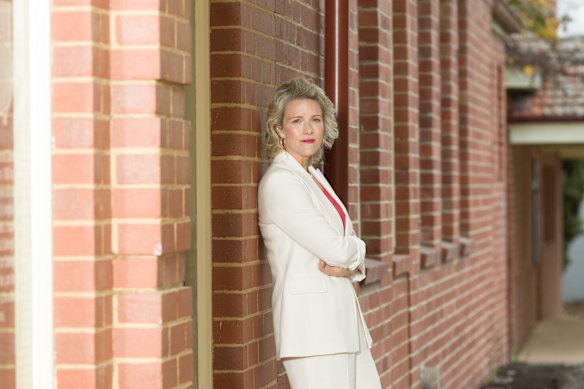
Housing Minister Clare O’Neil says harassment of MPs has spread across social media.Credit: Elke Meitzel
Female federal parliamentarians across the political spectrum are speaking out about the ugly abuse they receive, following a string of high-profile cases of alleged harassment, and as the AFP warns Australia has seen one of its worst years on record for threats against MPs.
Two decades later, O’Neil won’t say what that letter contained, only that the cruelty and violence shocked her.
Now the federal government’s minister for housing and homelessness, O’Neil says the harassment doesn’t surprise her any more and has become a fact of life for women in the public eye.
“Male politicians absolutely cop it too,” O’Neil says. “But what’s often directed at women is highly personal, vindictive, and the gendered and sexualised nature of the attacks is obviously different.”
Opposition Leader Sussan Ley says she will no longer read what people write about her online, as the abuse has escalated in frequency and tone as her public profile has been raised.
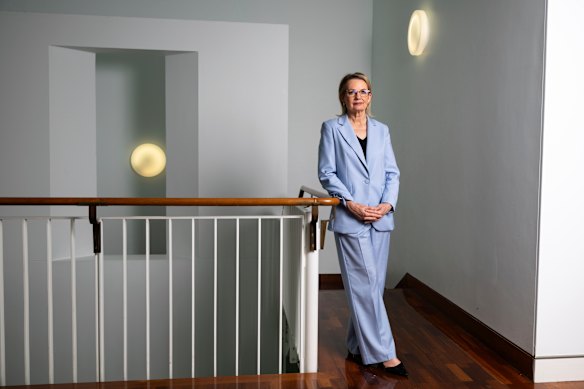
Opposition Leader Sussan Ley says harassment has accelerated in the past couple of years.Credit: Alex Ellinghausen
“I’ve seen a real acceleration in the last five years, and even probably more in the last 12 months to two years,” Ley says, speaking about the issue for the first time.
“Unfortunately, I think it’s probably spreading,” she says. “When you see something online that other people are doing, it can normalise it, which means that people who might be thinking of saying something horrific – contacting a member of parliament’s office, leaving a message on an overnight answering service – might be more encouraged to do that.”
Ley says when she started in politics, she would try to engage with people who sent “unpleasant” messages, but eventually decided some conversations were futile.
“If we’re talking about messages that are so hideous, so vile … I don’t know that you actually can reason with the person who’s sending that,” she says.
“There isn’t any place in our society for the types of messages that people are sending … so I don’t know that it’s even appropriate to dignify with some sort of rational argument.”
She doesn’t want to discuss specific threats, but says she has referred the worst ones to the police.
“I’m incredibly grateful for the work of the AFP … and I’m incredibly grateful to my amazing staff, who often have to hear this, read it,” Ley says. “The people who deal with this content are not necessarily the individual, and that’s pretty hard as well.”
Messages provided to this masthead by several female politicians tell women to kill themselves, accuse them of sexually abusing their children, or call for their murder or rape. The MPs say threats are often referred to police.
Assistant Minister for Social Services and the Prevention of Family Violence, Ged Kearney, says she’s been personally targeted at home and her staff assaulted.
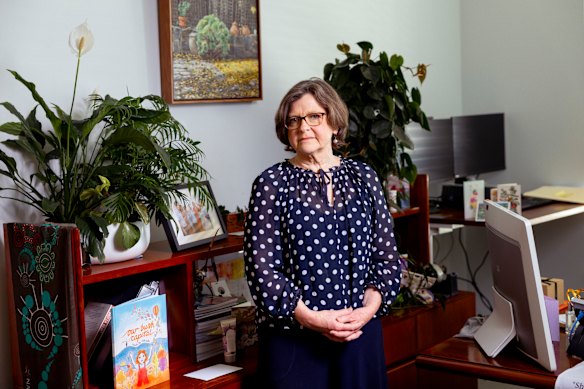
Ged Kearney says her home has been stalked and her staff attacked.Credit: Dominic Lorrimer
“I’ve had vitriol and threats thrown at me, I’ve had people stalk my home, I’ve been yelled at in the streets, my staff and volunteers have experienced physical violence, and my office has been damaged on countless occasions,” she says.
“I don’t want any young woman looking at the abuse and thinking politics isn’t for them. Intimidation cannot decide who leads our country.”
Loading
Then-AFP commissioner Reece Kershaw flagged in March that the nature of threats made towards women MPs was particularly troubling, after six men were arrested for harassing elected officials in the space of a few months.
“High office holders are being targeted because they have a public profile, because of the comments they have made in the media, or their positions on policy,” Kershaw said. “However, in some cases it appears male offenders are targeting women because they are women, or women with an ethnic background.”
Since then, a neo-Nazi leader has been arrested for allegedly calling on supporters to “rhetorically rape” independent MP Allegra Spender, a man has been sentenced for sending death threats to independent MP Fatima Payman, and another charged with allegedly harassing independent senator Lidia Thorpe.
A court heard Payman’s harasser sent her emails deriding her Islamic faith, and said he had a bullet with her name on it in one message.
“While this email was particularly abhorrent, I receive messages like this daily over email, on social media and over the phone,” Payman said.
Thorpe declined to comment on her case while it was before the courts, but says she has been subjected to alleged threats and intimidation her whole political career. She says she was a new Victorian MP, prior to her transition to federal politics, when she began having nightmares about being gang-raped by Nazis, after extremist threats were posted under her office door and put online.
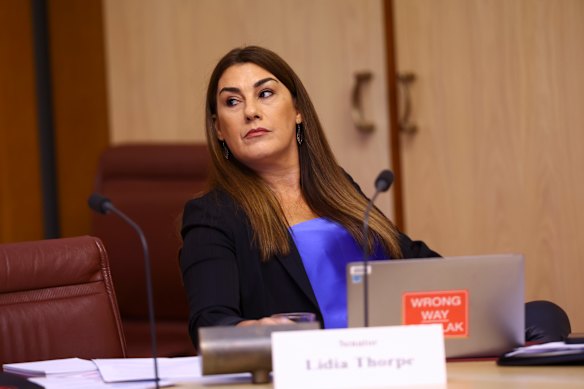
Lidia Thorpe says she can’t keep track of the racist and sexist comments she gets.Credit: Dominic Lorrimer
“I remember vividly having nightmares about that back then, having these visions and working through my head, how am I going to defend myself? A single mum, I had to send my daughter away,” Thorpe says.
She says extremists have become emboldened, and the scale of alleged abuse has “absolutely” escalated.
“If you look at social media, I can’t keep up with what people say about me on there,” she says. “I don’t want my staff working on this full-time. I don’t want our work to be distracted for these keyboard warriors or violent people.”
Extremism expert Dr Cynthia Miller-Idriss says extremism and misogyny are linked, and the growing threats in Australia match the escalation in violence she’s seeing directed at politicians globally.
The director of the Polarisation and Extremism Research and Innovation Lab at American University in Washington D.C. says more abuse is lobbed at women, and it is more sexualised – not just to inspire fear in the individual, but to discredit them in the eyes of the wider public.
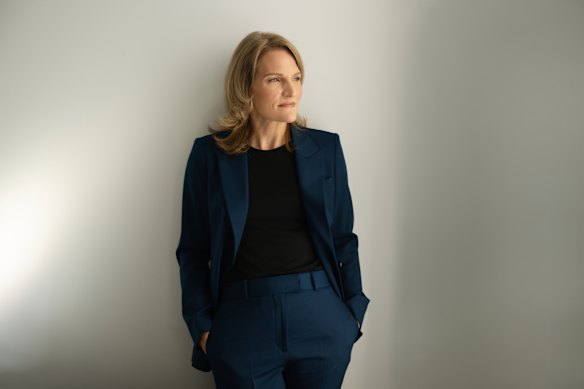
Dr Cynthia Miller-Idriss says the hierarchical ideology of the far right means alleged perpetrators target people they see as inferior, including women and immigrants.
“Online spaces have enabled these sorts of threats to feel more realistic, but also to develop co-ordinated campaigns,” she says.
“Women do leave these offices. They are more reluctant to run for office because they don’t want to put themselves in the firing line. They don’t want to risk their families’ safety. And so it’s really, unfortunately, an effective strategy of reducing women’s engagement in the public sphere.”
Miller-Idriss says social media platforms could intervene before violent content causes harm.
Loading
“They can improve algorithms that weed out this content … they just don’t,” she says. “I don’t have a lot of hope in tech sector accountability, but I feel like it’s always worth mentioning because if you don’t mention it, they just never get called to account for it.”
Australia’s eSafety Commission can order platforms to remove posts. But individual messages must be referred to the commission for the regulator to take action, and only if the comments have an intent to cause serious harm beyond emotional distress.
A review of the Online Safety Act last year recommended the threshold for what constitutes cyber abuse should be lowered, and should include scope for handling “pile-on” attacks when a person is inundated with abuse.
O’Neil says tech companies’ inaction means her only option is to ignore the vitriol.
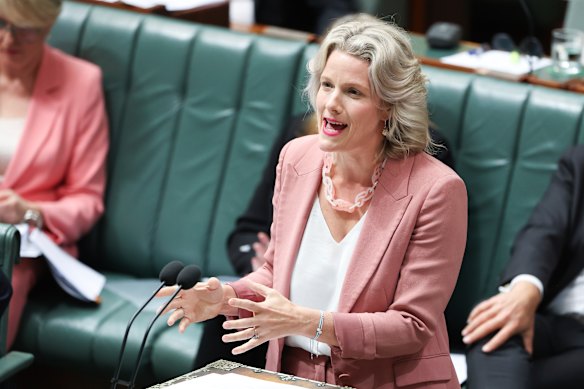
Clare O’Neil says she doesn’t want young women to be discouraged from entering politics.Credit: Alex Ellinghausen
“I don’t look at the comments. None of them, probably for the last year in particular,” O’Neil says. “Honestly, if you were to read the comments on your own digital media as a politician, male or female, I don’t know how you’d keep going. It’s that nasty.
“The platforms have completely dropped the ball,” she says. “They’ve made no meaningful attempt to do anything about any of this. And this discussion about their role in toxifying the public debate has been going now for at least a decade, and they’ve done absolutely bloody nothing about it.”
She wants to call out the harassment so others are not discouraged from pursuing a public role.
“I’m not a victim. I’m incredibly privileged to hold a position of power dealing with the most important issue, in my view, that our country faces,” O’Neil says.
“I do genuinely worry about the impact this is going to have over time. We want that next generation of women to enthusiastically flood into politics; our nation desperately needs them to do it.”
Thorpe says: “When other women see this … they’d have to be crazy to want to be a politician”.
She emphasises racism is just as violent as misogyny, and women of colour suffer dual bigotries.
Greens leader Larissa Waters says knowing what comes into her inbox, she admires the strength of women of colour in politics, including Thorpe, Payman, and deputy Greens leader Mehreen Faruqi.
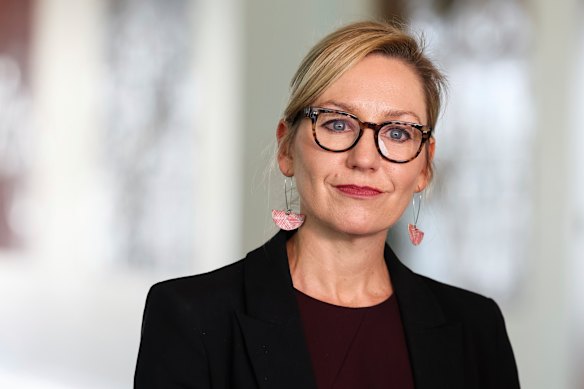
Greens leader Larissa Waters says she also worries about the affect harassment has on female staff.Credit: Alex Ellinghausen
“Small blokes think that strength comes from anonymously flinging hate at people while behind a mask or computer screen. The alleged harassment resulting in arrests is what happens when a toxic culture built upon male privilege and racism goes unchallenged, and it’s left to women to call it out,” she says.
O’Neil says the same misogyny that was so shocking to her at the beginning of her career has not changed.
“It’s the same underlying belief, this sense of threat that some people feel when women hold positions of power, and the reflex is to use gendered, violent, sexualised language to try to put them back in their box,” O’Neil says.
“That’s what that person was trying to do to me when I was 24, and that’s what some people are trying to do to women in politics today.”
Cut through the noise of federal politics with news, views and expert analysis. Subscribers can sign up to our weekly Inside Politics newsletter.