 1 hour ago
1
1 hour ago
1
Word is out in Australia’s pelican community: Kata Thandi-Lake Eyre is in flood, the fish are jumping and love is in the air.
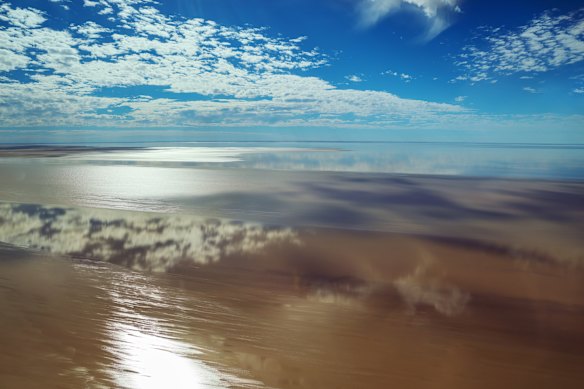
On Dulhunty Island, at the end of the Warburton Groove that carves its way through the shimmering salt pan, rich floodwaters have attracted waterbirds in their thousands for an avian orgy, with a feathered baby boom predicted in the coming months.
“What we’re looking at below is Love Island for pelicans; single males throw sticks into the air to attract the lucky ladies, strutting around with their face pouches bright red,” our Wrights Air pilot Luke says as he brings the Cessna 208 Caravan down to 500 metres over Australia’s largest inland lake, full for the first time in 50 years after massive outback flows.
“Scientists still don’t know how the pelicans communicate that the lake is full, but they’ve flown from the coast in their thousands to feed and mate here – it’s an amazing spectacle.”
We have a lot to learn from our feathered friends, not least that this is a great time to visit outback Australia, now cloaked in olive green, its salt lakes full and brimming with life.
Sign up for the Traveller Deals newsletter
Get exclusive travel deals delivered straight to your inbox. Sign up now.
This bird’s-eye view of Lake Eyre is a highlight of APT Luxury Travel’s Lake Eyre and Flinders Ranges tour of outback South Australia, a seven-day journey departing from Adelaide. But what is usually an exploration of the harsh red interior of the continent is this year revealing a very different side to desert life, with outback communities and wildlife alike celebrating the unusually lush conditions.
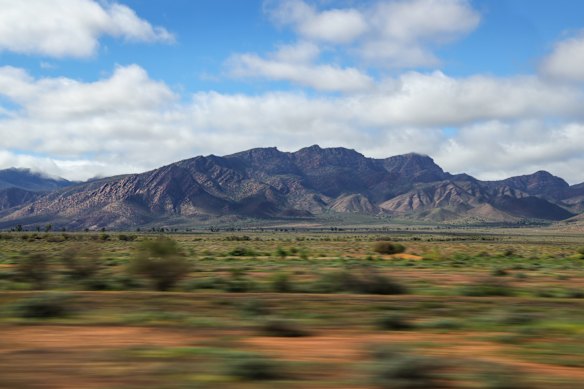

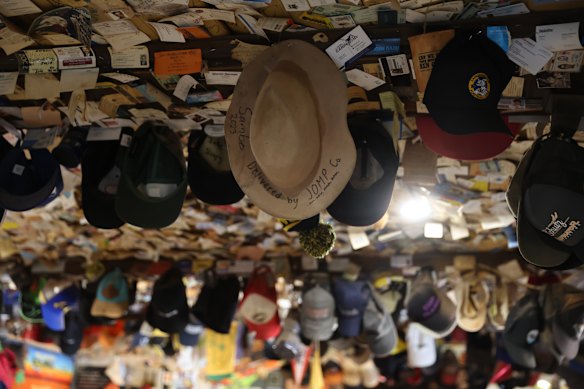
“Green’s not a colour we’re used to seeing around here,” one of only two permanent residents of the remote town that’s home to the characterful William Creek Hotel, tells us. “This is definitely the year you want to be checking this area out.”
Most of our group of 11 have joined the tour for this very reason, to witness the transformation of the desert. As fuel prices are hitting independent travellers hard, an organised tour, with all expenses factored and with someone else doing the driving, is a no-brainer.
If any vehicle is equipped for the brutalities of corrugated, pitted outback roads, it’s the one we’re travelling in. The 26-seat coach, based on a Scania off-road truck, packs all the comforts needed for long-distance touring – bathroom, seats with ample legroom, phone charging, air-con and a television screen showing an unrestricted driver’s view of the dusty road ahead.
South Australia’s outback starts at Port Augusta, a three-and-a-half-hour drive north of Adelaide at the head of Spencer Gulf. There, we visit the Wadlata Outback Centre museum to learn of the geological, spiritual and cultural formation of the Flinders Ranges and beyond, following the “tunnel of time” via the head of Megalania, a giant monitor lizard that roamed these parts in the Pleistocene epoch.
We discover we’ll follow the route of the original Central Australia Railway, built between 1878 and 1929 but dismantled in 1980 due to risk of floods.
The train that plied this line was the original Ghan, named in recognition of the Afghan cameleers who transported goods before the railway was built and were crucial in the construction of the Overland Telegraph Line between Adelaide and Darwin.
In Port Augusta, our overnight stay is at the c.1883 Standpipe Hotel, a beautifully restored example of the accommodation of the time. From there, we travel through the south-western Flinders Ranges, the undulating folds and grooves cushioned by plains of fragrant saltbush. Cutting through deep gorges, we then follow the tracks of the historic Pichi Richi Railway – now a popular tourist steam train attraction – to Quorn before pausing for morning tea break at nearby Kanyaka Station.
Here, the harsh reality of outback life is illustrated in the riverside ruins, abandoned after workers walked off the land during a severe drought in 1888. In today’s lush conditions, it’s easy to appreciate how farmers could be lulled into a false sense of security, expanding operations when stock feed was plentiful … until suddenly it wasn’t.
One outback family has weathered the vagaries of climate extremes, however. Ross and Jane Fargher are fourth-generation pastoralists and owners of the Prairie Hotel in Parachilna. After buying their “local” in 1991, they transformed the former railway siding into an oasis, where the feel is convivial and the menu’s emphasis is on native and feral ingredients. At lunch, our antipasto platters have emu pate, camel metwurst, roo pastrami and goat cheese, and it is one of the culinary highlights of our journey – rustic, tasty and an innovative nod to the bounty of the desert.
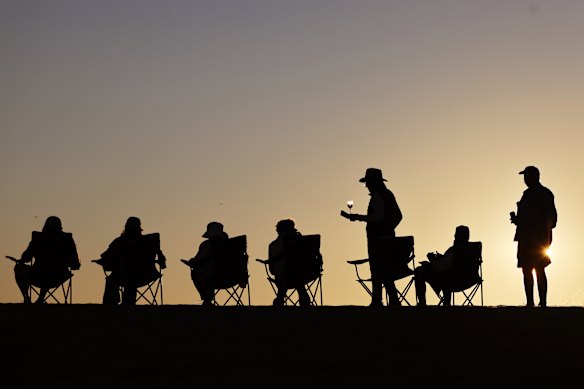
Continuing onto the junction of the Birdsville Track, we arrive in Marree as the sun is sinking, its deserted main street reminiscent of Russell Drysdale’s surreal 1948 painting The Cricketers. Under a starry sky, we gather around a firepit (created by a prisoner at Port Augusta jail) in front of the hotel for “frothies”, chewing the fat with fellow travellers, local pilots and hotel manager Simon, who recently took over after managing the pub “further up the track” at Oodnadatta.
“This is the big smoke,” he jokes, “at least there’s asphalt here.”
In a memorial park in the town is a ramshackle lean-to, a reconstruction of Australia’s first mosque, built in about 1861 for the Muslim workers who camped on the north side of town, segregated from the Europeans. There has never been a Christian church in Marree and the memorial to the cameleers is a poignant reminder of their unique contribution.
For one of our group, 85-year-old Pete, our overnight stay at the Marree Hotel is a trip down memory lane as he recounts teenage visits to the region to visit relatives. He’s seen Lake Eyre in flood, he tells us, but not from the air – so he’s looking forward to tomorrow’s flight, its destination the Birdsville Pub over the border in Queensland.
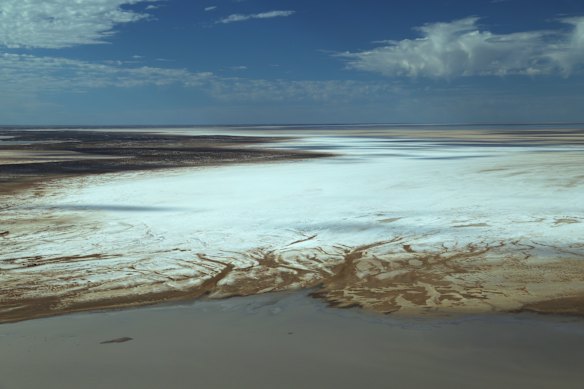
From above, Kati Thanda-Lake Eyre is an eye-shadow palette of pastel blues, soft pinks and shimmering silver, grey clouds mirrored on its glassy surface. The Arabana people are the tradition owners of what is known as an endorheic lake – water in a closed basin that has no natural outlet.
Beyond the lake, we fly over channel country, waterways created by still-travelling floodwaters appearing like swollen blood vessels. It’s a mesmerising sight, a complex landscape in flux; transformative and life-bringing, if somewhat ephemeral.
At Birdsville, we are whisked away for sundowners on Big Red, the tallest sand dune in the Simpson Desert. Since 2013, up to 13,000 visitors have camped below it for The Big Red Bash, the world’s most remote music festival. This year, however, the stage area and campsite are under water; with the floods showing no sign of dissipating, the July event has been cancelled.
After a low-flying journey back to Lake Eyre over Cooper Creek and the expansive wetlands of the Warburton River, we continue into the ancient landscape of Wilpena Pound in the Ikara-Flinders Ranges National Park.
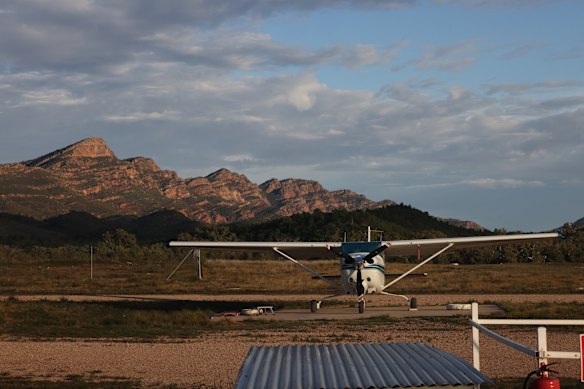
From the comforts of the Discovery Resort, there is free time to hike into the natural amphitheatre, and some take to the sky again on a scenic early-morning flight, the sun illuminating the dramatic circular escarpment that plummets into a sea of native cypress.
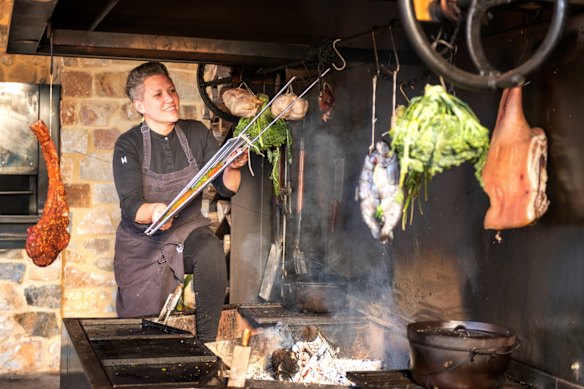

Our outback adventure concludes in the bucolic Clare Valley, where we tuck into tender home-baked organic chook, courtesy of award-winning South Australian chef Nicola Palmer, at the historic Watervale Hotel.
In a converted 1868 jail where rowdy revellers were once interred, hotel owner and sommelier Warwick Duthy shares how the region’s diverse geography – where arid ranges meet the productive Goyder’s Line – has shaped its wine industry. Its exquisite, crisp riesling and full-bodied reds are expressions of its unique terroir.
We toast our incredible journey, covering more than 3000 kilometres by road and air, Australia’s outback a sight to behold in its current mantle of green. Like the pelicans, we’ll return to life on the coast, curiosity sated, and our eyes now opened to the tribulations and delights of desert extremes.
THE DETAILS
TOUR
APT’s seven-day Lake Eyre and Flinders Ranges tour runs until September. From $5995 a person. The tour includes guided 4WD transport, a scenic flight over Lake Eyre and all accommodation and meals, including post-tour city accommodation and a farewell dinner in Adelaide. See aptouring.com
The writer was a guest of APT Luxury Travel.