 1 hour ago
1
1 hour ago
1

Experts say it’s the No.1 thing the aviation industry must adopt to achieve net-zero emissions by 2050 – replacing reliance on conventional fossil fuels with a new technology using waste products to power planes.
It is already used in major travel hubs across the globe and from Monday, airlines travelling through Brisbane and regional Queensland cities will have permanent access to a supply of sustainable aviation fuel, marking an important step forward in the Australian industry’s decarbonisation efforts.
The project, led by fuel retailer and owner of the Geelong Oil Refinery, Viva Energy Australia, uses repurposed cooking oil sourced from Malaysia to create sustainable aviation fuel (SAF), which will be stored, blended and piped directly to Brisbane Airport from the company’s Pinkenba Terminal.
SAF is a lower-carbon alternative to conventional jet fuel, made from biogenic feedstocks such as waste oil, animal fat and farming materials, or synthetically through methods including carbon capture and hydrogen.
Under current mandates, up to 50 per cent of SAF can be blended with traditional jet fuel to power planes.
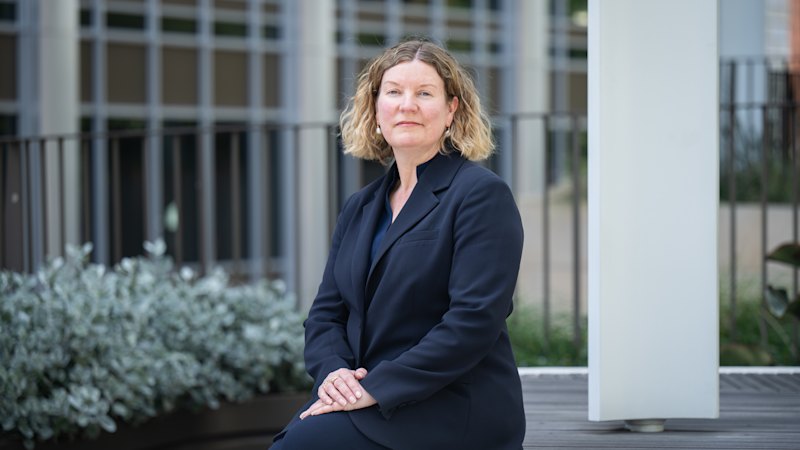
Viva Energy’s head of future fuels and decarbonisation, Vanessa Lenihan, said the cooking oil from Malaysia was added to one of the company’s pre-existing trade routes, but hoped the Brisbane project would encourage greater local production of SAF and build consumer confidence in the market.
“There’s a huge uptake of SAF across the world … most of the international airlines will already have it. If you fly out of Singapore, you’ll have already used it,” she said.
“The reason why we picked Queensland as the location for this investment [is] because there is the most number of projects being really investigated for potential manufacturing [here].
“This project is about getting the supply chain in place to make it cost-effective for others to come into the system.”
While SAF still emits carbon, it uses less newly extracted fossil fuels and can reduce lifecycle CO₂ emissions by about 80 per cent according to the International Air Transport Association (IATA).
But at three to five times the cost of conventional jet fuel, price remains prohibitive for airlines.
“There is a price barrier and the government policy settings aren’t quite right for customers to take up that product,” Lenihan said.
“We need to see more of that in place in order for some of these projects to really be able to flourish.”
The $4.93 million Pinkenba project was partly funded by the Australian Renewable Energy Agency (ARENA).
Its general manager of transport, Alex Grant, said the organisation was interested in “helping Australia build the supply chains, skills and infrastructure needed for a future sustainable aviation fuel industry”.
“Reducing aviation pollution is one of the hardest challenges in the energy transition. Unlike other forms of transport, aircraft can’t easily electrify, which is why low emissions fuels will play a critical role,” Grant said.
Aviation accounts for about 2.5 per cent of global CO₂ emissions and the industry has committed to achieving net zero by 2050.
Chemical engineer and UNSW Associate Professor Emma Lovell said while carbon offsetting and advancement in technologies such as electric planes have been mobilised to reduce carbon emissions, SAF “is really the only pathway to get [to net zero]”.
“To say you’re offsetting your carbon, it implies that all we need to do is throw a few bucks at the problem, when really it’s much more problematic,” Lovell said.
“[SAF] is known as a ‘drop in fuel’, which means that essentially it’s chemically the same as conventional petroleum-based jet fuel … so we’re not changing plans [to use it] … it’s where we’re sourcing the fuel from that is changing.”
Lovell said with further investment, Australia has the potential to be a global leader in SAF production and use.
“While currently we import most of our SAF, we have all of the raw ingredients … to really set us up to be a global powerhouse in this area.”
Brisbane Airport chief executive Gert-Jan de Graaff said the dedicated SAF tank at Pinkenba Terminal would “help make sustainable aviation fuel a more regular part of aircraft operations in Queensland while building momentum for a stronger sustainable aviation fuel industry in Australia.” .
Start the day with a summary of the day’s most important and interesting stories, analysis and insights. Sign up for our Morning Edition newsletter.