1 hour ago
1
1 hour ago
1

Cartels have created a genetically modified super coca plant to produce more crops annually and extract more cocaine, the Australian Federal Police has said, as production hits new peaks.
The drug is becoming so common that supply may soon outstrip demand, according to a recent report by the United Nations.
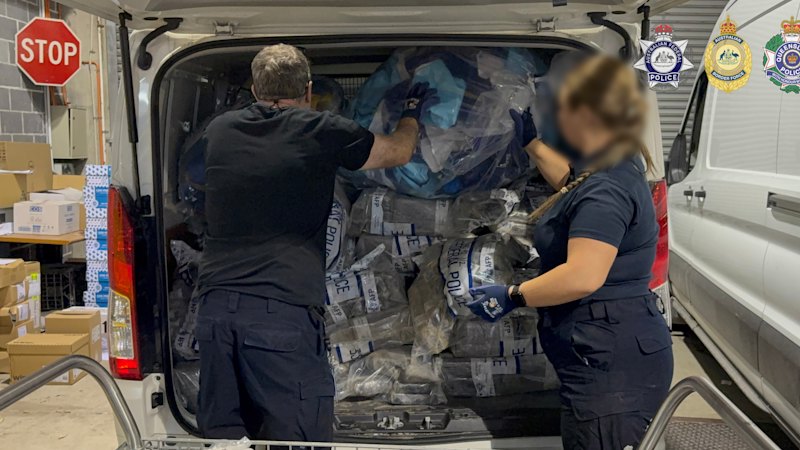
There have been record seizures of the drug in Australia. Late last month, the AFP recorded its largest cocaine bust to date: 2.7 tonnes with an estimated street value exceeding $800 million.
The drugs were concealed in bunkers hidden under shipping containers at a Londonderry property. When they were imported is unclear.
Head of the AFP’s South America operations, Superintendent Rebecca Langmead, said cartels were becoming savvier in their techniques.
“Armed groups have refined the ways that they’re able to convert the coca plants into cocaine, so for each hectare of coca, they can now make more cocaine,” she said.
They are doing this in two ways, she said. First, they had altered the genetics of coca plants to grow more crops a year on the same land.
Second, they had become “more sophisticated” in their technology and methodology, extracting more of the drug from the plant.
“They’re innovating within their production,” Langmead said.
Australian and New Zealand law enforcement agencies joined the Colombian National Police earlier this year, teaming up to stop illicit drug shipments to the region. Langmead said a key focus was on disrupting upstream activity among high-level organised crime groups.
The United Nations Office on Drugs and Crime World Drug Report, released last week, found cocaine production had quadrupled in the decade to 2024, when the estimated output was 4100 tonnes in pure form.
The report noted this was largely driven by increases in productivity and the area under cultivation. In 2014, dealers manufactured 869 tonnes of cocaine from 132,000 hectares of coca bush. By 2024, the estimated 4100 tonnes came from less than 385,000 hectares of coca bush.
Charles Sturt University lecturer in terrorism and security studies Cesar Alvarez said the fact of criminal actors delivering technology to farmers wasn’t new.
When the government began using the weed killer glyphosate to eradicate illegal crops, he said, criminal groups had farmers grow genetically modified plants resistant to the chemical. They had also delivered plants that grew faster and yielded more harvests.
“Technology, advancements, mechanisms and tactics … have been given by other areas within the criminal structures,” he said.
Recent cocaine seizures
- July 2: NSW Police seize 10 kilos of cocaine from a Sydney freight company, with an estimated potential street value of $1.6 million. Three people have been charged.
- June 22: AFP officers seize 2.7 tonnes of cocaine in the largest haul to date with an estimated street value of about $816 million.
- June 24: ABF officers find 110 kilos of cocaine in a frozen berry shipping container at Port Botany, with an estimated street value of about $36 million. Inquiries are ongoing.
- May 7: ABF officers find 14kg of cocaine concealed within a consignment of two tonnes of fruit pulp at Melbourne Airport. Inquiries are ongoing.
- January 22: ABF officers intercepted two men arriving at Sydney airport accused of ingesting 212 pellets of cocaine to smuggle into Australia, totalling 2.33 kilos with an estimated street value of about $757,000.
Farmers were often more familiar with paramilitary groups as the face of authority than the government, he said. Coca plants were more reliable to grow and sell than other crops, yielding an income up to seven times more than they would receive from cacao or potatoes.
Alvarez believed the outgoing Colombian government’s policies, of pulling back on coca plant eradication in favour of peace negotiations with criminal groups, played a larger role than technological advancements.
The UN report found coca bush is being cultivated at record rates, on nearly 400,000 hectares in the region, nearly double the area in 2020 and triple the 2014 level.
Eradication of coca bush has declined in the Andean region, covering Colombia, Peru and Bolivia. In 2024, less than 46,000ha were cleared, down from 136,000ha in 2020. Colombia accounts for nearly 70 per cent of cocaine production.
“These groups have been given a free pass to grow coca at the rate that they wish,” Alvarez said.
Australia remains a highly lucrative market for cocaine users, as wastewater analysis finds that cocaine use continues to rise. In 2016-17 when monitoring began, the estimated national use was 3000kg. In 2024-25, nearly 8000kg was detected, and NSW accounted for 3200kg.
Street value last year was nearly $2.8 billion and in 2024-25, national consumption increased by 17 per cent over the previous year. Cocaine is the second most used illicit drug after methamphetamine.
Start the day with a summary of the day’s most important and interesting stories, analysis and insights. Sign up for our Morning Edition newsletter.