 1 hour ago
1
1 hour ago
1
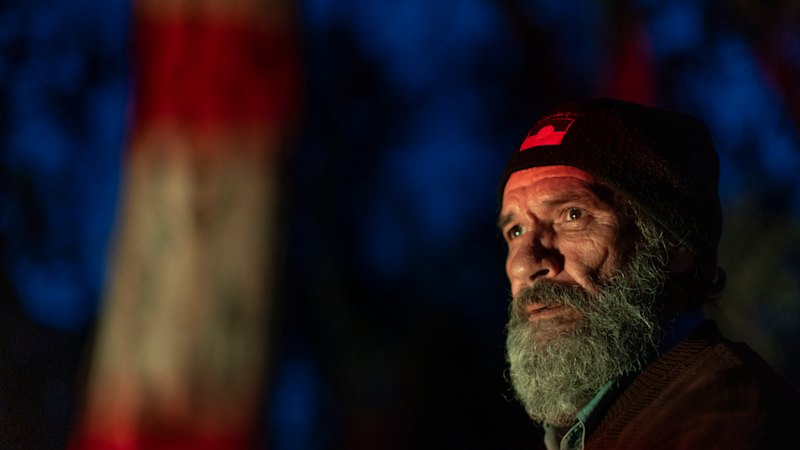
From the time he was a child, James Knight knew his future lay in rural Victoria. Although he grew up in Melbourne, Knight got a taste of life on the land during school holidays at his uncle and aunt’s beef and cropping farm.
From that moment, his mind was made up.
“I got hooked,” he says.
Later, Knight worked in corporate agriculture for four years while living with his wife, Georgie, in Melbourne. And during that time, the land kept calling.
The couple both wanted the farm life and experience of living in a close rural community. So, when the chance came to take over Georgie’s family beef farm in south-west Victoria, they took it.
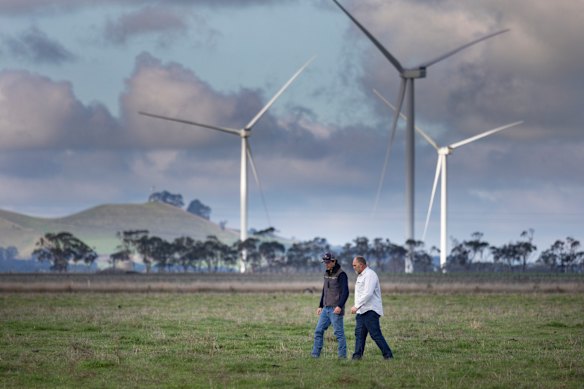
But when they moved there in 2016, Knight found a community simmering with frustration. There was a proposal at the time for a wind farm with more than 40 turbines.
While some landowners agreed to host turbines, many in the community vehemently opposed them, including Knight’s father-in-law.
It was obvious to Knight that the project consumed the lives of neighbours “and not for the better”. So he sided with his father-in-law, declining to host turbines on their farm.
The renewable energy wind project proceeded anyway with 35 turbines, including one erected 200 metres from Knight’s title boundary and 1.5 kilometres from his house.
Knight understands Victoria needs renewable energy. But he believes many regional communities feel corporate interests have forced renewable projects on them, while compliant governments allowed the benefits to flow to the cities.
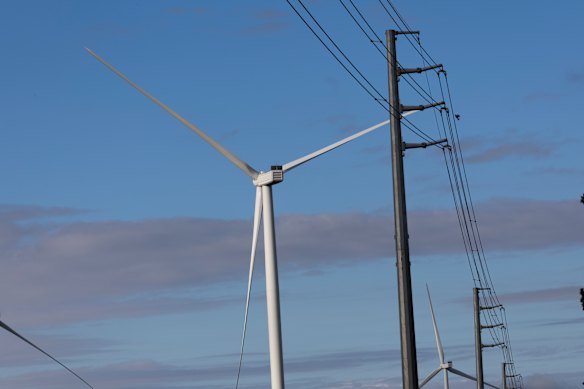
“How about we put 30 or 40 of these across the St Kilda foreshore and see how you go?” Knight says. “Because it’s the same for us out here. We don’t want them.”
Knight says there are also frustrations with turbines and transmission lines hampering aircraft access, which can be required for firefighting and spraying fertiliser on farms.
Anger about the wind farm is emblematic of broader frustrations taking root across regional Victoria.
It’s not just the soaring transmission towers and lines stretching across the landscape throughout much of the state’s south-west. Or the wind turbines rising above farms where there was once uninterrupted sky.
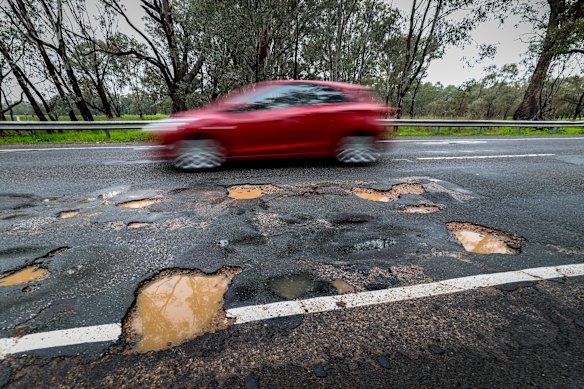
It is not only the absence of doctors forcing people to drive long distances on roads pockmarked with festering potholes that pose a daily hazard to cars and lives.
Nor is it just the hangover of pandemic restrictions that damaged faith in government institutions. Or the patchy mobile and internet coverage. Or the fire services levy that enraged volunteer firefighters.
It is these and more grievances compounding into deep-seated resentment, and driven by a perception that state and corporate interventions inflict more harm than solutions to problems.
Many of these issues are specific to regional Victoria. Yet here’s why they matter to everyone else.
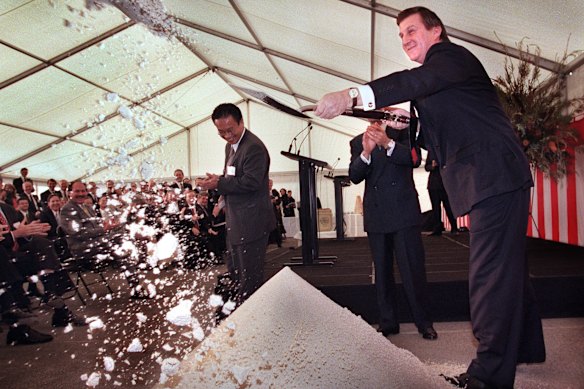
In 1999, rural seats swung hard against the Liberal Party, booting then-premier Jeff Kennett from government in an election he was expected to win easily. The eight regional seats Labor flipped, and three regional independents backing them, were enough to secure Labor minority government.
So began an era of political dominance that continues today.
But the dynamic is shifting drastically. Labor now faces the prospect of losing government in November after accumulating heavy political baggage over three terms.
Unlike previous state elections, Victoria is in uncharted political waters. Multiple polls indicate fed-up voters are warming to Pauline Hanson’s One Nation – a prospect that seemed all but impossible a year ago.
Knight is not a member of any political party, but he understands Hanson’s appeal. When Hanson took aim at renewables in her recent address to the National Press Club in Canberra, Knight said the message cut through.
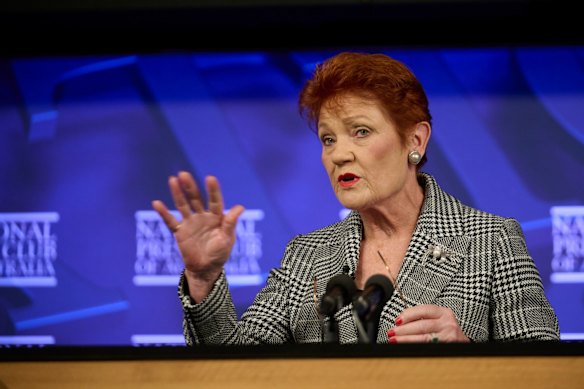
“Any individual or organisation that’s going to call out renewable energy, you will get regional communities on board because I feel like we’re seeing it firsthand,” Knight says.
In 2024, the Clean Energy Council reported that farmers could earn more than $40,000 a year per turbine on their property and $1500 per hectare annually for solar panels. Farmers are also reimbursed for transmission line easements on their properties.
Justine Hide is also no stranger to state politics seeping into everyday life. The deputy mayor of Northern Grampians Shire spent the past year on a community reference group seeking government answers for landowners worried about the long-term impacts of the renewable energy transition.
The meetings touched on solar, wind and power lines, but tended to be dominated by one particular $7 billion transmission project planned to snake through 235 kilometres of Victorian farmland: VNI West.
For three years the shadow of this planned behemoth has loomed large over regional people’s lives, even if they support the project or aren’t farmers themselves.
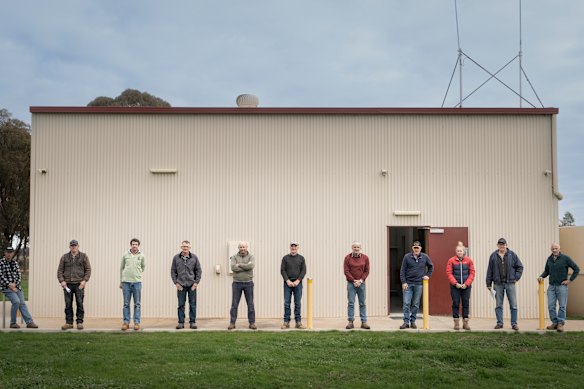
“I can’t go to the supermarket or my kids’ swimming lessons without either seeing affected landowners or people in that community, and they’ll talk about it if they see you,” Hide says.
The rollout of VNI West drew criticism for being short on answers when the Australian Energy Market Operator first revealed its preferred route for the transmission project.
Hide says anger and distrust ultimately filled this knowledge vacuum, to the point where people became afraid to talk openly about the project for fear of offending one another.
In November, state government agency VicGrid assumed responsibility for planning transmission and renewable energy zones.
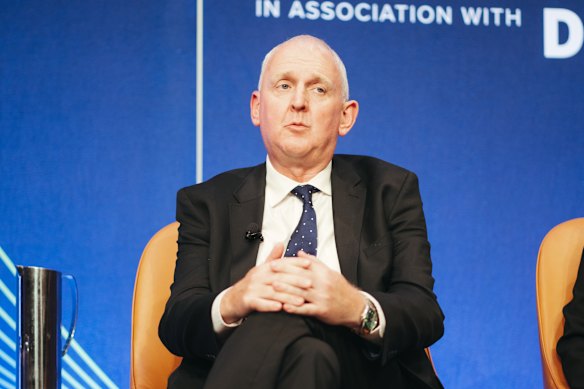
VicGrid chief executive Alistair Parker says the government established the agency after recognising national arrangements for renewable infrastructure had not served communities well.
VicGrid has introduced new guidelines, which Parker says will ensure communities in renewable energy zones are treated respectfully.
Some nondisclosure agreements for landholders hosting renewable infrastructure will be scrapped. Previously, these contracts banned property owners from discussing their financial payouts with neighbours.
Parker says 40 per cent of the 220 property owners along the VNI easement have allowed VicGrid access to their land under voluntary agreement.
He expects compulsory easement acquisition will only be necessary for 2 per cent or 3 per cent of property owners once the process concludes, based on experience elsewhere.
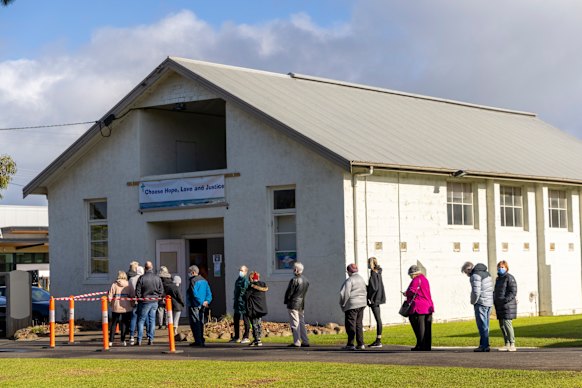
“So it doesn’t take the land off people, it just creates an easement across the land,” Parker says.
He insists VicGrid now has better decommissioning processes in place when renewable infrastructure reaches its end of life. And he says VicGrid is also trying to better share information about renewable projects with communities.
“We’ll come and talk to anybody about any aspect of this whenever it suits them,” he says.
But Hide remains pessimistic about VicGrid’s attempts to make amends. “I think the damage has been done,” she says.
The most recent community reference group meeting was abandoned after dozens of anti-transmission line protesters gatecrashed with signs and chants. In one video of the confrontation, a man can be heard saying: “You could have done this five years ago, and you didn’t bother.”
A generally negative sentiment bubbling in regional Victoria has emerged clearly in opinion polls.
The Age’s Resolve Political Monitor, which surveyed 1652 Victorians in April, May and June, found 46 per cent of regional and rural Victorians expect their personal outlook to worsen, compared with 32 per cent of respondents in Melbourne.
Similarly, 51 per cent of rural and regional Victorians expect the state outlook to worsen, whereas 38 per cent of Melburnians responded the same way.
Resolve founder Jim Reed says cost of living is the most pressing concern uniting Melburnians and regional Victorians. But now rising anger in the regions is flowing through to increased support for One Nation: according to polling, Hanson’s party has a primary vote of 31 per cent in the regions, compared with 19 per cent in Melbourne.
Reed says voters are drawn to the One Nation leader’s unvarnished image and plain speaking style. Hanson’s decision to accept a plane from billionaire Gina Rinehart seemingly mattered little to her supporters.
“They are willing to forgive her quite a great deal in terms of her candidates’ behaviour and getting airplanes because she seems to stand for them,” Reed says.
Reed says critics once dismissed One Nation’s supporters as grumpy, old white men. But One Nation is increasingly drawing supporters from every demographic group. That includes, crucially, women aged between 30 and 50.
“Once you’ve won that group you tend to get a snowball effect,” the pollster says.
Natasha Miller is in that group. The fifth-generation Mildura resident already had something in common with Hanson, as the owner of a fast-food shop. But after years of watching transport and health issues in her community persist largely unabated, she’s now considering voting for One Nation.
And Miller knows she’s not alone.
“I have customers who have told me they will be voting One Nation,” she says, even though the party is yet to announce its candidates for November’s election.
“I think government needs a shake-up, and if One Nation can at least do that – get some different ideas and different people in there – then that’s what I’m hoping for.”
Miller’s experiences speak to the growing resentment for the extent to which decisions made in Melbourne affect regional Victorians’ lives.
COVID and the associated lockdowns were a turning point for her. Miller spent hours navigating government bureaucracy so she and her staff could keep working, while watching jealously as, just over the border, regional NSW lived in relative normality.
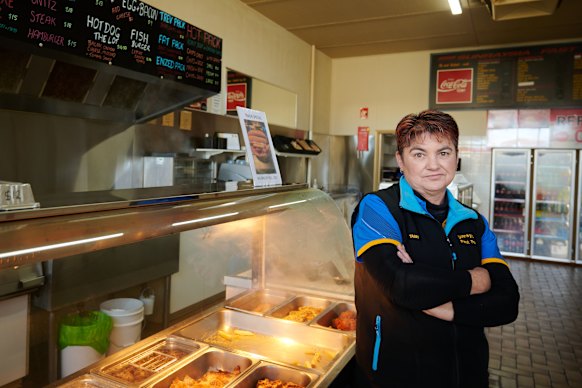
Four years on, Miller is serving one-third of the customer base she had before the lockdowns.
“Everybody is talking about how slow business is – tradies tell me they’re waiting for the phone to ring,” she says. “We have not recovered at all, not even close.”
In response to questions about sentiment in the regions, a government spokeswoman lists a raft of commitments. Her response ranges from 68,000 energy jobs across the state to $1.04 billion on roads, including 70 per cent for regional Victoria.
“Only Labor will deliver cheaper power for all Victorians and $18 billion in wages for regional Victorian workers through our renewable energy transition,” the spokesperson says.
‘You can go to the emergency department, but why would you with a sore throat?’
Penshurst resident Ama CookeAlex Fein, research and intelligence principal at polling firm Redbridge, says regional Victoria is somewhat more susceptible to anti-establishment and populist sentiment than Melbourne.
She believes social media also allows populist messages to be spread easily throughout the regions, where residents often face greater economic challenges and less access to services than their city counterparts.
The conservative Sky News now broadcasts for free in regional Victoria and its evening hosts often invite Hanson on air for interviews. Meanwhile, television audiences for the ABC, which is required to be politically neutral, are declining.
“Whatever is really difficult everywhere in Australia is doubly so in regional areas,” Fein says.
“They have to drive longer distances and their services are strained. The cracks are wider to begin with.”
A report by the OECD released in January supports the assertion that regional communities confront steep financial hurdles. It found Australians have experienced a marked decline in disposable incomes while inflation surged and mortgages soared.
A series of major shocks have battered the Australian economy: the COVID-19 pandemic, energy and food price spikes due to war in Ukraine, and sharp interest rate rises.
These economic blows hit the regions particularly hard. Furthermore, the OECD report said the concentration of house price gains in capital cities meant the economic disparity between urban and rural areas widened.
Ama Cooke sees these challenges firsthand. She runs a newsletter for her community in Penshurst, just south of the Grampians. Like Miller, she points to myriad reasons why residents of rural Victoria feel let down by the political class.
“I think people are sick of being lied to,” she says.
When pressed to identify the most urgent problems in her community, Cooke nominates the shortage of doctors and the poor state of rural roads.
The paucity of health services in the region means it can take up to three months to secure a doctor’s appointment.
“You can go to the emergency department, but why would you with a sore throat?”
Cooke’s priorities for change are entwined. The lack of health services force residents to drive long distances for medical attention. But deep and numerous potholes pose a daily danger to rural residents who have no option but to drive.
“Why can’t they do decent repairs instead of a quarter-inch layer of tar and pretending that’s OK?” she says.
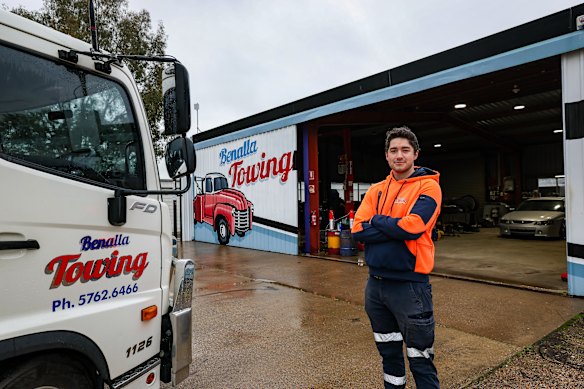
In Benalla, tow company owner Harlen Black is well acquainted with potholes. His team is regularly called out to motorbikes and cars damaged by the road surface on the Midland Highway and Hume Freeway.
Three weeks ago, his crews were called to a pothole about 70 centimetres long and several inches deep near a bridge on the Hume. It had damaged eight cars.
“Most of them had the wheel or the rim itself destroyed, so it’s a fairly big pothole to do that,” Black says.
He says the potholes are a huge financial and mental burden for the drivers whose vehicles were damaged, especially given many gave up car insurance due to the cost of living, which forced them to cover the entire cost of repairs.
“They’re very, very frustrated,” Black says. “You just want to have good roads, and we don’t at the moment.”
During the week, five cars lost tyres to a metre-wide pothole on the Hume north of Seymour, and Annabelle Cleeland, the Nationals MP representing the area, said her office had received almost 100 reports from people with road-damaged vehicles.
Just another week on regional roads.
For James Knight in Mortlake, the tensions around renewable energy, the government’s attempts to levy volunteer firefighters and the poor state of roads point to a deeper frustration that regional communities are feeling viscerally.
When they’re not being overlooked, they feel looked down upon.
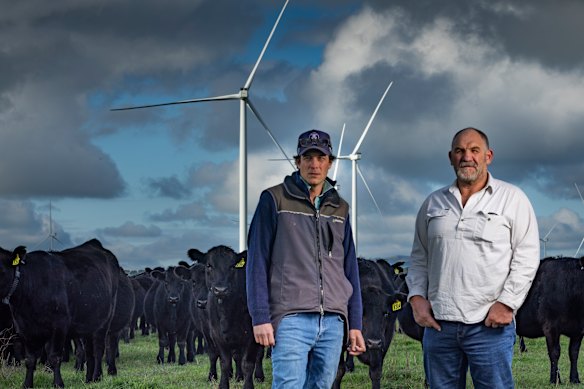
“We are not banjo-playing dimwits,” Knight says. “There are some very educated and smart people out here.”
Should regional voters unite to punish the political establishment in November’s election, the consequences may ripple well beyond the country roads and farms to impact all Victorians. That includes the city dwellers too.
Start the day with a summary of the day’s most important and interesting stories, analysis and insights. Sign up for our Morning Edition newsletter.