 1 hour ago
1
1 hour ago
1
One Nation MP Barnaby Joyce is on the phone talking water policy, and getting animated.
“The Murray Darling Basin system is a big old dry carpet, not interconnected garden hoses,” he says bluntly. “Tipping a bucket of water in one corner of the dry carpet does not saturate the carpet; it just saturates that section of the carpet.”
The long-term member for New England in NSW, an electorate right on the headwaters of several Murray-Darling Basin catchments, has spent much of his political career talking about water.
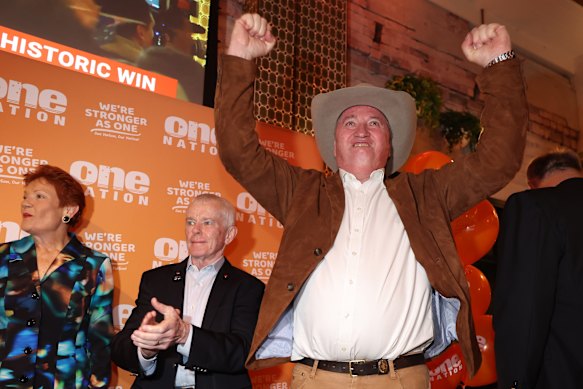
But this year, particularly after his defection from the Nationals, Joyce and his new One Nation colleagues are preparing to spend a lot of time campaigning on water politics.
At the top of One Nation’s grievances in the electorates that sit within the basin is the government buying water entitlements from licence holders, known as “buybacks”, to allow more water to flow through the parched Murray-Darling system.
“What people have to remember is, after you purchase the water licence the farmer goes and buys a flat at the Gold Coast, but the hairdresser goes broke, and the tyre business goes broke, and the value – the economic worth of the town and the district – is smashed … for what purpose?” Joyce says.
The Murray-Darling Basin Plan, which governs the use – many would say the overuse – of water across this vast system, is due for its first-ever review at the end of this year. In a parallel process, the Water Act 2007, the federal framework for the management of water resources across the basin, is also being reviewed.
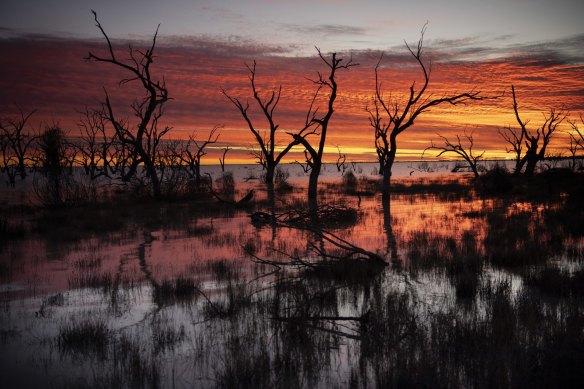
The Murray-Darling Basin Plan was designed to assert federal control over state-run water allocations, and return water from farm irrigation to rivers, floodplains and wetlands in a bid to boost an ailing ecosystem.
Environmentalists are urging the government to use the reviews to fulfil the aims of the plan and finally address the “chronic over-allocation” of water entitlements.
First Nations leaders are demanding the right to finally take a share of licences held by the Commonwealth.
Meanwhile, National Farmers’ Federation groups say the Commonwealth’s water buybacks have gone too far, arguing irrigators “have already given more than their fair share”.
Factor in the election in May of the first federal lower house MP voted in while a member of One Nation, David Farley, who campaigned vigorously on water entitlements; looming state elections in Victoria and NSW this year and next; a rapidly changing climate on the world’s driest inhabited continent; and a looming El Nino driving hotter and drier conditions, and it’s clear the reviews have the makings of a perfect storm.
Cry me a river
In 2007, then-prime minister John Howard stood before the National Press Club in Canberra to unveil his plan to revolutionise water allocations in Australia.

“The current trajectory of water use and management in Australia is not sustainable,” said Howard, describing himself as a “climate change realist”.
“In a protracted drought, and with the prospect of long-term climate change, we need radical and permanent change.”
Announcing his government would commit to a $10 billion, 10-point plan to improve water efficiency and counter water overuse in the basin, Howard added: “This is the Commonwealth assuming responsibility for a problem created by the states. We are willing to address the chronic over-allocation of water in the basin and to carry the cost.”
The changes that flowed from Howard’s historic intervention were agreed by six governments in 2012, and set legal limits on the amount of water that could be extracted from rivers. They formed, in the words of current Murray Darling Basin Authority chief executive Andrew McConville, a “political compact” between governments.
That compact is vast, and it is strained.
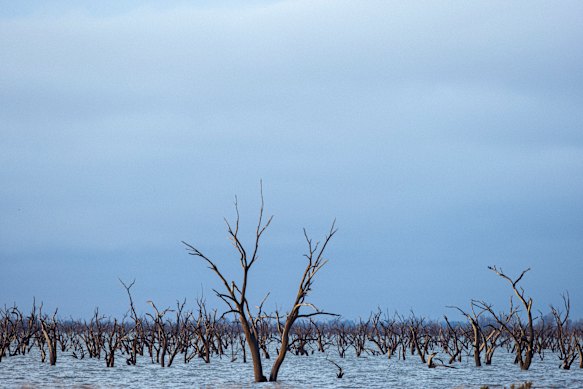
The Murray Darling Basin Plan covers waterways and terrain spanning about 1 million square kilometres in which 2.4 million people live, as well as almost 300 threatened aquatic, terrestrial and avian species.
In 2012, governments agreed that 2750 gigalitres of water would be “returned” to the environment – perhaps better described as not being extracted – to improve the health of the system.
In 2017, ministers agreed to alter that plan to reduce the water reserved for the environment by up to 605 billion litres a year in return for measures that reduce water losses from the river system, including infrastructure projects such as weirs and pipelines, and farm irrigation system upgrades.
The following year, it was agreed 450 gigalitres of water could be set aside for the environment if no socioeconomic impacts arose from this.
The Murray-Darling Basin Plan is now as much a political as an environmental story. While the plan was supported by governments of both stripes when the deal was struck, the Coalition is now sharply critical of Labor’s buybacks and environmental watering program.
In April, federal Liberal leader Angus Taylor and Nationals leader Matt Canavan released their Murray-Darling Basin Plan policy, which would end any further reductions in the amount of water available for “farming, jobs and productive use”, and would target increases in the pool of water available for “consumptive” use by towns in the basin system.
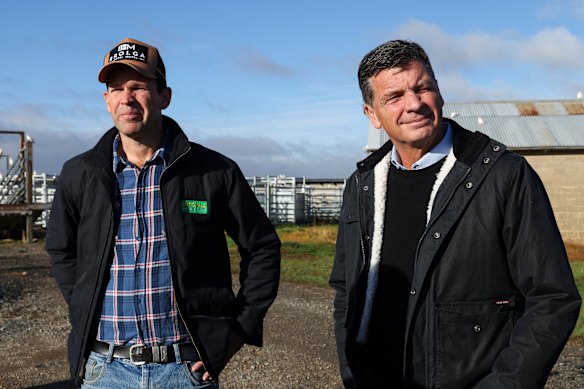
“Dumping water buybacks and building dams again will help families stay on the farm, create food manufacturing jobs and lower grocery bills,” Canavan said.
Since 2012, the Commonwealth has recovered 20 per cent of the basin’s “consumptive” water, and redirected it to the environment – most of it since Labor came to office in 2022.
Environment Minister Murray Watt says that under the Coalition government, just two gigalitres of the additional 450 gigalitres targeted for environmental flows had been returned to the river system.
Since Labor came to office, more than 380 gigalitres has been recovered in annual average flows, through a combination of the federally funded water efficiency projects and buybacks, where farmers voluntarily sell water rights to the Commonwealth.
Watt argues that returning water to the system brings economic as well as environmental benefits.
“There’s still a strong environmental case to deliver the plan, but also, if we want to have a viable agriculture sector and communities in the basin long term, that relies on restoring the health of the river systems as well,” he says.
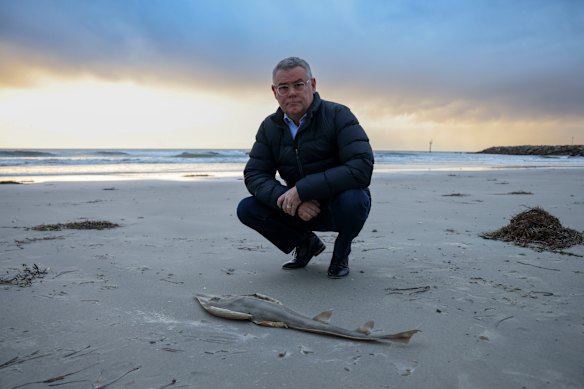
The government acknowledges some communities will feel the effects of water buybacks, he says, and has provided $300 million in “structural adjustments” funding to those communities.
“But faced with the evidence that we have around the state of the basin and the drying climate, I think it would be gross negligence for any government to not deliver on the plan.”
Water justice
First Nations people have historically been relegated to a footnote in the management and allocation of water in the vast basin system.
Announcing the review of the Water Act in February, Watt said this would change, with the review to be supported by a First Nations adviser, who would provide guidance on First Nations perspectives and priorities.
Grant Rigney, who describes himself as a citizen of Ngarrindjeri nation – a vast area of native title that spans crucial lower-Murray waterways in South Australia, including the mouth of the Murray – says First Nations people have been locked out of the conversation for too long.
“The [Water] Act doesn’t give First Nations an allocation of water at all,” he says.

“The basin plan may talk about the First Nation groups, and that’s in chapter 10, part 14 of ‘values and uses’, but that’s the only section where we can actually have valid input from a legal context.”
Rigney’s view of the basin system – with its birds and fish and living, breathing, ecology – is worlds apart from Barnaby Joyce’s dry carpet analogy.
“It’s a living entity; it’s a living body,” he says.
“People see it as a commodity. So we need to start changing that vernacular, and think, ‘How do we actually get people to take responsibilities for the water usages in this country?’”
The federal government says First Nations people hold rights to about 40 per cent of Australian land through native title but own less than 0.2 per cent of surface water entitlements.
Watt says the government’s $100 million Murray-Darling Basin Aboriginal Water Entitlements Program will allow First Nations groups to buy and trade water from the consumptive pool, but he acknowledges the frustrations and anger in Aboriginal communities.
“I accept that First Nations interests have not been adequately considered in years gone by around Murray-Darling Basin management, and that’s something that we want to do better moving forward.”
Ngarrindjeri and other First Nations groups within the Murray Lower Darling Rivers Indigenous Nations (MLDRIN) have campaigned to convince the Commonwealth to rethink its focus of directing precious environmental flows to “icon” sites like RAMSAR-listed wetlands.
“They’ll get huge and significant amounts of water for the waterbirds and the ecosystems in those areas,” Rigney says. “But there’s many tributaries and nurseries along the system that miss out”.
“So we’ve said, ‘Well, this is an interconnected system. All living things are connected, and you’re missing out on these areas’.”
Parched wetlands
Jono La Nauze is chief executive of Environment Victoria, and chair of the Murray Darling Conservation Alliance.
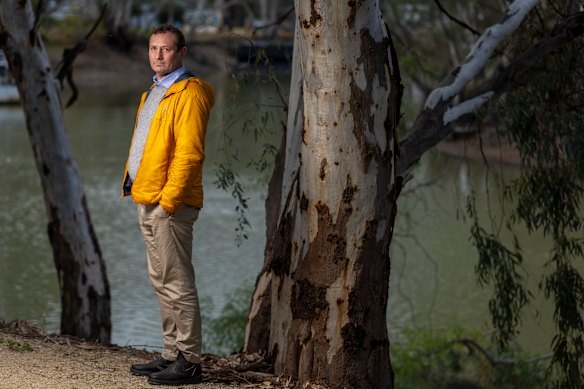
The alliance is calling for the review to recommend “hard targets” be included in the revamped basin plan, to compel governments to restore adequate flows to at least 60 per cent of wetlands in the Murray-Darling Basin.
The size of those flows would be adjusted based on the particular needs of different ecosystems.
“We’ve got really good science that tells us what different kinds of wetlands and ecosystems need, [and] what frequency and duration of flooding,” La Nauze says.
He points to an Australian National University-led study of the five-year period between 2014 and 2019, which examined the 21 per cent of Commonwealth environmental water that had been delivered as flooding events to nine river valleys.
Those flows inundated just 7 per cent of wetland areas in those valleys annually, representing just 0.8 per cent of major basin wetlands.
La Nauze says the recent arrival of the deadly H5N1 avian flu on Australian shores lends particular urgency to the plight of waterbirds that breed in wetlands.
“We’re going to have, inevitably, massive population declines as these waterbirds are hit by a disease they have no natural immunity to,” he says.
“And one of the best things we can do is ensure that populations are as large and healthy as possible ... that means every possible opportunity for waterbirds to be breeding in large numbers is critical right now.”
A system in danger
Watt, the environment minister, accepted in January the scientific advice of more than 1000 scientific papers and reports, and conferred critically endangered status on the lower Murray River ecosystem, which stretches nearly 1000 kilometres from western NSW, through Victoria and to the sea in South Australia.
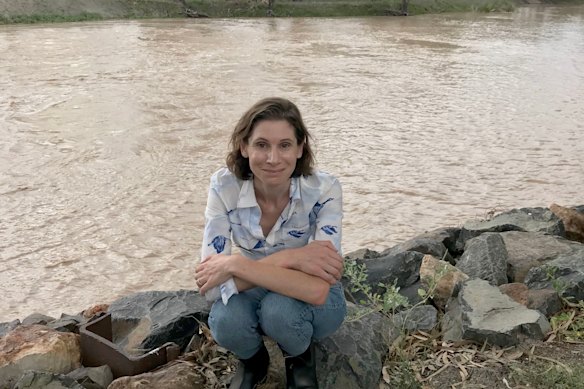
South Australian River Murray Commissioner Dr Emma Carmody, who has acted in the SA government-appointed role since last year, says targeted and considered environmental watering programs were critical to the health of the lower Murray catchment system, which begins in the mallee country of north-west Victoria and western NSW, and extends into South Australia.
Carmody argues it would be “an act of extreme cognitive dissonance” for the federal government to list the ecological community as endangered and critically endangered, but fail to allow enough water to flow through the rivers, wetlands and floodplains to save them.
“There is a great deal of evidence which shows there is a structural bias against environmental water, which has not been properly investigated and addressed by any government authority,” Carmody says.
She argues a structural bias has been baked into management of the Murray-Darling Basin, which “is a function of a legal and operational system that has evolved to support agriculture, not watering for the environment”.
“What we often hear [about the plan] is that it has a disproportionately negative impact on communities,” Carmody says.
“We don’t hear often enough about the positive impact of the plan, not only for the environment, but also for many landholders who are benefiting from a healthier river system.”
Get to the heart of what’s happening with climate change and the environment. Sign up for our fortnightly Environment newsletter.