 1 hour ago
4
1 hour ago
4

The cost to buy the typical Sydney property has started to fall over recent months, with buyers beginning to get the upper hand as muted confidence, affordability pressures and higher interest rates combine to dent the property market.
Sydney’s median house price dropped 3.3 per cent, or about $60,000 over three months to December to $1,733,891, the latest Domain House Price Report, released on Thursday, showed.
This was a fall from the previous quarter’s record high and the largest fall of all the capital cities. Over the year, house price growth slowed to 1.1 per cent.
The city’s median unit price was also down, falling 1.5 per cent to $849,068 over the quarter to June. This was also a drop from the previous quarter’s peak and the first quarterly decline in two years. Over the year, growth eased to 2.5 per cent.
Three rate hikes had affected borrowing capacity, while cost of living pressures and weak consumer sentiment was helping to constrain activity. Recent falls are signalling the “next stage” of the property cycle, Dr Nicola Powell, Domain’s chief residential economist, said.
“This is just the beginning,” she said of negative growth. More drops are expected during 2026.
Selling conditions in Sydney had weakened materially, Domain said. Clearance rates are at their lowest level since April 2020 (48 per cent), while withdrawn auctions were at a record 29.3 per cent.
Powell said that alongside weaker clearance rates and withdrawn auction levels, there were longer selling times, higher discounting and rising supply.
“The element of increased choice is just taking that urgency away from buyers, and giving them the power,” she said.
The federal budget in May introduced negative gearing and capital gains tax concessions reforms that Powell said would have a greater impact in markets such as Sydney, which has a larger proportion of investor activity than other states.
“It’s vulnerable to changes in investor participation. And ultimately, I think we are going to see fewer investors partaking in Sydney’s housing market.”
For first home buyers, too, there would be an “absolute element of caution to purchase in a falling market,” Powell said.
“Market conditions have shifted rapidly ... First time buyers are sensitive to changes in affordability, and we have to consider the mortgage serviceability aspect.”
Independent economist Saul Eslake said even though the budget’s property reforms did not come into effect until July 1 next year, they were having an impact on the way people think about the property market and what they were doing in “anticipation of those changes”.
This was at the same time, he added, as borrowing was becoming “significantly” more expensive thanks to higher interest rates, and banks were tipping further property price falls of between around 5 and 10 per cent nationally.
“Given that there may well be another increase in interest rates as well, and the full effects of the changes to the tax system on investors are yet to play out, it would make sense for prospective buyers to hold back.”
According to the latest Equifax Consumer Market Pulse, overall mortgage demand plunged 14 per cent over the year to June, driven by a 17.2 per cent drop in first home buyer applications.
With affordability pressures ongoing, the areas recording the biggest declines in price over the past 12 months across Sydney have been at the upper end, while more affordable areas have retained buoyancy.
The strongest median price growth for houses over the year to June was in the outer south west, up 12.5 per cent to $1,125,000) over the year. That was followed by the outer west and Blue Mountains (up 9.4 per cent to $1,110,000). By comparison, it was North Sydney and Hornsby which fell the most, dropping 12.1 per cent to $2,767,500.
Despite a downturn, every region of Sydney still has a median house price of at least $1 million.
For units, the biggest growth for the same period was on the Central Coast – part of Greater Sydney – up 11.9 per cent to $730,000, followed by the outer south west, which jumped 10.3 per cent to $642,500.
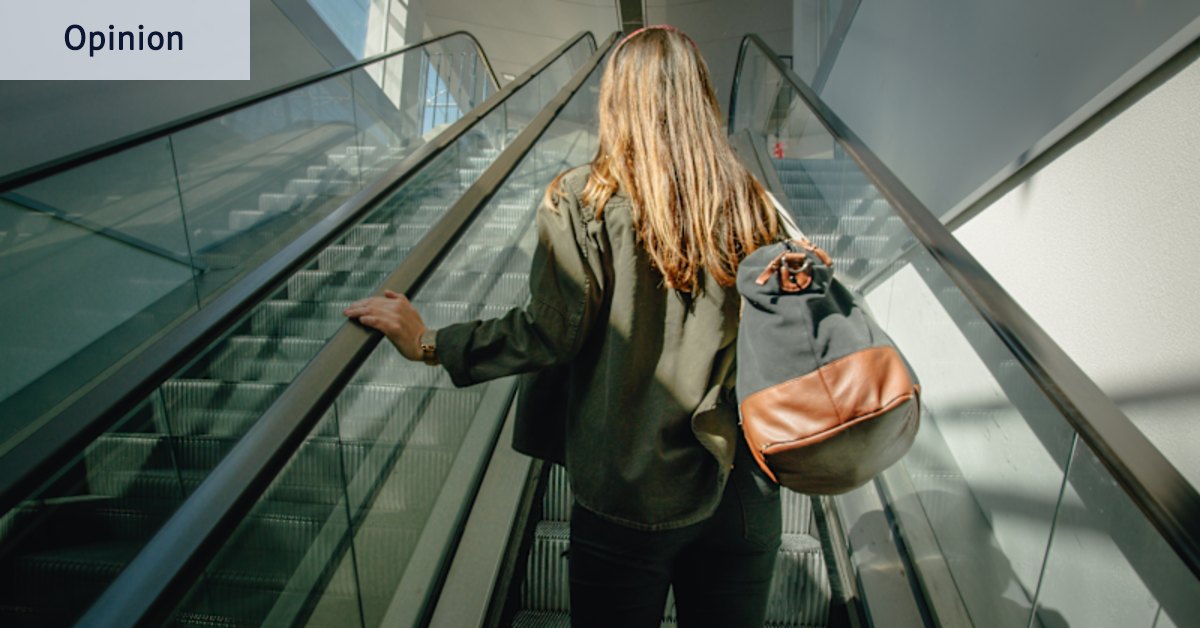
Alana Pasikala, 25, recently bought a one-bedroom apartment in the St George area after realising that repayments may not be much more than her rent, which had spiked over recent years.
Even so, the aviation people leader, who started looking for a property in January after getting her pre-approval, noticed a high level of competition. She noticed queues to view properties and steepening prices over the course of her hunt.
“When you’re a first-time buyer, auctions are quite difficult … so I completely avoided auctions,” she said.
“For the properties I was looking at, they were going for more than what they were initially advertised, or asking for, at that time.”
Pasikala, who is soon moving into her new home, is happy she stayed within her budget after putting in offers for a few properties.
“Ultimately, it’s a step in the right direction for something for myself, and my future.”
The more affordable parts of Sydney, Powell said, were likely to remain firmer in price and may even see modest rates of price growth.
“I think it says a lot about who is active and the lack of affordable supply,” she said. “The upper end of the market is leading the downturn.”
Julian Finch, principal mortgage broker at Finch Financial Services who worked with Pasikala, said inquiries for all types of lending had “quieted down exponentially” since the federal budget after a stronger start to 2026.
“I think what we’ve got is just a situation where everybody’s lost confidence in what the market is doing,” he said. “The reality is, of course, the buyers are in a stronger position to negotiate, or at least take their time.”
As the property cycle turns, NAB senior economist Taylor Nugent said the lender was forecasting Sydney house price declines of around 7 per cent over 2026.
“At the moment, it would be fair to say that recent momentum suggests the risk might be to a slightly larger decline over the course of the year than that.”