 3 months ago
31
3 months ago
31

February 25, 2026 — 5:30am
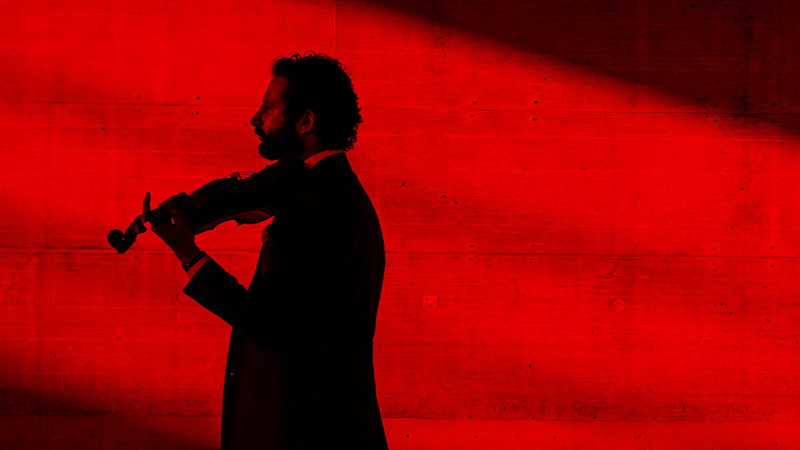
For more than five years, Stefanie Farrands scoured the globe for her perfect viola.
In that time, she played more than 50 exquisite instruments, but none was quite what she knew she was looking for.
Then, in September, the Australian Chamber Orchestra principal viola visited the New York showrooms of dealers Reuning & Son, tucked away discreetly behind Carnegie Hall (if you know, you know). For hours, she methodically play-tested the instruments selected for her appraisal. Finally, she raised Number Five to her shoulder and bowed the lowest (C) string.
“I brought it onto my collarbone and played one note and the way it resonated it just went straight into me and moved me to tears,” she says. “It was a moment where my life changed.”
The search was over. Farrands had finally found “her” voice.
A little later she walked into [ACO leader] Richard Tognetti’s hotel room. “He just looked in my eyes and said, ‘Oh, no. You’re in love!’”
The viola, which is the work of the great Italian luthier Giovanni Paolo Maggini and dates to 1610, is considered one of the greatest examples of its kind ever made.
And now it has joined a handful of exceedingly rare instruments in the ACO’s Instrument Fund, bringing the fund’s total value to more than $11 million.
The cost? More than $3 million. But focusing on the price tag – roughly twice the cost of an average Sydney home – misses the point, says Farrands.
“For me, the value of it is in the sound,” she says. “It’s a priceless piece of art.”
As far back as she can remember, Farrands has always dreamed of sound.
“As a musician, you spend years and hours trying to create a sound, something you can’t touch and can’t see. The strange thing about being an instrumentalist, unlike, say, a singer, is that you desperately need this tool to express yourself. And the instrument also has no voice without you. The connection between player and instrument is vital, important and unique - much like human to human.”
When Farrands describes the sound of the Maggini viola, she could almost be a speaking about a rare wine. The sound is “silky”, “smooth” and like “dark chocolate”.
That sound has opened up a whole new world of possibility Farrands says she will never tire of exploring.
“As an artist, you’re always trying to reach for something, and once you reach it, you bring the bar higher and push yourself beyond,” she says. “With this Maggini, that the bar is sky-high now. I have access to so many more sounds, colours, timbres and nuances than I thought as a musician I would ever experience.”
Quite what it is that makes instruments from the so-called “golden age” of the early 17th century so special is still debated. Theories range from the fact the wood comes from spruce trees caught in the so-called “mini ice age” of the period to the type of varnish used.
“In part it is a mystery,” says Farrands. “And I think there is a lot of mystery in this viola.”
Regardless of the reasons behind its exquisite sound, Ferrands says she has found her soulmate.
“When it’s in my arms, I don’t feel like I’m playing an instrument. I just feel like I’m expressing myself. Basically, it’s part of me.”