 2 months ago
43
2 months ago
43
Opinion

April 13, 2026 — 5:00am
Tony Abbott gave us killer three word slogans. From “stop the boats” to “axe the tax”, the former prime minister delivered cut-through political lines that are memorable more than a decade after he first deployed them.
They were extraordinarily effective political bumper stickers.
Pity other three word slogans – listen to advice, run government properly, don’t tell fibs – weren’t adopted. And when you govern by slogan, which by their very nature are devoid of nuance or intelligence, then you end up pretty quickly in strange places like the 2014 budget or fending off a leadership challenge from an empty chair.
Today, however, we’ve moved on from three-word slogans to a two-word rallying cry from all points of the political compass; sovereign capability.
Those two words, which gained prominence during the pandemic, are now sprinkled across just about every topic you can imagine.
There’s a sweetness to the term that means it is being applied like political icing sugar.
Throw in adjacent terms such as “economic security”, “national resilience” or “industry policy” and you’ve got a veritable cookbook of terms.
Opposition Leader Angus Taylor has taken it to the point that frontbencher Andrew Hastie has the title of the shadow minister for “industry and sovereign capability”.
But before you add a volume of sovereign capability to your recipe library, a word of caution. There are two big problems with this new term.
The first is that sovereign capability and its associated terms can mean just about anything. During the pandemic, politicians who talked about Australia’s sovereign capability were largely focused on our ability to produce a vaccine to deal with COVID and an ongoing supply of PPE to protect ourselves from the virus as it spread (and killed) thousands of Australians.
Since then, the meaning of sovereign capability – and what it applies to – has broadened exponentially to areas far beyond the life and death need for medicines.
A thick coating of sovereign capability is more often than not being applied to hide what’s really going on – governments wanting to put money into a pet project or two.
Heavy manufacturing (the bailout for Whyalla’s financially struggling steelworkers was couched as sovereign capability), food manufacturing, quantum computing, the energy grid, our natural resources – almost every sectorial interest argues that without their good/service being produced in Australia, there is a risk of utter economic and social collapse.
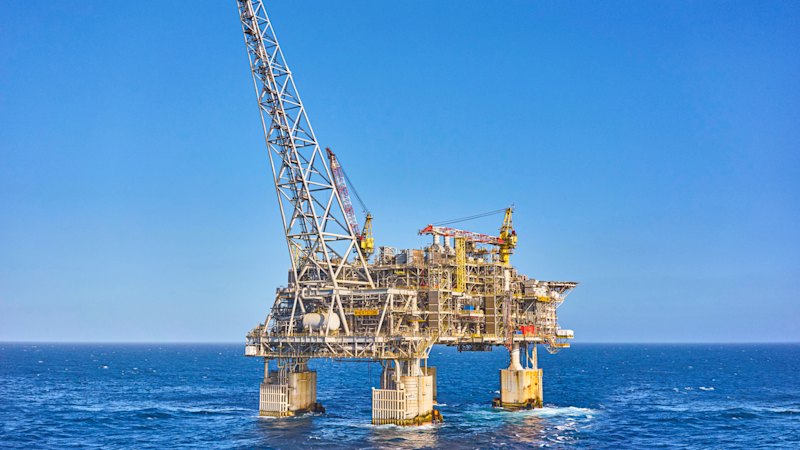
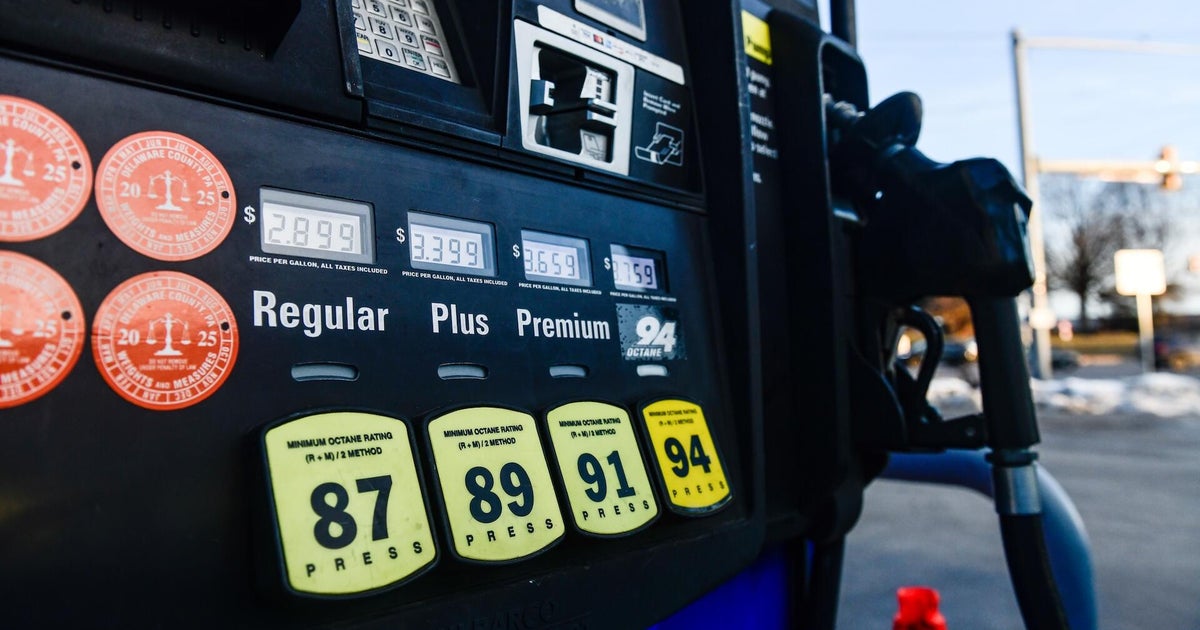
The war against Iran has led to the predictable calls for aid to the oil and gas sectors to ensure Australia has “sovereign capability” over its energy supplies.
Some have gone so far as to demand tax incentives to seek out oil and gas, as if a near-doubling in price is not enough of a price signal.
The Albanese government’s $15 billion National Reconstruction Fund shows how “sovereign capability” can now mean anything to anyone.
The fund, with a stated aim to “diversify and transform Australia’s industry and economy”, is designed to support manufacturing across seven priority areas.
They include renewable energy, defence, the resources sector, agriculture, medical science, defence and transport.
The seventh priority area is described as “enabling capabilities”. These “enabling capabilities” cover everything from “additive manufacturing” to semiconductors to AI to “space objects”.
Since November, the fund has sunk $800 million into 12 separate companies, through cash or debt instruments. That includes $50 million sunk into the firm Advanced Navigation, which has developed a specialist navigation system, and $45 million to Arnott’s to help it export Tim Tams to the world.
That’s taxpayers’ money being used to ensure our sovereign capability on everything from outer space communications to your afternoon tea pick-me-up.
And this comes to the second problem. It’s my favourite two-word term; opportunity cost.
That $45 million to sell Tim Tam slams to the world means there’s $45 million less to spend on something that might be more worthy or more important or that might do more good.
Tim Tams may make a morning tea. But, as we’ve seen in recent weeks, oil is still pivotal to the operation of the Australian economy.
That’s meant a lot of Monday morning quarterbacks bemoaning why Australia should not have closed down five oil refineries since 2010.
The first point to remember is that those closures were taken by private companies who decided it was not viable for them to keep the refineries operational.
Shell (which closed its Clyde refinery in 2013) and BP, which shuttered its Bulwer Island site in Queensland in 2015, made commercial decisions to shut up shop.
Since 2021, federal taxpayers have been on the hook to pay Viva and Ampol to keep open their refineries under a program that’s been extended to 2030. That’s taxpayers paying refiners up to $2 billion.
There’s every chance the Albanese government will, in coming weeks, offer even more money to private companies to reopen refineries as part of a new effort to protect the nation’s “oil sovereign capability”.
But taking out insurance on one sector means less to invest, and fewer people to employ, in others. We might have had a fleet of expensive refineries operational for the past decade or so, but it could well have meant less investment in other important areas that need it, from housing to AI to childcare.
We will never know.
But the more politicians sprinkle the sovereign capability icing sugar, the greater the trade-offs that have to be made. The broader the definition of what the nation needs sovereign capability over, the greater the cost.
Two- or three-word slogans may be simple – but they never tell you everything you need to know.
Shane Wright is a senior economics correspondent.
The Opinion newsletter is a weekly wrap of views that will challenge, champion and inform your own. Sign up here.