2 months ago
46
2 months ago
46
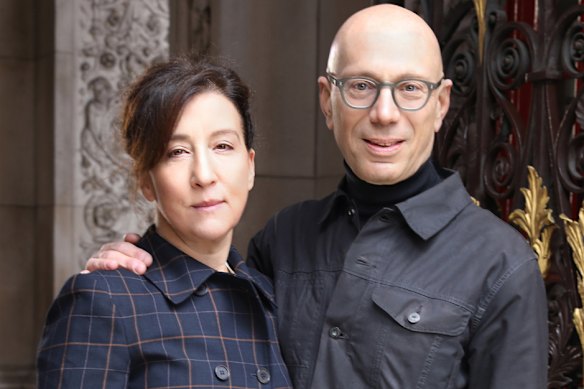
Patrick Radden Keefe has made a career out of following the money, the myths and the people caught in between, his books blending dogged investigative work with the propulsive energy of a mystery thriller. He grew up in Massachusetts, studied law and later landed at The New Yorker, where he’s since developed a reputation as a leading voice in narrative non-fiction (“the journalists’ journalist”). The 49-year-old is the author of six books, including the bestselling Rogues, Empire of Pain, and Say Nothing – the last of which became an award-winning TV series he executive-produced. He has also ventured into audio with the podcast Wind of Change, a twisty tale of Cold War intrigue. His latest book, London Falling, is out on April 14, and he will be discussing it on stage as a guest of the Sydney Writers’ Festival on May 19.
You’ve sat across from billionaires, gangsters and grieving parents. You’re very good at drawing people out. If I want to get the most honest version of you today, what would you recommend I do? Oh gosh, I feel like I only have one speed. I tend to be pretty honest. Everything with me is quite close to the surface. I’m exactly the sort of person I would want to talk to as a journalist.
When you look across your books – Empire of Pain about the Sackler dynasty; Say Nothing about the Troubles in Northern Ireland; and now London Falling, about the story behind a mysterious death – it seems you are drawn to people who are very good at shaping their own reality. Where does that fascination come from? I’m drawn to stories that have some of the qualities of fiction and, specifically, big characters who can take you through a story. I think we tend to latch on to larger-than-life characters, and I certainly do. It’s not that I have a plan or strategy but I have found, looking back on the things that interest me, it’s often people who have very forceful personalities. They’re charismatic, sometimes a little bit indifferent to the rules, and they have a tendency to reshape the world. I find those people endlessly intriguing. It’s not necessarily that I approve of them; sometimes, I think they’re terrible people – but in a way that seems worth exploring.
‘Most of the time, you don’t get the satisfying click that you get at the end of an Agatha Christie mystery.’
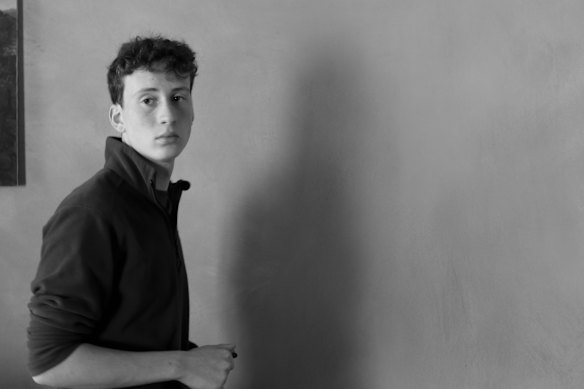
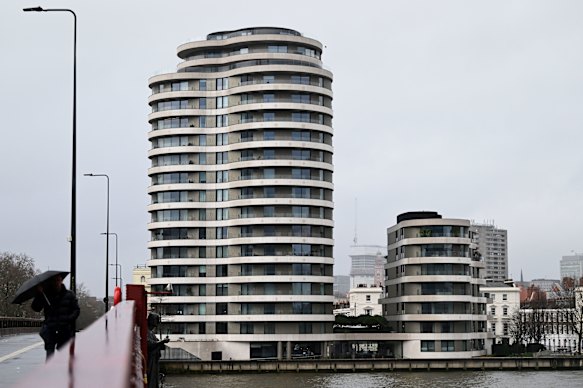
Patrick Radden KeefeWhich brings us to your latest book, London Falling. When did this story come to your attention? In the summer of 2023, I was living in London because we were producing a TV series called Say Nothing, based on my [2018] book. I was on set one day chatting to a guy who was a guest of the director, and he figured out that I was a magazine journalist. And he said: “I might have an interesting story for you.” He told me he had these close friends who had a son named Zac, who died in 2019 when he was 19 in mysterious circumstances. He went off the balcony of a luxury building overlooking the Thames and died in the Thames River. After he died, his parents made this terrible discovery that he had a secret life they hadn’t known about. He had been moving around London with an alter ego, pretending he was the son of a Russian oligarch. He’d gotten mixed up with some bad people and then died in this very mysterious way, and they’d never been able to figure out what had happened. We just talked for a couple of minutes about this and I knew in that moment, “If the family is on board and they want to tell me their story, this is what I’ll spend the next year doing.”
Who was Zac Brettler? Zac Brettler grew up in a family where he had a mother and a father, Rachelle and Matthew, and an older brother, Joe. They were upper middle-class and lived in a nice neighbourhood, Maida Vale, in West London. He went to an expensive private school. To one way of looking at things, he was a kid with all the advantages. Zac was born in the year 2000, and the course of his life coincided with this period of time during which London was really changing very dramatically.
There was a huge amount of foreign money that was coming into the city, a lot of it on the part of Russian oligarchs, or oligarchs from the former Soviet Union. These billionaires came, in part, because the welcome mat was laid down for them by British authorities. You had the presence of this mega wealth in London and London was reinvented as a destination for money and people who had it. Zac went to this fancy private school, and he was surrounded by the children of oligarchs. And so even though he was quite well-off, he began to feel as though he was quite poor. And he would say to his parents, “We should buy a nicer house, we should buy a better car.” And he slowly became more and more fascinated by these oligarch kids, and then eventually, unbeknownst to his parents, he decided that he would become one of them.
Where did the police investigation end up? When I say the words Scotland Yard, you still think it’s quite good branding, right? Your first impulse is to think of it as a world-class police department. And I think one of the things that I had to learn, and the family had to learn, is that that’s a bit out of date. In fact, there are some real let-downs. And in this case, the Brettlers were assured by the police that no stone would be left unturned. And then they just didn’t do much. The reality is that if a kid goes off a balcony into the river, your first instinct is to think that this kid committed suicide, and the Brettlers strenuously did not believe that is what happened. I’m kind of an independent outsider – I spent a couple of years looking into this – and I don’t think he committed suicide, either. But if you’re the police and what lies behind door number two feels a bit exotic, if it feels like you might be pulling on strange foreign interests and there’s a level of intrigue that might be tough for a resource-strapped police department to take on, then there’s a strong tendency to say, “We’ll never know, but it looks like suicide to me”, and that’s pretty much what the police did.
How do you know if you want to write a book about a story? I’ve been writing for The New Yorker for 20 years now. What I love about my job is that I parachute into a story I don’t know anything about. I spend six or eight or 10 months really trying to understand it as best I can and talking to as many people as I can. I figure out what the story is, and then I write my version of it, and then I walk away, and I’m done. And I like that. There have been exactly four occasions when I’ve finished one of these quite long pieces for The New Yorker and felt as though I’d really just scratched the surface, as though there was more there. And each of those times I’ve written a book, and this is the fourth one.
What was it about the case of Zac Brettler? It started to feel to me as though you could tell a story that was doing a number of things at once. It was, on the one hand, a mystery story; a thriller in the sense that this boy dies under really questionable circumstances, and it’s not clear what happened. His parents are hoping to figure it out. Initially, they trust the police, and they think the police will get to the bottom of it but the police don’t, and so the parents become detectives themselves and get to the bottom of what happened to their son. But on a deeper level, it felt as though there was a story that you could tell about London and how it had changed in recent decades.
You do reach a conclusion in your book about what you think happened that night. Did you hesitate before committing it to the page? I’ve been in this situation in the past. My book Say Nothing is about a murder in 1972 and at the end, I think I figured out who the murderer was. I gave a lot of thought to whether or not I should name that person, and I ultimately decided, I am 100 per cent certain, I’m going to name this person. Those are fraught decisions. There are legal considerations, and there are ethical considerations. The way I write is that I’m presenting it all to you, not as if I’m God telling you exactly what happened. I’m Patrick, I’m this person who’s really wrestled with this and here’s my best guess of what happened. The tricky thing with [Zac’s] story is there’s a bunch of little micro-mysteries within that that I didn’t solve, and I’m OK with that. In some ways, I feel as though that’s the way life is. Most of the time, you don’t get the satisfying click that you get at the end of an Agatha Christie mystery. You don’t get Sherlock Holmes explaining every last detail.
You’re the father of two teenage sons. Did writing this book make you think about how well you really know them? It did, yes. I have two boys with a similar age gap [about two years] to Joe and Zac Brettler. Adolescence has always been a difficult thing for the people going through it and their families. I think it’s particularly difficult now. The advent of smartphones and social media has changed the texture of human existence and the way in which we perceive the world. I’m hardly alone in worrying about that with my own kids and what it means for them to grow up in a world that’s so mediated by screens, and a world in which every kind of impulse that you might have in a moment is registered by an algorithm that then tries to pull you further along that path, whatever that path might be. There was no way for me to write the book and not think about my own experience.
You often interrogate big institutions – pharmaceutical empires, paramilitary groups, now London’s Metropolitan Police. Is your working mantra to distrust everything – and should we all be like that? There’s an old joke I always think about. Some grizzled city desk editor at a newspaper is giving advice to a young cub reporter. And what the city desk editor says is, “You know, if your mum tells you that she loves you, check it out.” My own mother is a retired professor of philosophy, and one of the more sceptical people I’ve ever met. She takes nothing for granted. And I think if you’re a reporter, it’s good to be that way. You don’t want to be credulous. I think fixed ideas are generally not a great thing.
Now you’ve got such a significant reputation, does that change how sources interact with you? It’s only an issue when it’s an issue, and a lot of the time it’s not. Literary fame as a construct is sort of a slightly funny idea, right? Because we live in a universe in which most people don’t read The New Yorker, much less books. I’m working on a big story for The New Yorker right now, and very few of the people who I’m approaching know who I am or know my work. Sometimes I will encounter somebody who knows my work, and most of the time that’s helpful. I think my work is pretty rigorous, and I’m pretty careful, and if you actually engage with the work that I’ve done, you get a sense of the kind of approach that I would take. Sometimes, if they have something to hide, they don’t want to talk to me. They stay far away.
Do you ever have any fears for your personal safety? On the one hand, I don’t think what I do is all that risky. I look at war reporters who really put themselves in harm’s way in a way that I don’t. I don’t want to make my life sound too melodramatic or courageous. At the same time, of course, I have to be careful, because I’m dealing sometimes with people who have the capacity for violence and a history of violence. I think that the important thing is that I am always very transparent and straightforward. I set ground rules in advance. I behave honourably. I do my work honourably. I’m not cavalier about these things. I’m pretty careful, but I sleep pretty well at night.
How do you reckon with the fact that, once a book is out, these real people become characters in the culture? They essentially become public property. Do you think about the consequences of that shift?Gosh, it’s such a great question, and I think about this all the time. In the interest of transparency, I will often say to people that “what I am creating in a book or an article is not going to be like a photo of you. It’s going to be more like a painting”; it’s very clearly filtered through somebody else’s sensibility. And I try to prepare people for that as best I can. The version of the story is the most truthful as I see it but I also have a degree of subjectivity. In the case of the Brettlers, it’s going to be really strange. They will get on the Tube in London, and there’s a decent chance they’ll see somebody reading this book, which contains these unbelievably intimate details about their family. That’s a strange position to be in.
The way I’ve dealt with that is to try and write the story as honestly and as compassionately as I can, and also on a more personal level, to prepare them as best I can. To say, “It’s going to get weird, and you need to remember that I’m creating this literary artefact that is going to go out in the world, and people are going to read it, and they will make of it what they make of it.” I’m not overly worried about them, because I think they will deal with the strangeness that is to come with the grace that they’ve dealt with everything up to now.
Many readers might not know that you’re half-Australian. Could you tell us a bit about your connection to the country? I am indeed. I have an Australian passport. In fact, I didn’t have an American passport until I was 13. My mum is from Melbourne. She grew up in the Yarra Valley, and her father helped build the Upper Yarra dam. When I was a kid, I spent my summers in Australia – not every single summer, but close – to see all my cousins and my gran and my aunts and uncles. I still have loads of family there now, and I’m very excited to be coming back in May.
Have you ever had an Australian mystery pique your interest? I’ve been looking forever. I should say, I’m very findable on the internet. I have a website, and the website has an email address. That would make me so happy because it would let me come back for a longer period of time. There’s a way in which you relate to a place when you have family there, and you go for short visits and stay with relatives, and it’s very different to when you’re writing about a place. I would love the opportunity to come back to Australia, but I need to find the right story.
London Falling is out on April 14 via Picador.
Get the best of Good Weekend delivered to your inbox every Saturday morning. Sign up for our newsletter.