
 3 months ago
56
3 months ago
56
8 minutes ago
Emer Moreauand Michael Race,Business reporters

 Getty Images
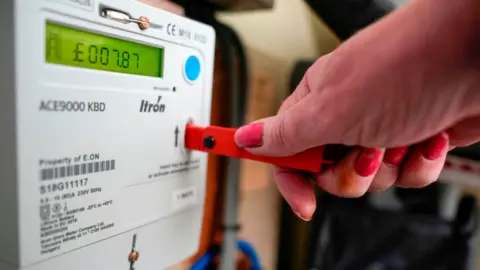
Debt agents working for British Gas broke into the homes of vulnerable customers to fit prepayment energy meters.
British Gas has agreed to pay £20m into a redress fund to settle an investigation by the regulator into the forced fitting of prepayment meters.
Three years ago it emerged that debt agents working for British Gas had broken into the homes of vulnerable customers to fit prepayment energy meters.
The regulator Ofgem said British Gas, which has apologised for the scandal, would also write off up to £70m of vulnerable customers' energy debt, some of which could be used as compensation.
Ofgem investigated and subsequently banned the practice of fitting prepayment meters without customers' permission in high-risk households.
In 2023, the Times revealed how agents working for Arvato Financial Solutions, on behalf of British Gas, had forced their way into the home of a single father of three to install a prepayment meter.
After establishing the property was unoccupied, an undercover reporter observed the agents work with a locksmith to force their way in and install a meter.
Ofgem said its investigation found that British Gas had "failed to meet the standards required" of a supplier when installing prepayment meters.
The regulator's head, Tim Jarvis, also said British Gas "fell short in its treatment of an unacceptable number of vulnerable customers who had a PPM [prepayment meter] installed without consent".
"The installation of prepayment meters under warrant should only be a last resort, with rigorous checks to ensure debt is recovered lawfully, proportionately and safely," he added.
Ofgem said that customers who are due compensation would be contacted and do not need to take any action.
The boss of British Gas owner Centrica, Chris O'Shea apologised to those customers affected, saying: "What happened should never have happened."
He added that when the problems emerged the company "stopped the activity immediately and took rapid action to improve our processes and change how we engage with customers in debt, particularly those in vulnerable situations".
"Over the last three years, we have treated this matter with the seriousness it deserves and have made changes to our practices and put safeguards in place to ensure we deliver the standards our customers have every right to expect."
Simon Francis, coordinator of the End Fuel Poverty Coalition, said the results of the Ofgem investigation were "truly shocking".
"The forthcoming Energy Independence Bill must include provisions to end the forced installation of pre-payment meters and fundamentally reform the warrant process. This scandal must never happen again."
There are three types of prepayment meters - key meters, smart card meters and smart prepayment meters. The first two work in a very similar way.
Prepayment meters require customers to pay for their energy use in advance, either through accounts or by adding credit to a card in a convenience store or Post Office.
Strict rules also apply that prevent energy suppliers moving an at-risk customer onto a prepayment meter if they are struggling to pay.
Having a prepayment meter is a more expensive method of paying than by direct debit, but is sometimes the only option for people struggling to pay and are in debt to an energy supplier.
Many rented properties also have prepayment meters.
Problems can arise when residents no longer have any credit left on the meter and have no money to top it up, leaving them unable to cook or heat their homes.
Customers who are behind on their energy bills can be moved to a more expensive prepayment meter. This can be done remotely on a smart meter, or physically after the firm has been given a warrant to do so.

















































