1 hour ago
4
1 hour ago
4
Like many other world-famous places, the Machu Picchu experience is widely documented.
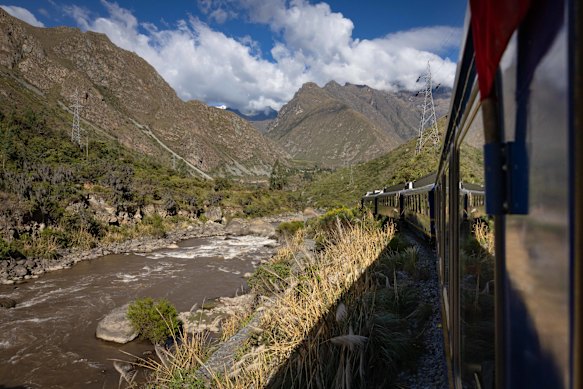
If I’d looked it up before my departure for South America, I could have seen it all – the rushing Urubamba River, the twist of the train as it follows the river through the mountains, the arrival at Aguas Calientes at the foot of the Machu and Huayna Picchu mountains, and the hair-raising journey by bus up a cliff-hanging road to reach the site.
But it still wouldn’t have prepared me for the real thing.
On this 10-day TravelMarvel Iconic Wonders of Peru tour, the most important realisation I’ve had so far is that visiting Machu Picchu can’t be done in isolation.
Apart from needing time to acclimatise to the Andes’ high altitude, the days spent in the Sacred Valley leading up to our visit are another form of preparation.
Sign up for the Traveller Deals newsletter
Get exclusive travel deals delivered straight to your inbox. Sign up now.
I don’t know it yet, but every Inca site we visit, every farm and market we pass, and every meal we eat creates a picture of life in the Inca Empire, and the cultures that preceded it, that shapes my Machu Picchu experience.
In Urubamba, we stop for lunch with Gloria Pacheco de Cuba, an 86-year-old former school teacher who welcomes travellers into her home twice a month. She feeds us huge ears of starchy white corn and a hearty quinoa and vegetable soup that could feed an army. And it probably did.
The Peruvians’ love of pork came with the Spanish; before then they were almost exclusively vegetarian. Alpacas and llamas were too valuable as a source of wool and transport to eat, and meat was only for ceremonial occasions, explains our genial Quechua guide, Boris Loayza.
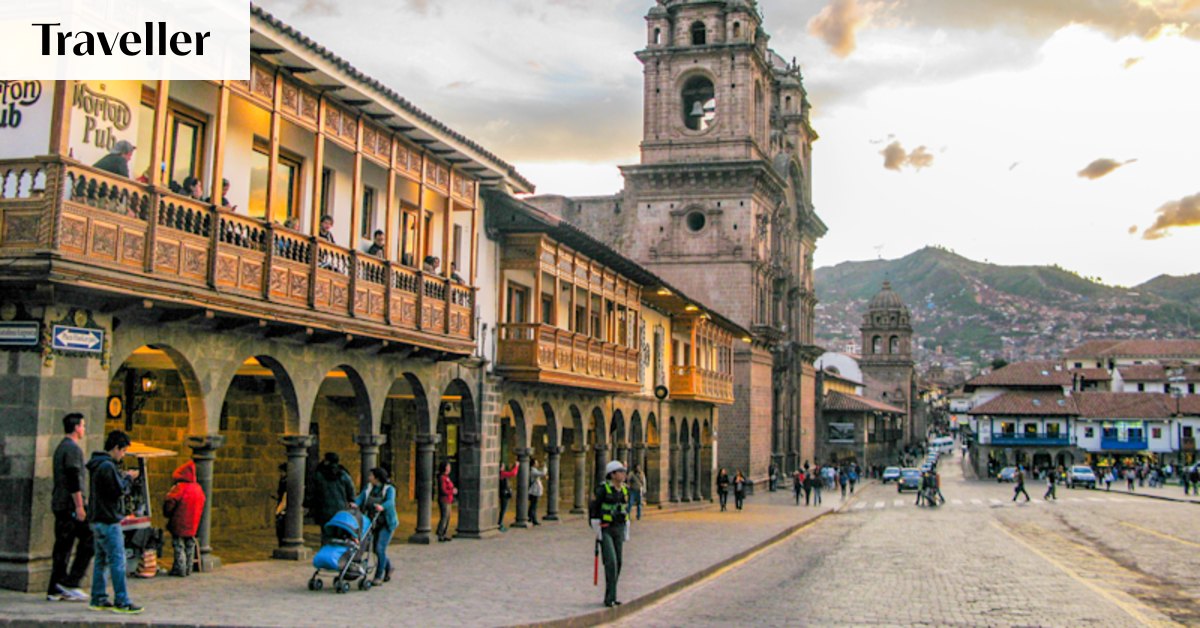
When we visit the Pisac ruins and the terraces at Moray, Loayza describes how the carefully preserved sites reveal the Incas’ architectural and agricultural brilliance, expertise in stonemasonry and collectivist approach to organising their society.
Loayza is a jewel-box of information, and by the time we reach Machu Picchu, we’re familiar with the belief systems central to pre-Inca and Inca societies. Pachamama – the “mama of the world” – is a deity that represents a life force that creates everything: the sun, moon, stars, rivers and mountains.
When Spanish colonists arrived in South America, these beliefs were adapted to Catholicism and never lost, explains Loayza. The deities are fundamental to understanding Machu Picchu and how every stone was laid to maximise exposure to the gods.
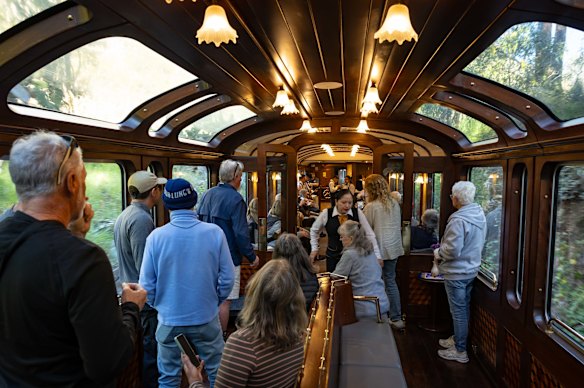
Boarding the train that takes us to Aguas Calientes at Ollantaytambo, I’m more excited than I expected to be. My expectations are high, but I wonder – will the experience live up to them?
In the past, Machu Picchu has not had great publicity. The photos of massive queues and crowds, influencers behaving badly, vandalism, local strikes, and the impact on the environment suggest that the popularity of this important cultural site has resulted in as many cons as economic pros for Peru.
The need to manage these issues has forced the government to act. It has regulated access and visitor numbers, including capping daily visitors at 5400 (including those hiking in via the Inca Trail), and introduced timed entries and limited routes. Visitors now have to choose one of three circuits on the site, or buy an individual ticket for each circuit if they want to see all three.
Other changes include strict rules banning umbrellas, hiking poles, tripods, selfie sticks, bulky cameras and large backpacks. The removal of personal rubbish is mandatory, only quiet and respectful conversation is tolerated, and walkers must stay on designated paths.
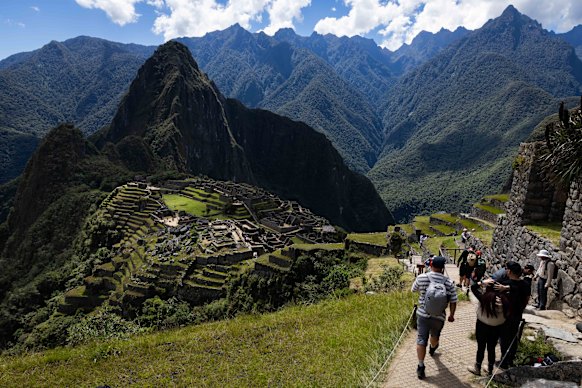
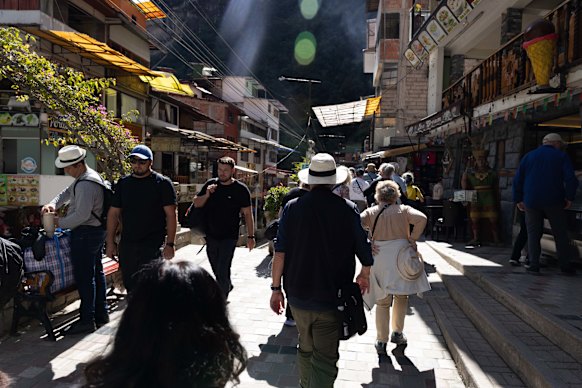
When I arrive at the start of tourist season in mid-May, the system seems to be working. While there are queues for the bus up to the site, and a queue to enter Machu Picchu, timed entries mean waits are short. Our group’s experience is seamless. Felipe Voigt, our unflappable tour director, handles our tickets and makes sure we’re in the right place at the right time.
Most of our group is tackling circuit one, a 20-minute walk up the side of the mountain that rewards hikers with panoramic views over the city, across the mountains and down into the river valley.
From here, the beautifully preserved ruins provide a visual map.
Loayza points out its temples, the houses of the elites, the artisanal workers’ quarters, and agricultural terraces, all designed to maximise exposure to the sun, the moon, and stars.
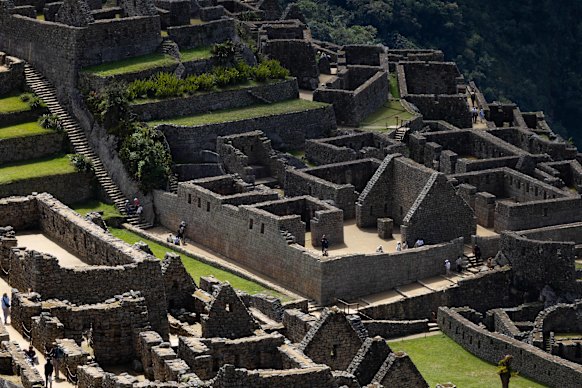
Machu Picchu offers a triple treat of natural, cultural and man-made wonders. Its location – high on a narrow ridge below a tall peak encircled by other peaks – is imposing. The city is an impossibly located citadel that makes you marvel at humanity’s capacity for creativity, and its history offers a glimpse into an ancient world built on a deep connection to the land, sky and water.
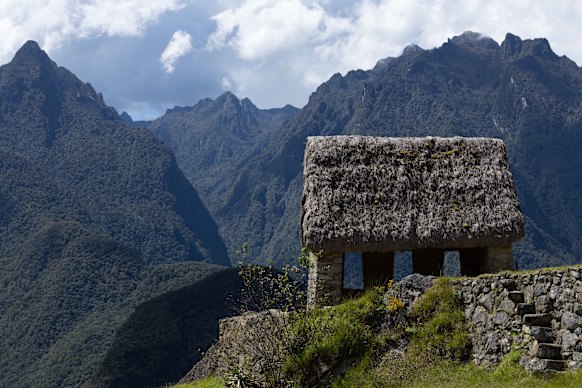
I wander ahead of my group and find a spot to sit and take in the view. We’ve been blessed with clear blue sky, the kind the Incas would have celebrated, and while there are people around, it’s not crowded. There’s no rubbish, and the trails are beautifully maintained. I eavesdrop on people nearby. The sense of awe is universal.
If there’s one downside to being on a tour, it’s that there’s no time in our schedule to come back on following days to take circuits two and three, which allow closer inspection of the site.
But with an afternoon free after the morning at Machu Picchu, Loayza recommends a visit to the Museo Manuel Chavez Ballon, a 20-minute walk along the river from Aguas Calientes.
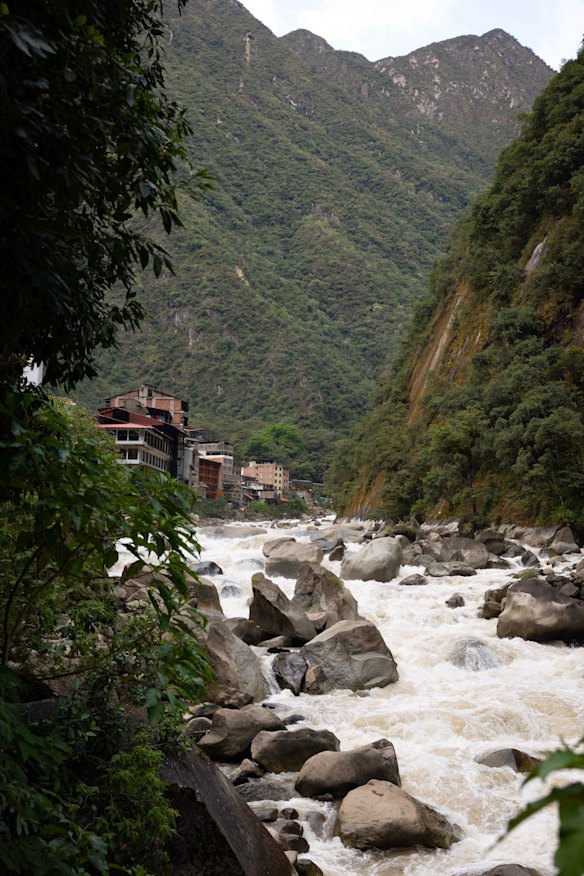
The tip is a good one. Inside, photographs taken by US explorer Hiram Bingham show the site as it looked in 1911, when locals guided him to it.
He wasn’t the first to visit Machu Picchu – Peruvian explorers reached it almost a decade earlier. But with the support of Yale University and the National Geographic Society, the rediscovery of the “lost city of the Incas” captured the world’s attention.
Bingham had the funds to pay locals to begin the painstaking process of removing hundreds of years of overgrowth. His photographs reveal what the site would one day be: a now beautifully restored UNESCO World Heritage-listed site recognised for its outstanding cultural and natural values, and a place that deserves its recognition as a wonder of the world.
THE DETAILS
VISIT
TravelMarvel’s Iconic Wonders of Peru 10-day itinerary starts and finishes in Lima and includes Chinchero, the Sacred Valley, Machu Picchu, Cusco and Lake Titicaca. The tour costs from $7195 a person (twin share) and $11,395 for singles. See travelmarvel.com
Independent travellers can book Machu Picchu tickets (from $65, four to six months in advance) from tuboleto.cultura.pe
FLY
LATAM Airlines has direct flights to Santiago in Chile from Sydney and Melbourne with onward connections to Lima and Cusco in Peru. See latamairlines.com
STAY
The four-star El MaPi by Inkaterra hotel has rooms in the heart of Aguas Calinetes from $312. See inkaterra.com
MORE
peru.travel
The writer travelled as a guest of TravelMarvel.