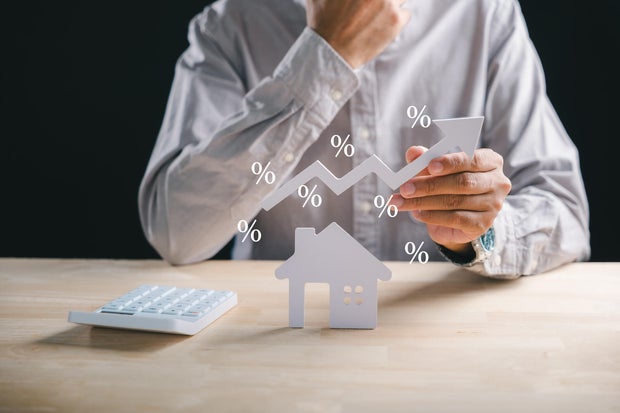
 There are multiple factors to consider when determining the direction of mortgage interest rates in 2026.
Sorapop Udomsri/Sorapop/Getty Images
There are multiple factors to consider when determining the direction of mortgage interest rates in 2026.
Sorapop Udomsri/Sorapop/Getty Images
Despite some declines at the start of 2026, mortgage rates have been on their way up in recent weeks.
In early March, the average rate on 30-year mortgages was just 5.75%, according to Zillow data. As of April 15, it had jumped to 6.12%. It might not sound like much, but when average home prices clock in at over $400,000, even a quarter of a percentage point can mean paying tens of thousands more in interest over the life of the loan.
Several factors have contributed to the recent spike in rates, including geopolitical uncertainty and its impact on gas prices and inflation expectations. How much will those factors continue to influence rates, though, and what can you expect to see if you take out a mortgage later this year? We asked some experts for their predictions on what mortgage rates could look like by the end of 2026.
Start by seeing how low your current mortgage rate options are here.
What could mortgage interest rates look like by the end of 2026?
For now, most industry experts think rates will end 2026 near their current, low 6% range, says Bill Dawley, senior vice president of residential lending at Amegy Bank. The Mortgage Bankers Association's recent forecast backs that up, calling for an average 6.2% rate on 30-year loans by year's end. But "predictions are hard, given today's conditions," Dawley says.
One thing that is certain, says Kevin Leibowitz, mortgage broker at Grayton Mortgage, is that volatility is keeping mortgage lenders cautious. "The mortgage trading desks hate not knowing which direction the wind is blowing," Leibowitz says. "And when interest rates bounce around, the mortgage trading desks don't get aggressive in setting rates."
Current forecasts might show a 6%-ish rate by year's end, but lots of factors could throw a kink in that, experts say — namely, ongoing geopolitical conflicts and their economic impact. Since those are difficult to predict accurately, mortgage rate predictions are challenging, too.
"The range of outcomes is genuinely wide," says Nicole Rueth, senior vice president at The Rueth Team of Cross Country Mortgage. "Geopolitics is driving everything right now in a way we haven't seen in a while. Oil prices feed into inflation expectations, inflation expectations feed into the 10-year Treasury yield, and the 10-year drives mortgage rates. If oil stabilizes and inflation cools, there's a path back toward the low-to-mid 6% range by year-end."
If geopolitical conflicts escalate and oil prices keep climbing, though, it could be a different story.
'What we've seen this year is a push-pull between fear and hope," Rueth says. "Rising oil prices and inflation concerns push rates up. Then there's a headline about ceasefire talks or de-escalation in the Middle East and investors rally, yields drop, and rates pull back. We've had multiple swings in a matter of days. Borrowers who are quoted a rate on Monday get a different number by Thursday."
Learn more about your current mortgage rate options now.
How a mortgage interest rate fall or rise could happen
Essentially, pros say there's a case for both higher and lower rates by the end of the year, and it all hinges on how geopolitics play out as 2026 goes on. "Right now, the market is trading on headlines more than data," Rueth says. "That kind of volatility tends to resolve in one direction eventually. We just don't know which one yet."
For rates to fall, conflicts would need to de-escalate and oil prices would need to stabilize. Inflation would also need to remain under control. If the opposite happens, mortgage rates could rise.
"Rates could continue to move higher if energy prices remain elevated, inflation consistently comes in above expectation, and the Federal Reserve responds to stronger-than-expected economic data with a more hawkish stance," Dawley says.
The bottom line
If you're worried about rates potentially rising before you can buy a home, consider getting prequalified and locking your rate now. Lenders often offer complimentary rate locks between 30 and 90 days that can protect you from rate hikes while you shop for a house. You can also work on improving your credit or saving up for a larger down payment. Both of these can qualify you for a lower interest rate on your mortgage. And be sure to shop around diligently for rates and lenders, which has also been shown to result in a below-average mortgage rate for borrowers.
Edited by Matt Richardson