 3 months ago
44
3 months ago
44
A jungle in South Africa is the last place George Calombaris could have imagined to put forward his side of the underpayments scandal that has dogged him since 2017. But there he is on reality show I’m A Celebrity ... Get Me Out Of Here!, talking about the elephant in the room in a setting where an elephant actually could walk by.
“We did a full audit of the business and we found that out of our 550 team members, we underpaid 49 per cent of them and we overpaid 51 per cent of them,” he says in footage aired this January, sitting on a stretcher bed, boots scuffing bare dirt under looming greenery, the salt-and-pepper stubble on his face longer than the shadowy regrowth on his largely bald pate. (By the way, there was no salt or pepper in the jungle, but Calombaris, ever the chef, snuck in contraband seasonings.)
“We’re sitting around a boardroom table, and they say we should go to Fair Work and tell them, be upfront and honest,” Calombaris continues. “We’ve found the problem, we’re going to rectify it and pay everyone back.”
They did: it’s all documented in a Fair Work enforceable undertaking, which noted the company self-reported and back paid workers more than $7.8 million in wages. The blame and hate surged.
“It was carnage. It was the worst time of my life. Within a day, 30 per cent of my revenue dropped.” Among the celebs listening to the unburdening is Dyson Heppell, the ex-AFL player who was subject to his own reckoning when he was caught up in the Essendon drugs debacle in the early 2010s. The empathy is palpable.
Less than three years after the scandal, in February 2020, Calombaris’ restaurant empire, Made Establishment, went into administration with a reported $389 in the bank: 12 venues closed and 350 staff started looking for other jobs on the eve of the pandemic.
The chef was pulled into a dark spiral: he moved his young family from Toorak in Melbourne to Arthurs Seat on the Mornington Peninsula, drank a lot, and retreated.
He didn’t quite disappear. Lots of people made weird cooking videos during lockdown, but the comedown seemed particularly stark for Calombaris. On Instagram, wearing trackies, he roasted sweet potato and browned mince.
In one post, he congratulated the new judges on MasterChef, the show that turned him from a local talent into a household name, as season 16 started screening. Later, there was a gig at Hotel Sorrento. He opened a neighbourhood Greek joint in Highett, which he recently sold. Last year, his casual Greek brand Gazi had a successful Sydney pop-up. But he seemed tentative, was endlessly contrite, and always copped “wage thief” barbs.
Why would Calombaris, 47, try to rebuild his reputation on a reality show? “I felt it was time for me to be in a situation where I can show who George really is,” he tells me when we sit down for an interview a couple of days after that episode of Celebrity aired.
“I had an opportunity to talk openly and freely. It was cathartic and refreshing because I’m sitting there with other like-minded human beings, talking with no script, no PR company making sure you’re saying the right things, no crisis management, none of that shit. Raw George.”
Today, there is a PR person sitting next to me, tapping away on her laptop with half an ear on our conversation. We’re in Sydney at the Kurrajong Hotel, a refurbished pub in trendy Erskineville that is part of Harbour Hospitality & Lifestyle, a new restaurant and hotel group.
Calombaris moved to Sydney 12 months ago with his wife, Natalie Tricarico, and their two teenage children, with a promise not to uproot them again until school is done. His new associates (Singaporean real estate people, “blokes who don’t want their names in it,” Calombaris says) seem to be picking over the scattered bones of Public Hospitality Group, the conglomerate owned by Jon Adgemis, which collapsed in a $500 million debt heap in 2025.
Calombaris came to Sydney to work with Public as culinary consultant in early 2024, but the association quickly came undone and he jumped to another outfit, Linchpin, which started running some Public venues as the empire crumbled. While Calombaris was Linchpin’s culinary adviser, the group opened Double Happy, a Chinese restaurant at an Adgemis-owned pub.
If that all sounds messy, it is, but things didn’t improve when Good Food reviewer Callan Boys scored the restaurant 11.5 out of 20 in April 2025, in a review that noted dead flies in the bottle of soy sauce on his table.
“Old George would have been really upset,” says Calombaris. “I would have rung him up and abused him.” New George laughed and shared an AI picture of himself as a fly holding a can of Mortein.
“Would anyone have reviewed it if I wasn’t involved?” he wonders. “I can’t stop a fruit fly going into soy sauce, I wasn’t in there with a wok. And Double Happy is going strong. I still go there and eat lemon chicken and Mongolian beef and prawn crackers out of a bag.”
Old George. New George. Real George. Raw George. Who is George Calombaris?
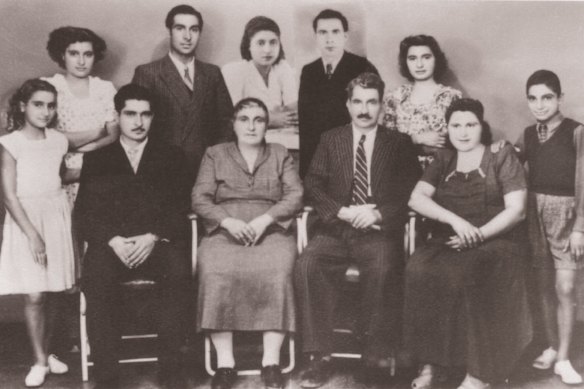
The youngest of three, he grew up in Mulgrave, in Melbourne’s suburban south-east, where his parents ran a supermarket. His father Jim, born in Egypt of Greek and Sicilian origins, immigrated in 1956; mother Mary came from Cyprus in 1972. By the age of eight, George was sweeping the shop’s aisles.
“My dad instilled in me that you’ve got to work hard,” Calombaris told me the first time I interviewed him in 2006. “It doesn’t matter if you become an astronaut or plumber or sweep the street, you do it to the best of your ability. He pushed us to work and to understand the values of that.”
Family life was bustling, with aunts and uncles living nearby and a family beach house at Coronet Bay, on the way to Phillip Island. An early food memory was of Greek salad (they called it “salad”).
“My dad would never eat the salad until everyone had finished it,” Calombaris recalled. “Then he’d say, ‘give me the bowl’, and he’d use a big crusty bit of bread and mop up the juices.”
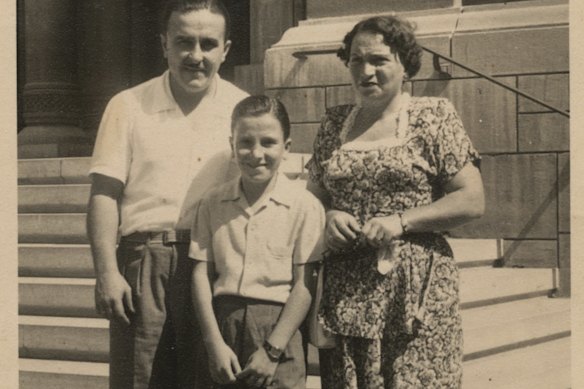
In 2009, I spoke to his mother, Mary. “George always loved food,” she told me. Home from school before his parents arrived, he’d roll pasta and fry potatoes. By 15, when he was struggling to focus at academic Mazenod College, he thought he’d be a chef. “I’d gaze out the window and dream,” he said.
But his parents didn’t want him to work in kitchens. “Go in an office, get a tie and a suit,” Mary said. They invited a restaurant-owning friend over to share
discouraging stories of late nights and awful conditions. Far from dissuaded, Calombaris asked the man for a job in his Burwood pasta joint. “All I did was wash pots and pans and watch these chefs cook. They were terrible chefs – I can see that now – but back then, I was aspiring to get onto the stoves with them. It gave me the taste and the hunger.”
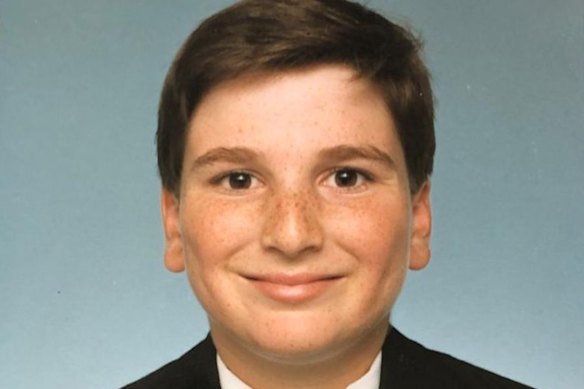
Calombaris did his chef’s apprenticeship at the Sofitel (“four years of solid graft”), competing in cooking competitions in his holidays. After qualifying in 1999, he became head chef of hatted Fenix restaurant within a year, then was named Young Chef of the Year in the 2004 Good Food Guide while cooking at the avant-garde Reserve at Federation Square. Calombaris was fresh
off an encounter with Spanish originator Ferran Adrià and was inspired by the molecular gastronomy trends of the era.
The two-hat review in the Guide refers to “foams, savoury ice creams and frozen oils”. Venison carpaccio came with raspberry ice cream. Bone marrow croquette was dressed with passionfruit syrup. A year later, the restaurant fell in a financial heap (Calombaris was an employee and remembers buying produce from Coles when suppliers put the brakes on.)
His first venture as co-owner was at Press Club across the road, in partnership with his then-wife Anita’s employers, who ran a steel company, and experienced restaurateur George Sykiotis. For the first time, Calombaris applied his classical culinary training to the Greek food he’d grown up with. The Press Club was named Best New Restaurant in the 2008 Good Food Guide and scored two hats. Greek food was nothing new in Melbourne, but as the Guide said: “Press Club undoubtedly takes Greek food into Melbourne’s major league.”
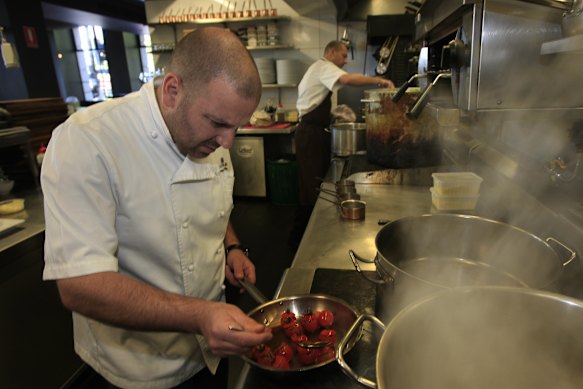
The quartet expanded rapidly with restaurants all over town, rebranding along the way as Made Establishment. Hellenic Republic, a more casual Greek offering, launched in Brunswick East in 2008. PM24 opened in the city in 2010, a showcase for French chef Philippe Mouchel. Saint Katherine’s opened in Kew in 2011 in partnership with Shane Delia, then relaunched as another Hellenic Republic two years later. South Yarra’s Mamma Baba flew in 2012 and flickered out in 2014. Numerous Jimmy Grants souvlaki joints opened in Melbourne, and later Sydney.
At the same time as they were opening, flipping and closing restaurants, Calombaris became a proper celebrity, as one of three judges on MasterChef Australia, alongside food writer Matt Preston and former Sofitel and Fenix boss, chef Gary Mehigan. The reality cooking show launched in 2009; its first four seasons not only smashed ratings records but also changed the way Australians cooked. Ingredients used in the show’s cooking challenges routinely sold out in supermarkets. Kids around the country started “plating up” everything from porridge to Sunday roast.
For Calombaris, there were endorsements, red-carpet trips overseas, and the commitment of filming up to 86 episodes a season. If there’s one thing he definitely wasn’t doing, it was payroll for Made Establishment. Swisse executive Radek Sali became a majority shareholder in Made in 2017, after cashing in on his successful vitamins business.
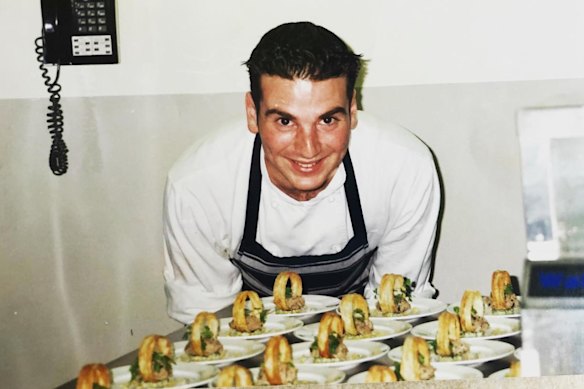
He uncovered a big mess. “You’re reviewing systems and processes, and you find out they’re not as robust as they should be,” he told me in 2017. “You’ve got an organisation that didn’t have a back end until we bought into the business.” After uncovering the underpayments, he pumped millions into the restaurants; The Age reported he was owed $13.74 million when Made collapsed in 2020, shuttering 12 venues, and reportedly owing about $1 million in staff entitlements.
Calombaris made another public mea culpa. There’s a feeling among some members of the Greek community that the vigour with which this particular tall poppy was torn down was at least partly due to his ethnicity.
“The backlash played into those old stigmas of the dirty, greasy wog.”
Christo Christiphidis“The backlash played into those old stigmas of the dirty, greasy wog,” says Christo Christiphidis, owner of Ripponlea Food and Wine. Even today, you don’t have to look hard to find social media comments about dodgy, crooked Greeks.
“There was no understanding of what George is all about and his position in the company. George shouldn’t have been the face of it: there were other directors. Awards and payments are a complicated part of any hospo business: it’s not an excuse, and George never excused it, but it was over-dramatised.”
Valeria Ubaldi was employed by Made Establishment between 2012 and 2017 and is one of at least six staff who have moved from Melbourne to Sydney to work with Calombaris. She’s now the operations manager of Kurrajong Hotel. Ubaldi was one of those underpaid.
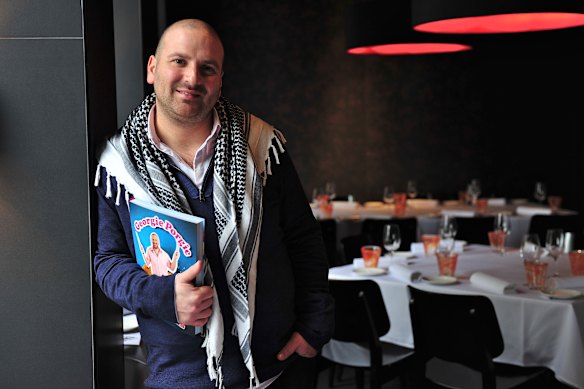
“I understand a lot of staff felt robbed, but I never felt like that,” she says. “I never felt abused or used. I was given sponsorship, rewards, promotions.”
She knew she was on the job for more hours than she was paid for, but that was normal in the industry. “We worked hard, but there were benefits and opportunities,” she says. “And George was never the person doing the payroll. It was never about not paying staff and having more money in his own pocket. I don’t know how that got into the narrative. Sometimes good stories don’t sell as well as ugly ones.”
Not everyone was as forgiving. When the repayment timeline was delayed for some months in 2017, one employee spoke to The Age anonymously. “These guys are millionaires,” the person said. “It was their fault, they admitted to it, and now they want us to wait. This may not be a lot of money to them, but it’s a fortune for me.”
Ubaldi believes the Made debacle changed the industry. “It’s brought the issue up front and made conditions better,” she says. “The culture of having to work extra to make your career has gone out the window. Staff aren’t scared to ask for overtime now.” Indeed, since 2021, wage theft has been made a crime in Victoria, punishable by hefty fines or up to 10 years’ jail for individuals. Ubaldi believes Calombaris has paid his dues, which included a $200,000 contrition payment levied by Fair Work. “He never shied away from it,” she says. “Don’t we want to live in a society that promotes owning up, fixing a mistake, and recovery or do we want to put one person on a crucifix? Isn’t it better to get back on the horse and do what you love?”
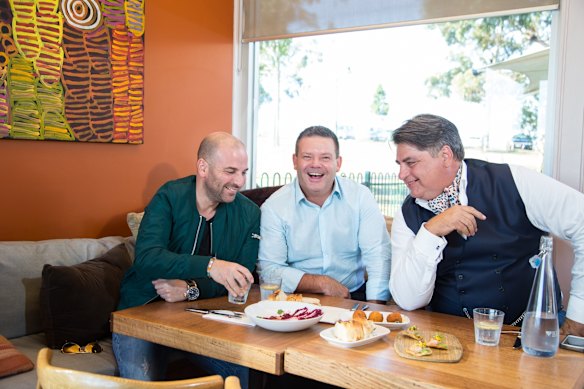
Calombaris reckons he’s wiser. “New George has very clear fundamentals and non-negotiables,” he tells me in the corner table at Kurrajong. One is WageSafe, a plug-in compliance technology. “I love chaos, I’m a thrill seeker but now I’m doing everything with good guard rails. Hopefully all of us are better versions of ourselves than we were 20 years ago. Every day I ask, what is the one thing I can do to be better towards someone, something, myself?”
Hospitality’s huge reckoning hasn’t only been about payments. It’s also been about workplace culture. Currently, the industry is closely watching a takedown of Noma as the Copenhagen restaurant begins a Los Angeles residency. Named Best Restaurant in the World five times between 2010 and 2021, Noma now seems set to be known as much for the abusive behaviour of its founder and chef Rene Redzepi, which allegedly includes shouting, shaming and assault.
There’s no suggestion Calombaris engaged in abusive behaviour, but he was brought up in an industry where sharp tones were as normal as sharp knives. “What I experienced was yelling, screaming and chefs having to work 80 hour weeks,” he says. “There were behaviours that were common in kitchens and front of house that weren’t acceptable. There’s a lot of conversation at the moment about the industry, which is great, I’m all for it. It’s better than it used to be, a million times better, but we should be looking at ourselves, checking ourselves, every single time we step into a kitchen.”
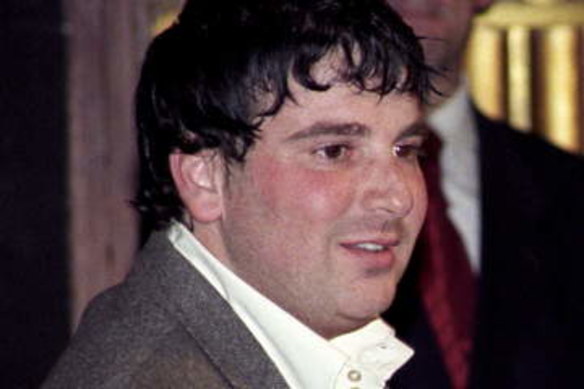
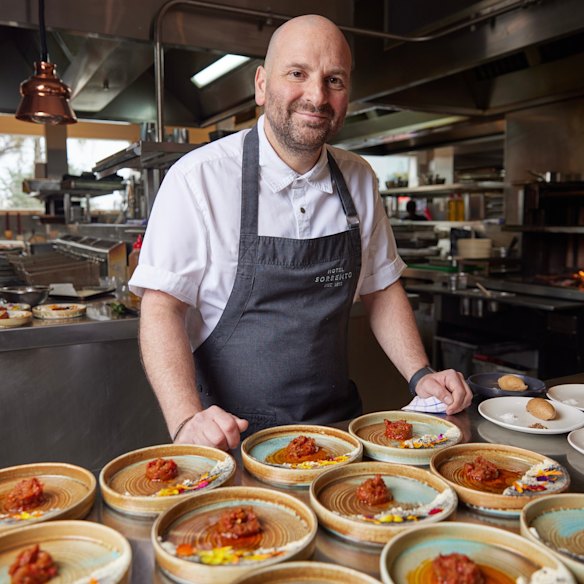
On a steamy afternoon in late February, Calombaris is back in Melbourne, in the kitchen at Auto Greek, a month-long pop-up restaurant he’s running at the Ovolo hotel in South Yarra. The man has opened a few restaurants in his time but this one is different, a tentative overture to the city that both feted him and hung him out to dry. “I’m nervous,” he says, watching a blender spin cod roe and soaked bread to make a white taramasalata.
He instructs a young chef who’s watching the mixture come together. “You want it silky smooth, nice white and bright, not too thick … taste that now.”
They dip in their spoons. “It might need a bit more lemon but it’s
good,” he says. “Nicely done.”
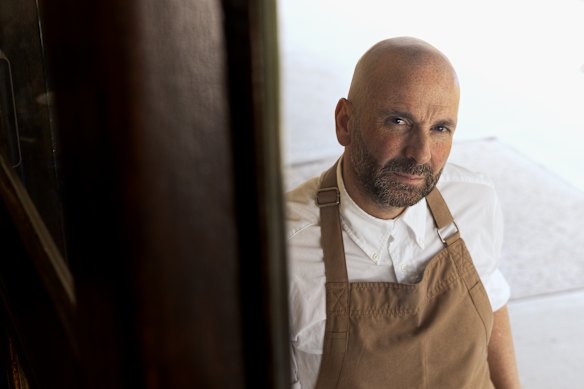
The hotel’s photographer is in the kitchen too, and I get out of the way while he shoots Calombaris stirring a seafood butter, then rifling through a box of vegetables from a local Greek grower. “This way, George,” calls the photographer. Calombaris picks up a shiny white eggplant and mugs for the camera: he’s done this once or twice before, though his passion for produce is real. He puts his face into bunches of herbs. “Smell this basil,” he says, holding it towards me.
“It’s better than the Italian stuff. And this lemon verbena!” There’s the food, the menu, the kangaroo pasticcio he reckons will cause uproar among Greek diners, and the vegetables boiled in onion juice, a trick he learned from monks on Mount Athos.
“There’s a bit of PTSD,” he says. “But I’d never turn my back on Melbourne, my city. It gave me so much, but also, I gave it a lot, my heart and soul. I’m still a Victorian, and I’ll always be one. I’ve got a lot to accomplish and achieve, and a lot still to give.”
Start the day with a summary of the day’s most important and interesting stories, analysis and insights. Sign up for our Morning Edition newsletter.