 3 months ago
48
3 months ago
48
Tony Wright
March 14, 2026 — 5:30am
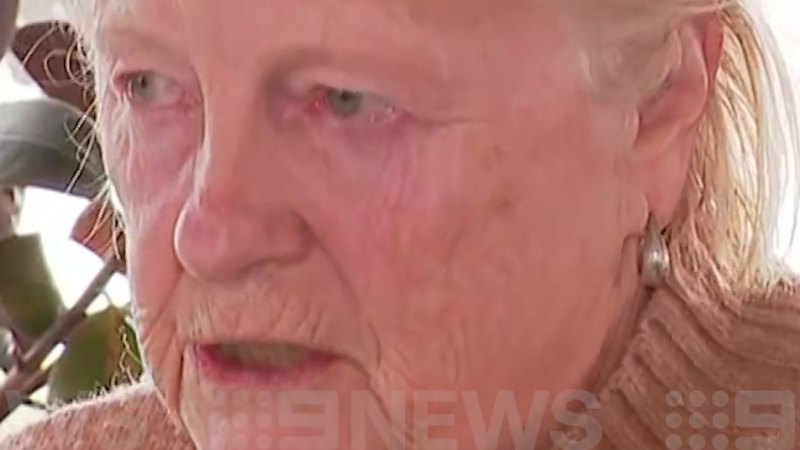
To hear Laura Bell speak of her sabbath outings as a child, her eyes closed at the pleasure of it, was to be drawn deep into a time lost.
She and her parents, her brothers and sisters and cousins and aunts and uncles piled aboard a horse-drawn cart every Sunday, swaying through the bush to a stone church at the old Lake Condah Mission in Victoria’s deep south-west, she related.
There, the voices of the congregation rose in song to heaven.
After the service, everyone travelled to a home owned by friends, away across the paddocks beyond the volcanic lava field where her people, the Gunditjmara, built an aquaculture system in antiquity.
Parents brought pots of rabbit stew and a week’s store of gossip to share. There was sweet jam on damper for the children when they had done their hours of tumbling around the garden.
“We’d all be asleep on the cart on the way home in the evening,” Laura told me.
Here then, was a rhythm that granted comfort to the Aboriginal families of far south-west Victoria who were forced otherwise to endure too much heartbreak.
And then, one Sunday in 1957, the church at the mission was gone.
It was built from bluestone blocks quarried near the mission where Laura’s ancestors were granted rough sanctuary after European settlers stole their hunting grounds, spread disease and shot and poisoned those who refused to make way for sheep and cattle.
In the 1880s, the men of the mission passed big stone blocks hand to hand and built their own fine church with a tower 23 metres high.
St Marys Church of England at Lake Condah Mission was consecrated in 1885.
In 1919, when authorities decided to close the mission and expel its residents, the church remained. The families who had nowhere else to go clung to it, living around their church in tents and the few old huts and a dormitory that hadn’t been torn down in the effort to force them away.
Laura’s parents, Frederick Amos Lovett and Mary Murray Rose, were raised there.
Frederick Lovett, like four of his brothers and a determined band of about 10 other Aboriginal men from the mission who had sailed away to fight for Australia in World War I, knew there was no future for them there.
When they came home from the war, believing they’d won some form of equality on the battlefields, they found the mission’s land broken up for soldier settlement. When they asked to be granted a plot, every one of those men and their families were refused even an acre.
Frederick’s brother Herbert loaded one of the mission’s wooden houses on to a sled, hitched up a couple of horses and hauled what would become his family’s new home more than 15 kilometres through the bush to an empty block among trees alongside the Sunday Creek at a place called Greenvale, a bit north of the town of Heywood.
Frederick brought his own family to another little house on the creek. Between them, 14 Lovett children were raised in those two houses with no electricity, taking their Sunday pilgrimages back to the mission church each week.
Laura trembled with indignation at what happened to the church.
In 1957, declaring the building was a public danger, state and church authorities brought in contractors who placed 13 charges of dynamite around the stones that had once been lugged by hand by survivors of the frontier war.
The tower came down in one mighty piece.
Laura was 20 that year.
She would set out on a life that led to feats of advocacy for her people that made her one of the most loved and respected women of Victoria.
It always seemed to me that the experiences of her youth, and that quivering indignation at the treatment of her family and her special place, impelled her to achieve more for her own family, and for the Aboriginal children and families of Victoria, than anyone had a right to imagine.
Premiers, ministers of the crown and decision makers learned they weren’t permitted to say no when Laura Bell presented her ideas for educating Indigenous children.
In time, she would be granted the right to be called Aunty Laura in the way Aboriginal elders are honoured.
She was entitled to be called Doctor Bell, too, after she was bestowed an honorary doctorate by the University of Ballarat for her work in education.
She caused Aboriginal defendants and magistrates to quail before her direct gaze in the Koori Courts she helped establish.
She came to be listed on honour rolls for her insistence that children be taught the culture and language she was denied as a child.
Deakin University named an accommodation wing after her.
In Heywood, Aunty Laura helped establish the Winda-Mara Corporation, providing multiple services for Aboriginal communities including health, land management, housing and economic development.
And as a traditional owner and elder of the Gunditjmara, she supported the native title claim that won, in 2007, the return of 140,000 hectares of Crown land and waters where once, her family was denied any land at all. The old mission is now part of the UNESCO World Heritage site known as Budj Bim.
Along the way, Laura had nine children – many distinguished in their own lives – and outlived three of them. She was married for a time to Ian Bell, a sawmill worker, and remained on amiable terms after they separated.
She was grandmother to 23 and great-grandmother to 24.
The front door and the beds in the crowded little houses she and her family occupied over the years were never closed to a stream of nephews, nieces, friends and even strangers. She felt it was her responsibility to give shelter to those who needed it. Anyway, she loved to entertain.
Last time I had the pleasure of Laura Bell’s company I found her sitting on the boundary at the Heywood footy ground. She knew how football gave Aboriginal families a form of recognition that was otherwise denied them in country districts.
Her brothers Wally and Jack and Billy played for Heywood in the 1950s and 1960s. To watch them was to witness wizardry.
Around 25 of Laura Bell’s descendants still play for various Heywood Football and Netball Club teams.
Her days at the ground are over now.
She died, aged 89, on March 2.
Her family has chosen Heywood’s community hall – the biggest gathering place in town – to bid her farewell on Monday, March 16.
Expect the crowd to spill into the street.