 3 hours ago
5
3 hours ago
5

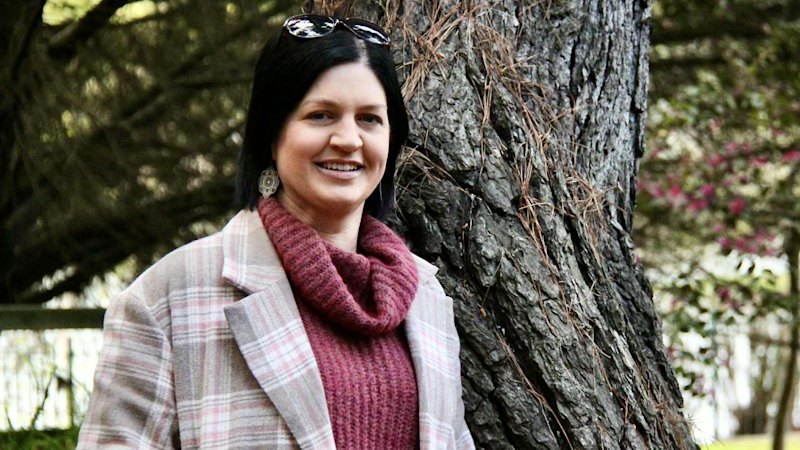
Despite their vicious nature, Taryn-Lee Perrior says bull sharks are pretty easy to manhandle.
All you have to do is pop a bit of eel on the end of drum line, wait for the animal to tire out, drag it in, grab it by the tail and flip it over. Easy-peasy.
“The shark just goes to sleep,” she said.
Perrior used this method on more than 200 sharks in four south-east Queensland rivers and in Moreton Bay, measuring the animals and taking blood from their tail before flipping them back over.
She said it takes them a few minutes to wake up, then they’re out of there.
A PhD candidate at Griffith University, Perrior is studying the toxicology of bull sharks to better understand how the species – which spend their first few years in rivers – is affected by humans.
Long obsessed with sharks, Perrior was inspired to conduct the study while living near the North Pine River in Joyner, where she often saw juvenile bull sharks.
“I’d go and use my drone there and see baby bull sharks just swimming around, and a lot of them had skin conditions,” she said.
Perrior wants to dispel the myth sharks don’t get sick, and turn the tables on how the animals are thought of.
“We always think, how are they affecting us, not how we are affecting them,” she said.
The study could also hold information for the health of the rivers and humans.
“When there is something going wrong in the environment they are affected, but we haven’t really looked at bull sharks, which is a huge gap because they are the one species that is so close to us,” Perrior said.
That includes how many toxins and heavy metals are found in the sharks, which are eaten by recreational fishers.
“Because of bioaccumulation, we might not see really high concentrations within the water, but over time, as they are eating things that toxins go into and they are eating larger things, it’s accumulating at really high concentrations,” she said.
In the Noosa, Maroochy, Brisbane and Logan rivers, where the study was conducted, the most common bi-catch was catfish.
In the bay, it was tiger sharks.
The biggest shark researchers pulled in was 4.2 metres.
Perrior said the flip-them-over method worked on tiger sharks too, and she tests them to provide to other researchers.
“People expect to pull a shark up, and it’s just going for you … but actually, they want to get away from you,” she said.
The results are expected by the end of the year.
“It’s important to create that baseline so they can be shown as bioindicators and say, ‘OK we have this baseline, now we can monitor how the environment changes over time and how that might affect them’,” Perrior said.
Start the day with a summary of the day’s most important and interesting stories, analysis and insights. Sign up for our Morning Edition newsletter.