
 1 month ago
46
1 month ago
46
It’s two decades since one of Australia’s most effective grassroots uprisings “saved” Abbotsford Convent. That insurrection, timed against the political backdrop of inner-Melbourne’s inflection from Labor to Greens, stopped the 19th-century monastery from becoming apartments.
Now, the social contract that prevented private ownership of the historic precinct appears to be fracturing. Mounting financial pressures, governance upheaval and very public scraps with those bringing life to the convent’s buildings have brought fresh scrutiny to the delivery of the promises of the early 2000s.
Last month, three of the convent’s board members resigned, including chair, and respected business figure, Gillian Franklin.
The organisation says the departures are orderly – but they come as the convent faces a financial cliff: hundreds of thousands of dollars in emergency pandemic-era state funding has ended. And earlier this year the convent failed to have renewed the $200,000-a-year funding it received in the previous four years.
Its 130 tenancies delivered rent of $2.4 million last financial year, while a car park gifted to the convent by the state in 2005 – a key element of the Bracks government’s “saving” of the precinct – turned over $1.1 million. In the face of substantial fixed costs and inflation, though, those millions don’t make ends meet. The convent foundation posted a $690,000 loss last year – its sixth consecutive year of losses, all up totalling almost $4 million. The precinct last broke even in 2019.
Richard Wynne, the former Labor MP for Richmond, steered the project through the Bracks government’s early years.
“It was a magnificent victory for the community to guarantee that this precious part of Melbourne stayed in public hands,” Wynne recalled this week. “But it was always made clear that the precinct needed to be financially self-sufficient, and for many years it was.”
Wynne’s use of the past tense is telling. In response to financial pressures, the Abbotsford Convent Foundation, which has 26 full-time staff, is trying to reposition the 6.4-hectare public site on a sweeping loop of the Yarra River as a premier commercial tourist destination.
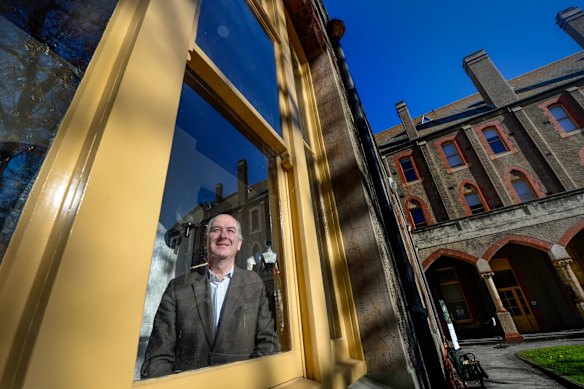
The repositioning, though, is bringing with it tensions. It has produced open warfare with anchor tenant Joe Shin, who runs the Convent Bakery and Kappaya Japanese restaurant at the heart of the precinct.
In May, a lease dispute led convent management to seize back Kappaya, changing the locks on Shin and stationing private security outside. Shin took the foundation to the Victorian Civil and Administrative Tribunal and won, with management forced to hand back the keys and the tribunal casting serious doubt on the grounds for eviction.

Following that defeat, the foundation stood down from a second tribunal hearing Shin brought over his bakery lease. The backdown has indefinitely stalled a management plan to replace the Convent Bakery with disability employment charity All Things Equal, which convent managers selected without an open tender. During the legal battle, it emerged that foundation managers had secretly escorted All Things Equal through the bakery in 2025 under the guise of a “disability access inspection” to facilitate the 2026 takeover.
“In hindsight, the foundation acknowledges that communication regarding the site visit could have been handled more transparently,” an Abbotsford Convent Foundation spokeswoman said when asked about this covert inspection.
“Unfortunately, access requests were repeatedly denied by Mr Shin. Given that he was on a month-to-month lease, we were within our rights to consider a replacement tenant.”
All Things Equal chief executive Jess Colgan posted enthusiastically on Instagram in February about opening at the convent this August. Asked about the move this week, though, she said it was “not appropriate or necessary for All Things Equal to comment on this matter”.
Franklin’s resignation as chair came at the end of May, days after the second tribunal hearing.
“In hindsight, there were a lot of things that could have been handled better,” Franklin said when contacted earlier this month and asked about issues around the Convent Bakery fight.
Asked if her departure was linked to the mounting problems at the convent, she said: “It was absolutely not because of that.”
Her exit was a long-planned succession, she said – though no successor has been named, and an acting chair is now in place.
Also leaving the board in May was Bridgid Cowling, who this week said work and family commitments meant she “had to step away sooner than I had hoped”. Director Paul Bowers also resigned in May; when asked this week about his departure, he said: “I have no involvement any more and refer any inquiry to the convent.”
In a statement, the convent acknowledged that the board – which is unpaid and entirely volunteer – was “going through a period of change” and that “the transition is being managed in an orderly way”.
The grassroots Yarra Residents Collective questions whether management “has lost its connection with the local community”.
It asks whether, for instance, board members who live interstate are appropriate to such a local institution.
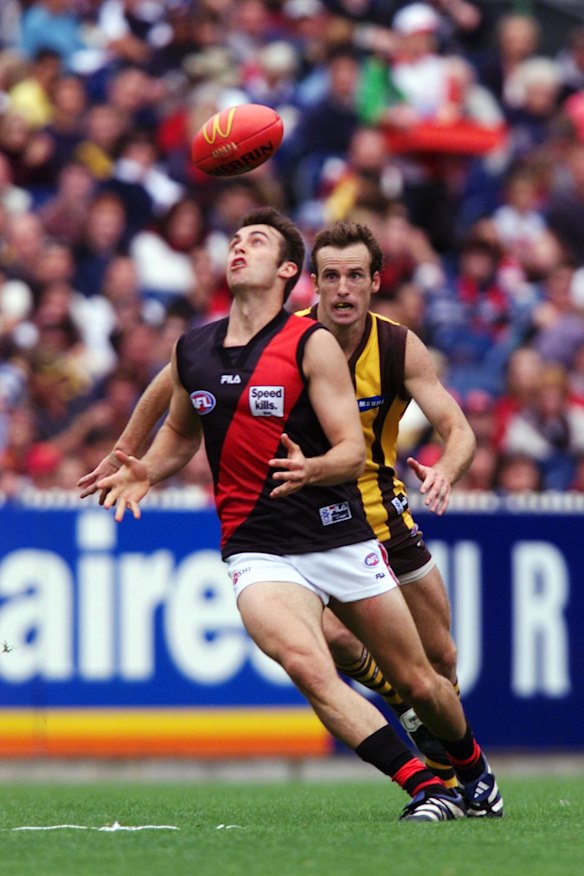
Justin Blumfield is an Essendon premiership footballer and commercial property executive who joined the board in 2020. Blumfield sold his Brighton home and moved to Queensland in 2021, and now attends meetings via Zoom. Blumfield declined to comment when contacted this week.
A spokeswoman for the foundation said Blumfield lived in Melbourne when he joined the board, and had subsequently relocated to Queensland for work.
“Justin is a valued director, bringing a wealth of experience in retail tenancy and strategic asset management,” she said.
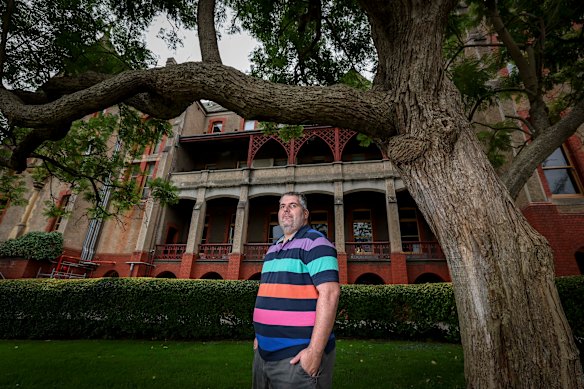
Yarra Residents Collective founder Adam Promnitz isn’t so sure. “While having interstate board members may be typical in other organisations, the convent sits in a unique space maintaining a close connection with the local community,” he said. “It raises legitimate questions whether having interstate board members is a good fit on an ongoing basis.”
To some locals, the corporate approach that seems to have been applied in recent times to the convent feels foreign to the movement that opposed the site’s residential development.
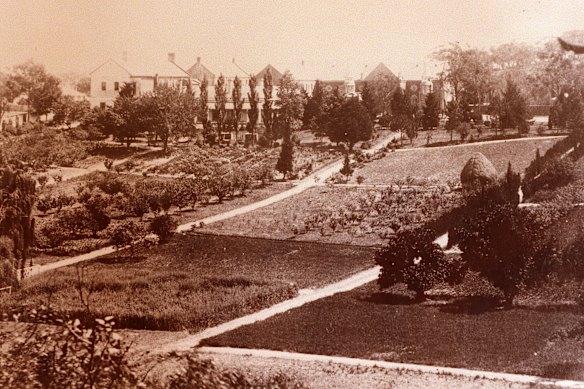
Established in 1863 by a French order of nuns, the Convent of the Good Shepherd’s mission was to shelter and “rehabilitate” vulnerable women and children.
Between 1863 and 1973, courts and parents sent more than 12,600 girls and women to the convent to be “reformed”. And for a century, the closed monastic community operated a self-contained farm and lucrative commercial laundry; at its peak, more than 1000 women and children lived behind its walls.
When the convent closed, the Whitlam government provided $5.5 million in 1975 to buy it for public education, transferring it to La Trobe University. By 1997, the university found the heritage buildings too costly to maintain and left.
The 6.7 hectares were sold for $10 million to developer Australand. The sale was conditional on the developer securing residential rezoning for 300 townhouses.
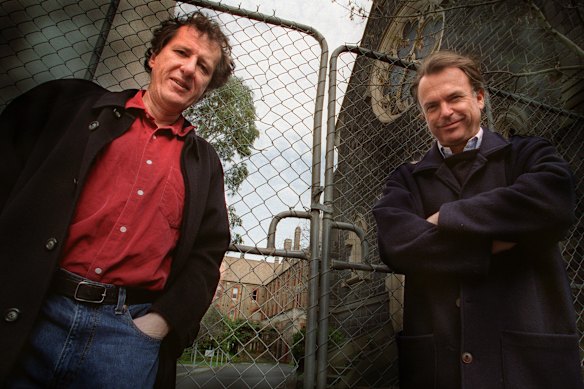
Local community members formed the formidable Abbotsford Convent Coalition, a volunteer group including town planners, lawyers, architects and accountants. The campaign flooded the state government and Yarra Council with 12,000 formal objections, packed public rallies at Collingwood Town Hall, and drew high-profile backers including Dame Elisabeth Murdoch, Geoffrey Rush and Sam Neill.
Key organiser Amanda Stone, who would later become Yarra mayor, recalls the high stakes of stopping the private sell-off.
“The state resolved the matter by eventually giving the convent to the community as ‘a gift to the people of Victoria’, but the car park was to go to the developer,” Stone said.
“We knew that if the car park was built on, the convent project was curtains – it would have meant much of the population who didn’t live locally or close to public transport could not visit. Visits to the Collingwood Children’s Farm would suffer too.
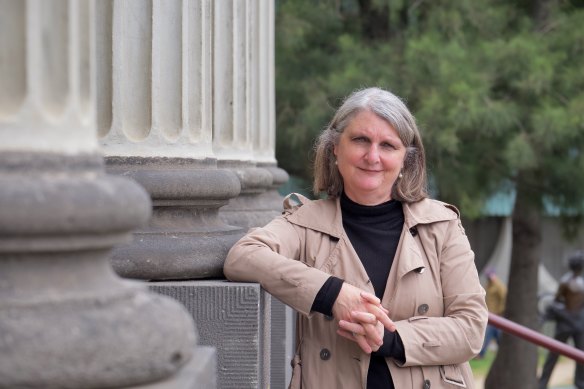
“So the fight entered a second phase of getting the car park as well. That was harder, and we had to do all sorts of things to persuade the government to do that. Steve Bracks was instrumental in that phase. Some of us even put our property, our humble houses, on the line and had a caveat put on the car park to stop the process of converting it to a private title for a developer.”
The Bracks government eventually paid Australand $1.8 million to withdraw and handed the car park to the foundation.
Rob Pradolin, Australand’s project lead at the time, voiced doubt in 2005 about the convent’s long-term viability without government funding.
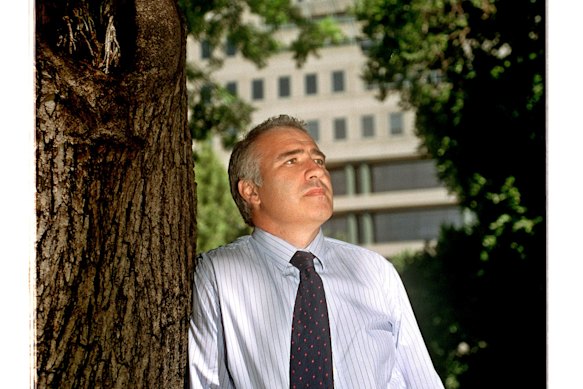
Pradolin – who is now an advocate for affordable and social housing – thinks the time has potentially come to reconsider the option of residential housing within the convent again – but done differently.
“[It’s a] very unique property in Melbourne, and it’s a missed opportunity that we weren’t able to figure out, with trust, how we might have allowed long-term sustainability with some residential uses on that site,” he said. “Maybe you keep the freehold in public hands, and those residents you get in would really help finance the rest of the convent long-term.”
A spokeswoman for Creative Industries Minister Vicki Ward said the government was “proud of our long history of support for the Abbotsford Convent”, and pointed out that a Labor government assisted in returning the precinct to community ownership in 2004.
Asked about the Abbotsford Convent Foundation’s financial situation, the spokeswoman said: “Operations and tenancy arrangements are a matter for the Abbotsford Convent board.”
Despite the recent frictions, the convent remains a sanctuary for many of its mostly creative industry tenants.
Seo Murphy owns Big Bite Studios, an art, design and ceramics studio and retail space that moved to the convent last year.
“We were in a shopfront in Northcote before, and it just didn’t do what we needed it to do,” said Murphy. “This was a bigger more affordable option, and it had the foot traffic of being at the convent. Beautiful natural lighting, we get to work in the convent next to the farm, and it allows us to do everything in one place. Also, being part of a not-for-profit rather than having a commercial lease is great. Rather than being a standalone business doing your own thing on a high street, it’s better to be part of a community.”
Melbourne author Sophie Cunningham has also maintained a workspace at the convent for a decade, and praises its unique physical geography and affordable rates.
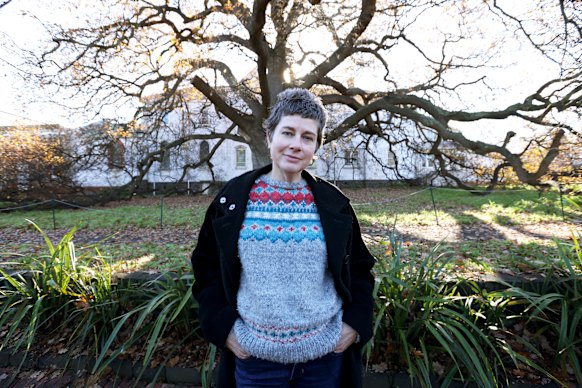
“Rents are lower here than you’d expect to pay for a space that you can have to yourself and that has such beautiful light. It’s pretty special,” said Cunningham, who is extremely attached to the grounds surrounding the convent buildings.
Among the convent’s gardens is one of the oldest oaks in Victoria, known as the separation tree, and a river red gum that is several hundred years old. Cunningham’s enjoyment of the convent isn’t limited to using it as a private space.
“I teach here on the weekends sometimes, come here socially, and shop at the farmer’s market,” she said. “The people here love it, as do the people who visit – it’s a really loved space.”
While none doubt the affection for the precinct, Yarra Council mayor Stephen Jolly says the leadership has severed the community connections that stopped residential development at the convent.
“It’s been one big PR disaster the last month or so for the convent,” Jolly said.
“Maybe it’s time to look in the mirror a little bit. You’ve got probably the most beautiful land in the entire inner city of Melbourne, and it just seems to be constantly in financial crisis.
“It’s basically a wellness centre on public land, and increasingly just one side of our community gets a look in there. Maybe it’s an opportunity to start again, to say, ‘Listen, we’ve got to rebuild our connection with the local community.’”
Stone said that to maintain its mandate, the board had to understand how important its local connection was.
“Most of the regular visitors are local. Most of the people who go to the coffee shops and keep the businesses running there are local,” Stone said.
“It needs to retain that sense of where it is and why it was established. Because of where it is, that place-based focus has to be retained. Otherwise, they do lose a kind of legitimacy.
“It’s actually a very difficult place to run. I wonder if some of the board members understood what they were getting into.”
Start the day with a summary of the day’s most important and interesting stories, analysis and insights. Sign up for our Morning Edition newsletter.

















































