 1 month ago
13
1 month ago
13
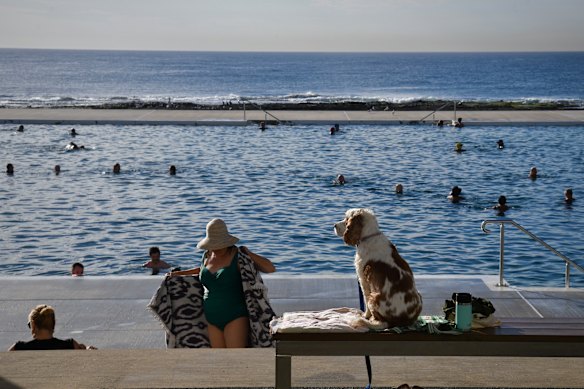
For the past 30 years, retired nurse Peter Wickham has got up before some people go to bed to drive from his home in Maitland to Newcastle Ocean Baths by 4.30am for a 1.5-kilometre swim.
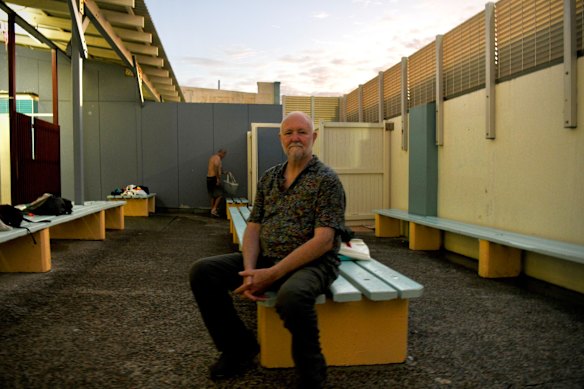
For Wickham, the president of Friends of Newcastle Ocean Baths, the community grown over post-swim chats in the open-air change rooms is as important to his wellbeing as his laps.
“It is our third place,” Wickham says. His mates include a retired scientist, a solicitor, former labourers and others who continue discussions over coffee when the nearby cafes open.
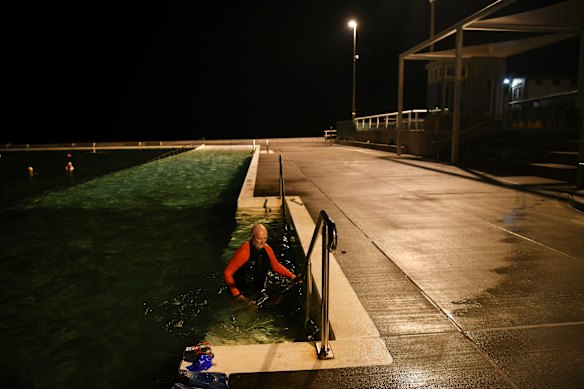
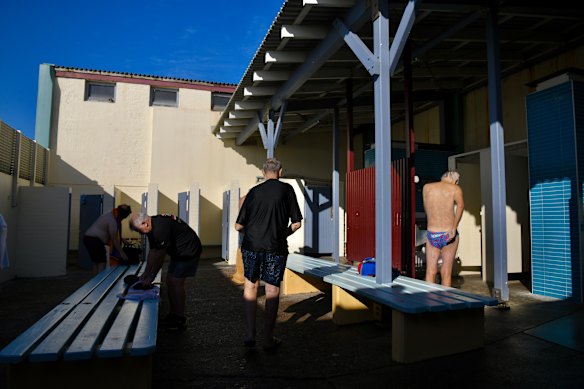
That freedom to dry off in the open has been threatened by a proposal to enclose the change rooms. It has been a major sticking point since 2014, when the revitalisation of the baths was first mooted.
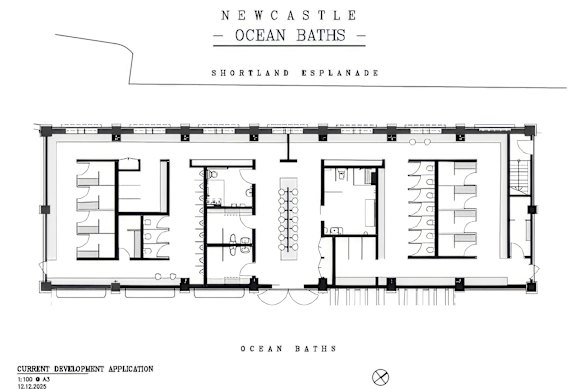
The plan for a roof is part of a $40 million development application by Newcastle City Council, being considered by the Hunter & Central Coast Regional Planning Panel, which also includes a licensed cafe. It follows upgrades completed in 2024 to the pool’s pumps, deck, floor, walls and seating.
“If the open-air change rooms are taken out, say goodbye to heritage,” said one of the thousands of submissions against the changes.
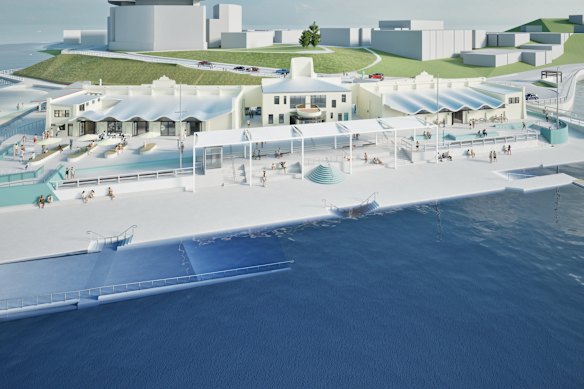

The plan includes the modernisation of the toilets and family change rooms that Newcastle City Council says would meet privacy recommendations by a NSW upper house committee into public toilets. The NSW government on Wednesday endorsed two of the 22 recommendations.
After earlier consultations, council agreed to change the layout and increase the roof height to balance the need for “natural light and the feeling of open air with privacy, security and protection for the historic facade”.
When the baths opened in 1922, they were advertised as offering “safe swimming”, “no shark scares”, “shallow water for kiddies” and the “best dressing accommodation in Australia”.
The pool complex, including art deco buildings, was state-heritage-listed last year, which means changes have to meet heritage guidelines. The listing said the baths had reflected changing attitudes towards nudity and morality, and the original funding had been contingent on providing mixed bathing at a time when men and women had to swim separately.
The open-air changing rooms were designed for sunbaking. “Public decency no longer dictated that this must occur behind closed doors.”
Architects Tonkin Zulaikha Greer said the new design tried “to reproduce the desired effects of open-air change rooms, and use a minimum of mechanical ventilation”.
A large, wave-shaped opaque roof – modern in style – with windows to the west and east will let air and light into buildings.
‘Public decency no longer dictated that this must occur behind closed doors.’
The case for the open air change rooms 100 years agoThe change rooms have been altered over the years, including the demolition of one half.
A spokesperson for the City of Newcastle Council said it acknowledged many people’s deep emotional connection to the baths and the change rooms. “That is precisely why this project has involved more than a decade of consultation and technical review, and why strong views continue to be expressed on elements of the design such as the amenities roof.”
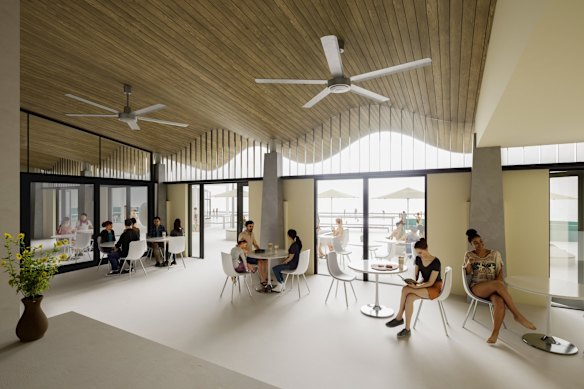
Council said the design would meet guidelines to prevent crime through environmental design, and prevent drones from taking photos of people changing or sunbaking.
This masthead was referred to a Newcastle Herald report about a man who allegedly exposed himself to young boys in the change rooms. The council said adults had been arrested for acts of indecency in open change rooms at Bar Beach and Merewether Ocean Baths in recent years. The council said vandalism and drug use were also linked to open roofs.
The new roof would “protect the much-loved facade, sheltering the structure from the harsh coastal environment”.
Wickham, though, said the new roof was driven by fear and not evidence. The Friends’ freedom of information requests had not uncovered any drone incidents.
“Speculative ‘pervert panic’ is being used to justify enclosing one of the Baths’ most cherished features. If drones and voyeurism were genuinely a problem, more than 2500 people wouldn’t have signed a petition to save the open-air change rooms at the Newcastle Ocean Baths.”
People were voting with their voices because it already felt safe, social and visible. “This roof isn’t responding to community experience, it’s overriding it,” he said.
Of the 270 submissions to the DA, 257 objected to commercialisation, including 170 who mentioned the change rooms.
Dr Catherine Bennett, an epidemiologist from Deakin University, wrote in support, too. During the pandemic, swimming had been shown to be mostly safe. But the threat of infectious diseases rose in small spaces.
Start the day with a summary of the day’s most important and interesting stories, analysis and insights. Sign up for our Morning Edition newsletter.