
 1 month ago
46
1 month ago
46
By Amantha Imber
July 1, 2026
Sometime in 2024, I started fantasising about being hospitalised. Nothing catastrophic. Just serious enough to warrant a week-long hospital stay: no responsibilities, no devices, no one able to reach me. A place where I’d receive flowers and sympathy, and where the most demanding decision of the day would be between lime or raspberry jelly. (Raspberry, always.)
I confessed my fantasy to my friend Sabina, a clinical psychologist. She had heard it so many times in her practice that she had created a name for it: the “hit by a bus” fantasy. Apparently, it’s what people at the edge of burnout reach for when they can’t find any other way to imagine stopping. Permission granted by external catastrophe. An excuse the world would accept without argument.
What struck me, when she said it, was how much the fantasy revealed not just about me, but about the culture we’ve built. We’ve created workplaces (and personal lives) where catastrophe is more acceptable than rest.
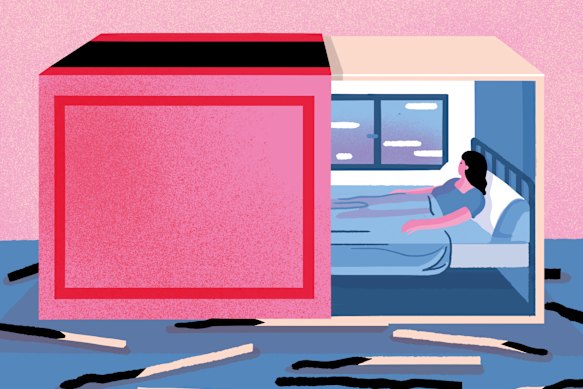
I was very familiar with burnout because I’m usually on the other side of it. I’m an organisational psychologist who has advised companies globally on how their people can work and feel better. Burnout prevention through helping people perform better at work underpins everything I do. And in 2024, I was deep inside it without having noticed it arrive. The irony was almost funny. Almost.
Looking back, the signals were there. My dentist spotted one first: a hairline crack in one of my teeth, which was the result of jaw-clenching I’d apparently been doing in my sleep for months. I was catching colds that had decided to set up permanent residence. I slept full nights yet woke unrefreshed and turned simple decisions into ordeals that took three times as long as they should. What to have for lunch. Whether to reply to an email. Basic human operations.
And then there was the crying.
A slightly critical email from a colleague, the kind that would have once rolled straight off, sent me into a spiral. I wept openly at my desk. I told myself it was a bad day. Then a bad week. Eventually I stopped registering desk-crying as being notable at all.
Burnout arrives like bankruptcy: gradually and then suddenly. And by the time you’re comparing jelly options in your head, you’ve already missed the window.
The people most likely to need an imaginary medical event to justify some R&R are the ones most skilled at pushing through. The better you are at overriding your own signals, the further down the rabbit hole you go before the signals become impossible to ignore.
What I’ve thought about most since then is why someone who knew those pressures so precisely still couldn’t stop. I knew the mechanics of burnout. I’d explained them to hundreds of organisations. I could see it arriving in other people and name it clearly.
The answer had less to do with knowledge and more with identity. I had spent so long being the person who had answers, who kept things running, who didn’t need to be looked after. Stopping would have felt like admitting I had failed. But knowing something versus acting on it are not the same thing, especially when what you’d need to act on is a version of yourself you’ve built your whole career on.
Eventually, I stopped waiting for conditions to improve on their own. I went deep into the research on energy recovery (ironically, research I’d been handing to other people for years) and started using it. Over the next few weeks, I felt a difference. I could function again without calculating how badly I’d need to be hurt for a week in hospital to seem like a reasonable solution. Progress by any measure.

















































