1 hour ago
3
1 hour ago
3

American technology giants are spending more on artificial intelligence infrastructure than their businesses generate in cash, and Australian companies are paying record sums to rent it at prices they cannot negotiate.
Every frontier model an Australian business can buy is built offshore, priced in US dollars and sold on terms the supplier sets. Local firms choose how much to use. Increasingly, they do not know from one month to the next what that use will cost.
“What we’re seeing right now is that AI cost is moving week to week, not year to year,” Kim Teo, chief executive and co-founder of hospitality ordering company me&u, told this masthead.
Sydney software company Dovetail now spends about $US30,000 ($43,000) a month on the coding tools Claude Code and Cursor, roughly six times its January bill. Its engineering headcount has not changed and no developers have been made redundant, chief executive and co-founder Benjamin Humphrey said.
At the smaller end of the market, the exposure is more direct. Tommy Gregory, 20, runs a marketing agency serving 10 to 15 clients and spends about $550 a month on software, roughly $160 of it with Anthropic after upgrading his plan this month to get past his usage limits.
“I’m pretty much hostage to them at this point,” Gregory said. “There’s a line somewhere I wouldn’t cross, but triple’s not it. If they went five times I’d still pay.”
None of that money stays local. “I can’t think of a single thing in that stack that’s Aussie, maybe Xero,” he said.
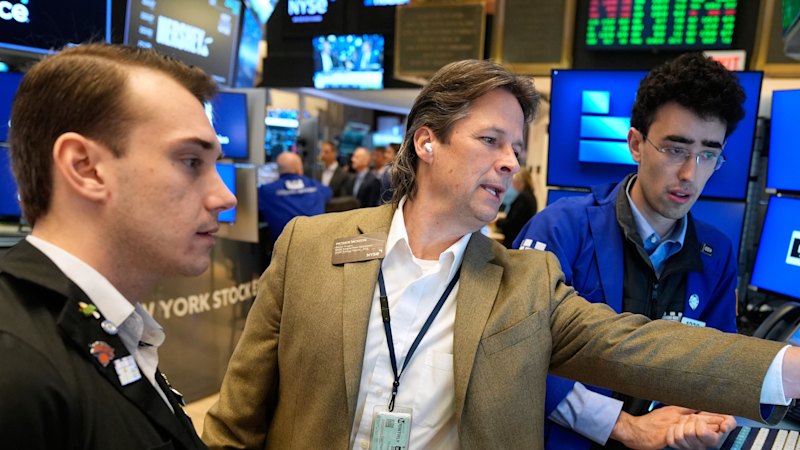
Those subscriptions feed a US build-out that has begun to strain the companies financing it. Google parent company Alphabet posted negative free cash flow of $US5.9 billion for the June quarter, its first negative result since listing in 2004, after capital expenditure doubled year-on-year to $US44.9 billion and outpaced the $US39.1 billion in cash the business generated. Alphabet is funding the gap with fresh capital, having raised about $US85 billion in the quarter.
Alphabet shares fell more than 7 per cent. Chief financial officer Anat Ashkenazi told analysts free cash flow would remain under pressure. Microsoft, Meta and Amazon all report this week.
Local spending is accelerating regardless. The Weel Australian AI Spending Index, tracking thousands of local small and medium businesses, put AI adoption at 30.8 per cent in June, up from 22.1 per cent in January. Average monthly spend among businesses paying Anthropic reached $1082, about 3.6 times the average OpenAI customer bill. Over the same period, the share of businesses paying the 20 largest traditional software subscription companies fell to 41.6 per cent, a record low for the index.
Dovetail runs 45 AI features and currently absorbs the cost inside per-seat pricing (where firms pay a fixed fee for every staff member using AI) but is shifting to usage-based pricing.
“In SaaS [software as a service] we’ve enjoyed 80 to 90 per cent margins, but under the new consumption model, our margins for AI features might drop to 50 per cent,” Humphrey said. “I think this will fundamentally change the way investors see software companies.”
Developing software faster no longer gives companies a competitive edge, Humphrey said, because rivals can match their speed instantly.
“Our biggest competitor is Anthropic,” he said. “It sometimes feels like our buyers lump all software into ‘Claude’ or ‘Not Claude’.”
Teo reads the spending surge as an opportunity. me&u’s AI spending has risen tenfold in 12 months, which she described as a good investment rather than a risk.
She also disputes that buyers are without options. Teo said a pricing war between the large US labs, and Chinese open-source models closing the gap, was putting real pressure on what the frontier providers could charge, and that more companies were running open-source models on their own hardware to hedge against the volatility.
“At me&u we are not wedded to any one model or vendor, and that flexibility is our hedge,” she said.
Others are simply spending less. Build Club founder Annie Liao said finance and technology teams had started scrutinising their bills, consolidating tools and treating AI as a core operating cost rather than a productivity rounding error.
“The companies that win won’t be the ones burning the most tokens,” Liao said. “They’ll be the ones that know which tokens are worth burning.”
That discipline is already evident overseas. Uber exhausted its annual AI coding budget by April and imposed a per-person spending cap, while Microsoft revoked internal Claude Code licences from one of its divisions in June.
For Hobart home fertility testing business Fertility2Family, a $US100-a-month OpenAI subscription now covers work that would once have cost about $30,000 through an agency. Founder Evan Kurzyp said the saving came with permanent strings attached.
“AI did not remove our dependence,” he said. “It moved it from agencies we hired project by project to an overseas platform we rent every month.”
The Business Briefing newsletter delivers major stories, exclusive coverage and expert opinion. Sign up to get it every weekday morning.