
 1 month ago
22
1 month ago
22
Decades of indifference by both sides of politics has led to the debacle of the closure of the Great Western Highway on Victoria Pass (“Year of angst looms before vital bridge is repaired”, June 27). The project just announced can only be described as a patch-up. The 1832 sandstone structure passed its use-by date decades ago, yet its heritage listing remains a permanent obstacle for desperately needed upgrades. The only real answer is to pull down this structure and reuse the same blocks to build something locally that pays homage to the engineers and convict workers from the early European settlers who built it. Once magnificent, the Mitchell Causeway has become unusable, unstable and dangerous. Transport NSW will have road improvement plans that have long existed for this desperately needed upgrade. They would be so old they will have a “DMR” stamp on them, denoting the Department of Main Roads. It has been obvious from the beginning that the road will be closed for an extended period. Unplanned but foreseen, this problem is a golden opportunity to upgrade Victoria Pass to two lanes and gentle bends in both directions. Imagine how much progress could be made if this work started within days. The Woodford bends had all the tight curves removed and some realigned several years ago. The entire pass must be given priority for a 21st-century upgrade, as there is no doubt that any alternative route or a tunnel is decades away. Imagine if a similar problem emerged on the two northbound bridges over the Hawkesbury River and the old punts and ferries were put back in service. The western regions of NSW are long overdue for safer and faster roads to connect with Sydney. Tom Clarkstone, Springwood
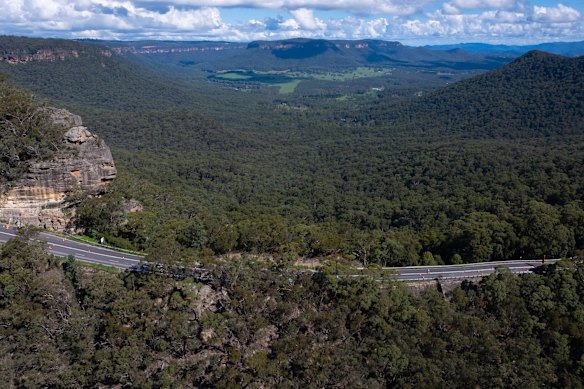
The fiasco of Victoria Pass and Chris Minns’ Band-aid solution is a master class in how not to do politics. The days are over for the average truck – coming once every 30 seconds, weighing 60 tonnes-plus, crawling up the kilometres of this pass and often breaking down on the steepest slope. For at least 25 years, this pass has been under almost constant repair. It is no longer fit for purpose, but Victoria Pass is only a small part of the problem. It’s the constant degradation of the many small businesses in the villages along the Great Western Highway, the only true mountain villages left in the Blue Mountains. The noise of these thumping diesel engines just metres from shops and cafes is impossible to bear, let alone the vibration. Our politicians offer nothing, no meeting with residents, no plans to finance a long-term solution. A conversation with residents and business owners reveals the anger is palpable. Their votes are going straight to One Nation or independents, and they tell you this loud and clear. Minns will be out of office by the time the next stuff-up occurs, that’s why he doesn’t care. Tony Lewis, Mount Victoria
I am not an engineer, but I hope the NSW government and the chosen contractors have rather more complex design drawings than those shown. The picture seems to be the result of a Katoomba Primary School year 4 competition to draw the best bridge. Minister Jenny Aitchison’s statement that “we have a timeline, contractor and major construction on the new crossing beginning in July” is probably a bridge too far, given the government’s track record on infrastructure projects. It will be somewhat of a miracle if the new crossing opens on time and on budget. Peter Cooper-Southam, Frenchs Forest
Party in name only
Kerryn Phelps raises questions about the new Community Strong Australia party (“New party may be just what we need. But I have questions”, June 27), and sets out the possible contexts in which a micro-party might have a positive influence. However, much of her article centres on the conventional ideas of what a political party should look like – party structure, binding policies, discipline regarding conflicts of opinion over contentious areas, who will have “the final word” and so on. These issues are what many voters find frustrating about the current major parties. Why can’t there be a “party” in name only, with a broad but non-binding statement of principles? As a registered party, they would side-step the discriminatory electoral donation restrictions imposed by the self-motivated dominant parties. Each member could still campaign individually on issues in their own electorates. If elected, they could subsequently provide a genuine conscience vote as an independent in parliament, with no internal recriminations or “leadership speculation” which are not uncommon in the conventional parties. Yes, further discussion about this is needed, but a party of independents? Now there’s a radical idea. Rob Phillips, North Epping
Strong support
It remains to be seen whether the new political party founded by teals Allegra Spender and Zali Steggall (and yet to have more members) will do well (“Who’ll come to the two-teal party?”, June 27). As several commentators have pointed out, the new party’s name, Community Strong Australia, is an interesting choice. One suggestion, Competent Sheilas Australia, is quite funny, of course, but based on the convoluted syntax of the chosen name I feel it’s appropriate to suggest another alternative: the Yoda Party. Kerrie Wehbe, Blacktown
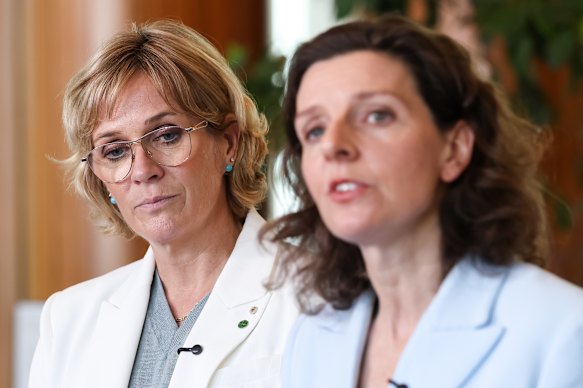
I notice Allegra has the first letter of the Alphabet and Zali the last. From A to Z they have had the courage to shake up politics in a way that has never been done before. Exciting times if other candidates come on board and all those supportive letters in the Herald show that this just what the community wants. Can we have a Community Strong candidate in Willoughby so I can vote for him or her? Congratulations, Allegra and Zali. Christine Stewart, Willoughby
I’ve been looking for a new party to vote for, and one that is looking for members. Community Strong Australia could be it. I’m prepared to book a seat on the plane, taking off in 2028, and am prepared to help readying it for takeoff. The more diverse parties, the better for the country. Looking forward for the first poll. Go, CSA! Robert Pallister, Punchbowl
The proposed Community Strong Australia party is a good idea if they can take significant support from One Nation. Just one teeny suggestion – call the new party the Strong Communities Party. Andrew Macintosh, Cromer
Go, Zali and Allegra: “Keep the bastards honest.” Maxwell Swart, Balmain
Blokes’ club
One Liberal MP, who asked not to be named so “they” could “speak freely”, defended the present leader by saying, “he’s trying hard ... he deserves a fair go” (“Taylor safe, for now, say concerned Liberal MPs”, June 27). That quote says everything about the so-called Liberal Party. It is a bit like the Catholic Church, a blokes’ club. He and his other predominantly male colleagues did not give Sussan Ley a fair go. Fair dinkum, some men never learn. Chris McKimm, Karangi

Trim NDIS rather than cut cover
The letters (June 27) concerning overcharging by NDIS and Aged Care providers brought to mind the exposure in 2022 by the Herald and the ABC’s 7.30 of the rorting of up to $8 billion annually (about 30 per cent) of the Medicare budget. The AMA summarily explained overcharging as mostly as due to the “complexity of billing rules”. What efforts and successes have been achieved in reining in some of this overcharging? If this was followed up with real action against rorting by some private providers in the NDIS and Aged Care sectors, the federal government could sustain funding in such important areas. Martin Frohlich, Adamstown Heights
When we lived in Newcastle, the first town to commence the NDIS in its infancy, our son, who was diagnosed with a severe mental illness, was accepted into the program and has remained in it ever since. I have been reading Herald letters citing exorbitant charges from providers for items that are available at a much lower cost nearby. Working with a supposedly helpful provider, we experienced a similar situation. Money was provided for domestic cleaning and soon the price was raised alarmingly and we were asked to sign a contract with the provider. I contacted the local agent in the NDIS and found the pricing was way over the top, so I gave the provider away and began self-management regarding our son’s working with the NDIS. It was easy to find excellent cleaners and I regularly check the charge, which is worthy. I would like to suggest that the problem with the soaring NDIS costs to our government may be possibly more to do with greedy providers than too many people with disabilities. Ruth McMahon, Wahroonga
Can’t see the forest
For a long-retired forester, it’s disheartening to see so many of the public rejoicing at the end to logging in NSW public forests (Letters, June 27). For almost a century, these forests were logged using single tree or small group selection, helping to maintain a largely uneven-aged, natural forest structure. This supported healthy wildlife populations, protected catchments and provided attractive recreational opportunities in locations such as the Watagans, Barringtons, South Coast and Northern Rivers. The advent of a global market for woodchips changed the way forests were managed. Governments, and unfortunately the public, demanded that native forests should pay for themselves through timber sales alone. Foresters had to maximise timber production and revenue, for which the woodchip market provided added opportunities and incentives. There was no recognition given to the other substantial, non-monetary values of managed forests. It’s easy to understand now the broad public aversion to native forest logging, but we should remember that NSW forests contain some of the world’s finest hardwoods – strong and durable, as well as being good to look at.
Sympathetically managed, they could have still produced those timbers without seriously prejudicing other forest values. Now that opportunity is lost. Col Nicholson, Hawks Nest
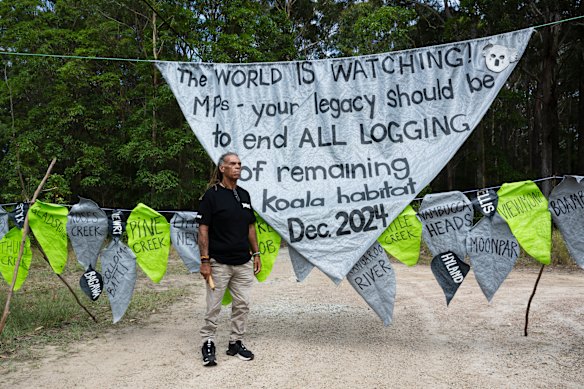
NSW Forestry costs taxpayers about $50 million a year to destroy what is left of our native forests and associated species. That amount could instead employ 370 nurses or 350 teachers or 310 police officers. The same number of jobs are being subsidised, but the latter deliver public benefits. Mike Ritchie, Haberfield
What sinner name
Thank you, David Astle (″I forgot a name. Was this the start or the end?″ , June 27), for your confession that you have forgotten a name. Thousands of us oldies will be delighted and given confidence at this evidence that it can happen to a word person like you, leaving us ordinary mortals still on the right side of dementia. Nedra Orme, North Sydney
David, rest assured that if you can remember my name ahead of Nathan Cleary’s, your cognitive future is likely to be safe. Professor Henry Brodaty, Centre for Healthy Brain Ageing, UNSW Sydney
Something to cerebrate
Really enjoyed the brain game article by Adam Spencer (“At last, a brain game to remember”, June 27), especially as my attacking of the daily Herald crossword/puzzle page just may assist slowing dementia or, as Adam suggests, “It might pad the buffer that holds it at bay”. No guarantees but, if nothing else, I look forward to the morning brain challenges. Denis Suttling, Newport Beach
Doing five word puzzles daily seems to help my old brain, whether science agrees or not. However, perhaps it’s writing letters to the Herald that’s keeping my brain working. Graham Lum, North Rocks
Cup runneth over
This is what the world needed right now (“The binge-watch World Cup is so good that not even Trump can ruin it”, June 27). As Malcolm Knox puts it, a regime does not define a country — and these few weeks have proved it. We’ve set the politics down, tuned out the noise from the top and remembered something simple: people from every corner of the planet still know how to come together over something they love. The warmth, the welcome, the strangers celebrating side by side — it’s a quiet reminder that the headlines aren’t the whole story, and that most of us, given half a chance, choose joy over division. More of this, please. Raj Kamath, Castle Hill
May I commend and thank Tony Popovic, his team and players for advancing to the final 32, giving joy to the nation. Their grit and determination to perform at the highest levels are encouraging. I noticed that no one in the Socceroos is named Hanson, Smith or Jones. Peng Ee, Castle Cove

One only had to see the thousands of people who turned out around the country to watch the Socceroos match on Friday to see what an extraordinary multicultural society we are so lucky to have. John Swanton, Coogee
- To submit a letter to The Sydney Morning Herald, email [email protected]. Click here for tips on how to submit letters.
- The Opinion newsletter is a weekly wrap of views that will challenge, champion and inform. Sign up here.

















































