 3 months ago
52
3 months ago
52
Retired boxer Stephen Smith on struggling to "fill the void" after retirement
In the mid-1950s, Terry Spinks was a phenomenon. A bookmaker's son who climbed to the pinnacle of amateur sport to win Olympic gold at the 1956 Melbourne Games, the Londoner became a household name.
"He couldn't walk down the street without everybody getting hold of him and wanting to take him in the pub," says his cousin, Rosemary Elmore. She describes him as the David Beckham of his era.
But behind the flashbulbs and pints being bought by strangers, a darker story was being written. The adulation of the public offered little protection against the physical and neurological toll of the ring.
Decades after standing on that podium, the man the nation loved fell into a battle with alcoholism and ended up in a clinic for brain injuries.
"Terry didn't know me. He didn't know anybody," says Elmore.
Elmore eventually gave up her career to care for him on a carer's allowance. It is a sacrifice she made willingly, but she is under no illusions - not every fighter is lucky enough to have a family to catch them when they fall.
"My mum says I gave my life to Terry," she says. Spinks died in 2012 at the age of 74.
Yet, in the wake of the death of Ricky Hatton, a new BBC documentary explores how the sport has still not filled the void in care for its fighters.
Fame, it seems, is still no protection from what comes afterwards.
The Fight Beyond the Ring
Could a dedicated care home be the answer?
For some, the answer is a bricks-and-mortar solution.
Jimmy Revie, a former British champion, now lives with dementia. The 78-year-old from London is cared for by his wife, Louisa, who takes him to meetings of ex-boxers to keep the fading flame flickering.
"When he goes to the meetings he comes alive because he sees all the old fighters, and they all say 'hello Jim' and they're all friendly," she says.
Louisa is a vocal supporter of the Ringside Charity Trust, which is campaigning to open a 36-bed specialist care home for retired boxers - a facility similar to those provided by the Jockey Club for former riders.
Currently, the charity runs a helpline that helps fighters in severe distress.
"They'd have their own nursing staff that know about boxing," Louisa explains. "They would know everybody. They want to do a cinema in there so they could watch their old fights.
"So it would be a better atmosphere for them. And I think they would flourish in there."
Stephen Smith, a boxer turned coach from a family of boxers - including former world champions Callum Smith and Liam Smith - says retired fighters become "vulnerable" and can feel "forgotten".
"Your phone doesn't go again once you retire," he says.
"It's sad but if there can be something in place to help look after fighters after the sport it's a massive, massive thing."
The trust has high-profile backing; former heavyweight champion Anthony Joshua wore their logo on his attire for his recent fight with Jake Paul.
But, while the will is there, the way to fund it has proven difficult.
'Financially, it's impossible' - the funding battle
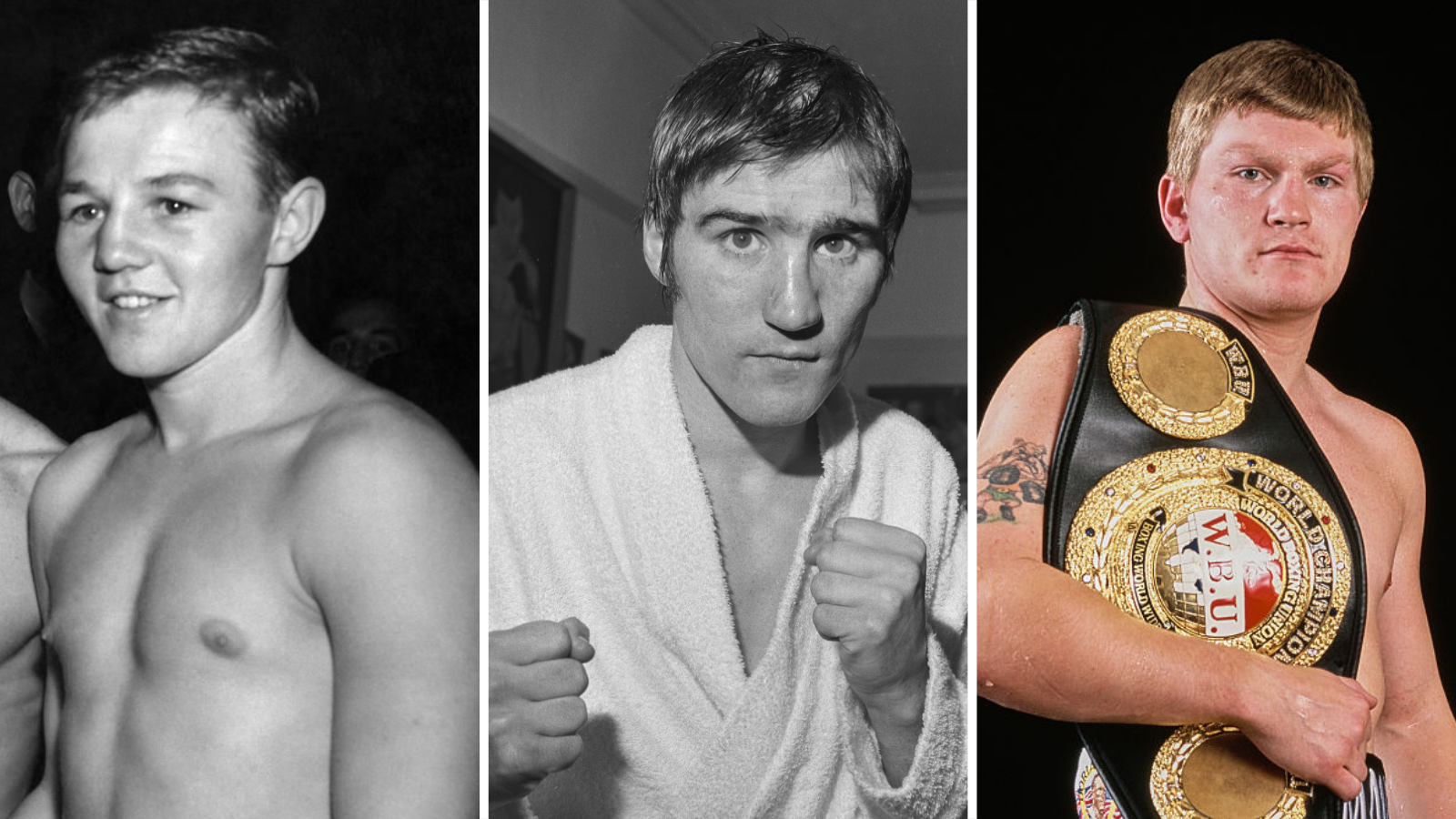 Image source, Getty Images
Spinks (left) died in 2012 after a long illness, Revie (centre) is living with dementia and Hatton (right) died aged 46 in September
The Ringside Charity Trust wants the British Boxing Board of Control (BBBoC) to implement a compulsory levy on current boxers earning more than £1,000, increasing as fight purses get larger.
Louisa suggests even a 50p or £1 contribution from every ticket sold could change lives.
However, Robert Smith, general secretary of the BBBoC, says while they favour voluntary contributions, a compulsory levy is not "appropriate".
"I'm a big believer in preventing something first," Smith says.
"We have a board insurance for death and permanent injury for a boxer. Which as you can imagine, given the nature of the sport, is very expensive."
Smith says no boxer he has spoken to has ever taken the option to "top up" their insurance, and past attempts to create pensions were met with a lack of interest.
"I know it sounds very callous, but boxers are self-employed," Smith adds.
"If they need assistance, they need to come and ask for it. I'm very happy to talk to people and give advice but it's up to them to take the advice."
The board runs its own charitable trust, but Smith admits that with more ex-boxers than current ones, the finances are a struggle.
"Would I like to have a duty of care to ex-boxers? Yes. Financially, it's impossible," he says.
'Hatton achieved everything but it didn't make him happy'
Light-heavyweight Liam Cameron's life fell apart in 2018 following a ban for using cocaine.
"I spiralled out of control. Lost my way. Ended up on drink, drugs. Overdosed in hospital and everything," Cameron, 35, recalls.
"No-one helped me. No-one asked if I'm all right. There's no help for boxers, nothing. It's a brutal sport. Once you lose, sometimes you're kicked to the kerb."
Sheffield's Cameron has since turned his life around and returned to the ring. He is now an ambassador for the Boxers in Need charity - a role once also held by Hatton - supporting fighters who have struggled outside the sport.
But he views the trajectory of icons like Hatton as a sobering warning.
"He achieved everything in boxing - what I'm trying to achieve - and it didn't make him happy," Cameron says.
"So it's making me think: what am I doing if it hadn't made Ricky Hatton happy?"
Decades after Spinks was celebrated as the Beckham of his era, the central question remains - when the cheering stops, who is left to look after the person in the middle of the ring?
Elmore remembers asking that very question of her cousin before his final days.
"I said to Terry once, 'would you still do boxing if you had known you were going to finish up like this?' He said: 'I'd do it tomorrow because I loved it.'"
The question for boxing's authorities is whether that love is ever matched with care once the fighting ends.
If you have been affected by any of the issues raised in this story, information and support can be found at the BBC's Action Line.