
 3 months ago
60
3 months ago
60
When Ku-ring-gai council began its $3 million transformation of Norman Griffiths Oval in March 2023 from grass to a synthetic sports field, seven-year-old Lily Choi was promised it would close for a few months and reopen before year’s end.
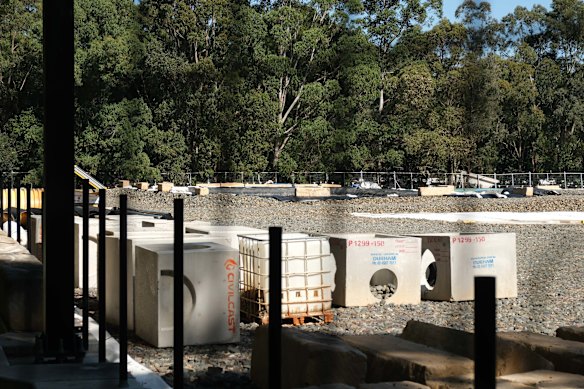
Now the West Pymble football club member is 11, and the north shore oval is far from complete – grey rocks and a few diggers are among the only items strewn across the dormant construction site – all while sporting groups and the broader community have been locked out for years, waiting for the site to reopen.
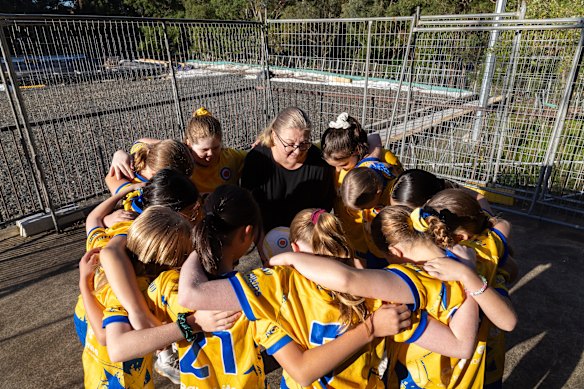
“When I walk past with my dog and I look over here, I just feel really sad because nothing’s happened for ages, and I’ve only played on it three or so times,” Lily said.
The idea to rip up grass for an all-weather sporting field to prevent washouts was conceived in 2016. It has since plagued multiple cohorts of councillors. Costs have ballooned six-fold to $20.2 million, and the opening date could be as late as May 2027.
Beneath the delays and cost blowouts lies another issue: The council has not been up front about a conflict of interest over the oval’s design. Separately, the council now says years of work undertaken on the most complex part of the project – the stormwater detention system – needs to be reversed for a reconstruction under a different design.
The council has blamed the since-fired contractor’s allegedly unsuitable materials and poor workmanship, which required “substantial costly corrective works”, while the builders were “outraged”, and said they had “never seen [council] mismanagement like this”.
But how does it take a decade and $20 million to deliver an oval, and what is next for Norman Griffiths, which has been described as Ku-ring-gai council’s version of a “North Sydney pool-type mess”?
Doubts simmer over the design
The council declined to tear up the grass for a synthetic field in 2019 as the site, a flood detention basin, is upstream of an endangered forest and national park, and lies above a Sydney Water sewer main, but the synthetic turf was approved in 2020.
The Herald reported at the time that it was the risk of saying goodbye to nearly $1 million in state government and community grants that helped sway Ku-ring-gai’s decision.
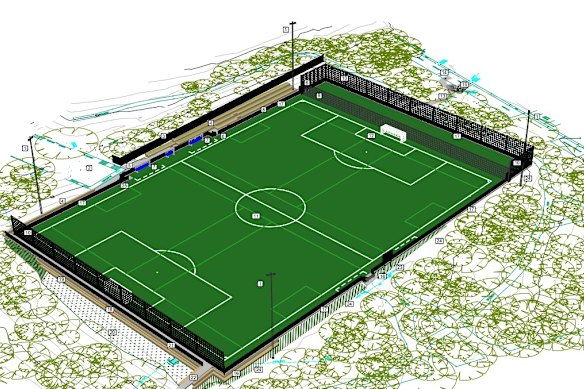
A key reason for the delayed rollout has been drainage issues. The West Pymble oval must be designed in a way that ensures it is floodproof and can manage stormwater in the event of one-in-100 year floods.
The original design called for an underground concrete detention tank capable of holding up to 2.4 million litres of stormwater. However, contractor TurfOne proposed a solution outside the tender’s scope, which the council accepted: An aggregate-based detention system made from porous rock or gravel instead.
But internal emails seen by this masthead reveal council engineers and project staff raised concerns about whether the aggregate design would be floodproof, years before shovels broke ground in March 2023.
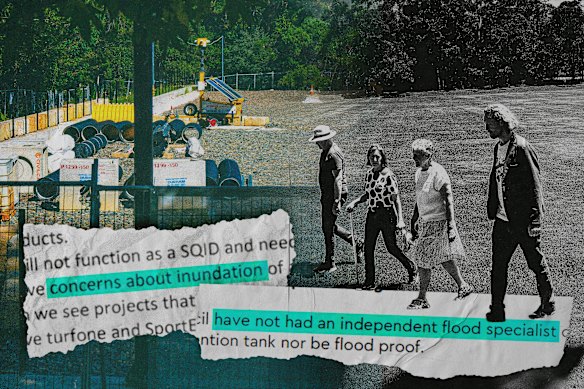
One council engineer wrote in a July 2021 email that he had “concerns about inundation of [the] synthetic field”.
“I would be careful about differential settlement under the synthetic field if there are flood events and subgrade layers get wet under the synthetic field,” he wrote.
He also explicitly requested that the design “must be signed off by a third party experienced and accredited flood engineer”.
Four weeks later, TurfOne updated its project proposal, which included a new clause requiring a “third-party review” and certification of the stormwater design, according to an August 2021 letter sent to the council.
Ku-ring-gai Council then wrote back, accepted the tender, and the two parties signed the contract in November 2021.
The ‘independent review’ that wasn’t
The third-party independent review into the stormwater system was published in February 2023, 18 months after council engineers voiced their doubts.
However, the review was not authored and signed off by an independent contractor who had no involvement in the oval. It was done by an engineer from Optimal Stormwater, the same contractors that had worked closely with contractor TurfOne on flood-proofing the oval.
One of the first pages in a flood impact report commissioned by the council and published a few years later also alluded to the conflict of interest. It read: “Council have not had an independent flood specialist confirm the design will work as a detention tank, nor be flood-proof.
“Council requires an independent sign-off that the completed Norman Griffiths Oval development will work as a detention system, and that the oval is not inundated in storm events.”
Academic Andy Asquith, who researches governance matters in local councils, questioned why the council engaged the same contractor who had done other works on the oval to sign off on what was supposed to be an independent, third-party review.
“It’s a conflict of interest, it smacks of incompetence, and it just raises alarm bells,” he said. “In some cases you might argue the council had no choice but to go to the same people because the market simply wasn’t there to provide an alternative contractor. But I would find this very difficult to justify in Greater Sydney, where there will be so many [options].”
Optimal Stormwater has worked on Ku-ring-gai Council infrastructure projects before.
“We haven’t done anything wrong or inappropriate,” general manager Murray Powell said. He didn’t consider that Optimal Stormwater’s previous work posed any conflict of interest on the review.
“We understood the site and had to work with TurfOne, to make sure our design worked and flowed into their design.”
Powell said it would have been ideal for an uninvolved party who had done no previous work on the oval to conduct the review: “Would have loved for somebody else to do that, but on the other hand we were helping the people [council] we had a good long-term relationship with,” he said.
“[Council] could have paid someone with no involvement – but it would’ve taken more time and money.”
Ultimately, the independent review was for the council’s benefit, and it chose Optimal Stormwater.
A council spokesperson said the review was conducted by different engineering consultants, but did not directly confirm or deny the conflict of interest. They did not respond to questions about any actions the council had taken later to prevent further probity issues.
Stephen Hill, chief executive of BildGroup, TurfOne’s parent company, said the council “kept having independent reviews for everything, and if they didn’t get the answer they wanted, they went to a different reviewer”.
Winning the legal dispute with council “vindicated” TurfOne, he said. He disputed all claims the council made about their supposedly unsuitable detention system design.
“This is not true, as we have used this design to successfully deliver other projects in Australia, including for Woollahra rugby union football club in Sydney, whose pitch has stood them well for many years,” Hill said.
One month after Optimal Stormwater published the independent review, construction began in March 2023.
Back to ground zero
During upgrade works in April 2024, the NSW Environment Protection Authority discovered the “uncontrolled discharge of sediment laden water” from the oval into a creek within Lane Cove National Park, and issued the council with a clean-up order.
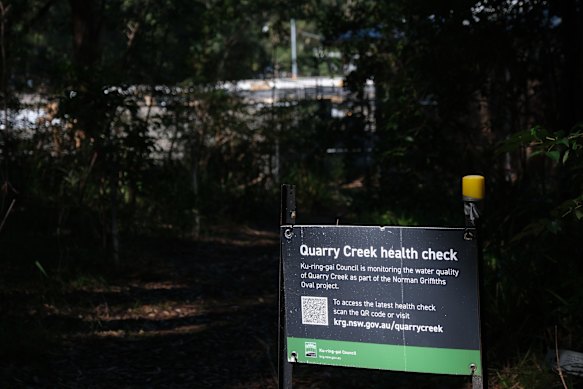
The SES described the site as prone to flooding, and has previously responded to multiple flood rescues and sandbagging requests for property protection in the area.
The site has been in limbo since the council fired contractors TurfOne and told it to lay down tools in May 2025, embroiling the parties in a legal dispute. In March, the council was forced to pay $4.4 million to the contractor from the $12.7 million that had been spent to date.
After years of building the alternative aggregate design proposed by TurfOne, the council now says all work on the stormwater system needs to be ripped up and redone. The council will vote to revert to the original design – the concrete detention tank – at an extraordinary meeting on Monday.

There is frustration in the community over how the council has handled the project, as ratepayers just want to see the oval reopen.
West Pymble Football Club president Kieron Fitzpatrick said the oval was a “community asset” that should be returned to residents and players, who have been uprooted from their home pitch for three years.
Sharlene Wellard said countless game cancellations and having to travel up to an hour away for training was “incredibly frustrating” for the under-11 girls team she manages.
“When Norman Griffiths was up and running, there were always kids from the local community on it. It was always being used. We’ve lost all of that community connection, which is frustrating,” she said.
“They’re sticking it out, but they just desperately want their home oval back.”
The Morning Edition newsletter is our guide to the day’s most important and interesting stories, analysis and insights. Sign up here.

















































