
 2 months ago
50
2 months ago
50
11 minutes ago
John Sudworth and Samantha GranvilleBeirut

 Reuters
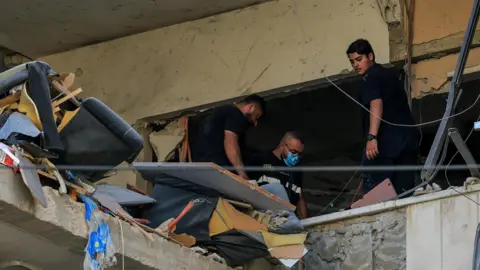
Emergency services at the scene of the Israeli strikes on Sunday
Israel has hit southern Beirut in the first attack on the Lebanese capital since a truce brokered by the US last week.
Two air strikes on two apartment buildings in a stronghold of Iran-backed Hezbollah killed two people and injured at least 20, including women and children, Lebanon's health ministry said.
Prime Minister Benjamin Netanyahu said Israel had struck "terrorist headquarters in the Dahieh district of Beirut, in response to Hezbollah's firing at Israeli territory". Hezbollah has since confirmed it fired at Israeli military positions.
Israel had limited its Beirut attacks under US pressure. Washington is concerned strikes there could jeopardise efforts to reach a wider peace deal with Iran, which insists on a complete and total ceasefire in Lebanon.
Sunday's strike tore open the lower floors of a residential building, exposing apartments and scattering concrete and twisted metal across the street below.
Social media videos show crowds of people rushing to the scene to assist the wounded. Lebanese health officials said four women and four children were among the injured.
A statement from an Israeli army Arabic-language spokesman posted on X saying "Hezbollah terrorist infrastructure" was being targeted - and suggested further strikes were coming.
"To be continued," he wrote.
The Israeli military said it had intercepted two projectiles crossing into Israeli territory from Lebanon.
In a statement later on Sunday, Hezbollah said it had fired rockets at Isreali artillery positions at Yiftah Barracks and at troops near al-Marj Pond.
Hezbollah said the barrages were in response to Israel's "violation of the ceasefire and the attacks on villages in southern Lebanon".
Ebrahim Rezaie, spokesperson for the foreign policy and national security committee of the Iranian parliament, promised "a decisive and painful response" to the Israeli attack on Beirut.
President Trump later went on Truth Social to announce there would be "no troops going to Beirut" after a call with Netanyahu, and the US informed Qatar, which had been working to broker de-escalation, that it had instructed the Israelis to stand down.
But in an interview with NBC's Meet the Press on Sunday, Trump said he was not demanding that Lebanon be part of any peace deal with Iran, separating the two tracks even as the Dahieh attack threatened to destabilise both.
Lebanon was drawn into the war on 2 March, when Hezbollah launched rockets into Israel in retaliation for an Israeli strike that killed Iran's supreme leader.
Israel responded with an air campaign across Lebanon and a ground invasion in the south, which has been escalating in recent weeks.
A ceasefire has been in force since 17 April - in name only - as it has been violated repeatedly by both sides.
Though Israel has continued to intensify its air strikes in the south of the country all weekend, Sunday's attack marks the third strike on the capital since the ceasefire went into the effect - the first two targeting Hezbollah commanders.
Lebanon's Parliament Speaker Nabih Berri - leader of the Amal movement and a figure closely aligned with the Hezbollah - this week rejected the US-brokered deal announced after rare talks between the Israeli and Lebanese governments.
Berri called the agreement "a trap" because it makes no mention of a parallel Israeli withdrawal from occupied territory in the southern part of the country.
Hezbollah itself has no seat at those talks, and its leader Naim Qassem said in a written statement on Thursday that disarming the group would amount to fulfilling "the enemy's objectives".

















































