 3 months ago
33
3 months ago
33

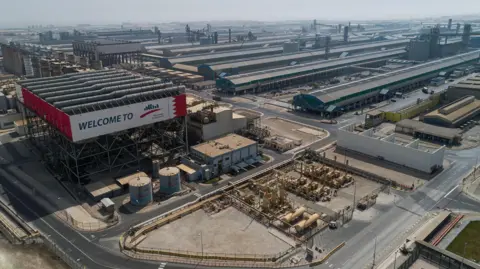 Aluminium Bahrain
Aluminium Bahrain said its facility has been attacked by Iran, with two employees wounded
Gulf nations reported a series of attacks as the US-Israel war against Iran entered its fifth week, including strikes on major industrial infrastructure.
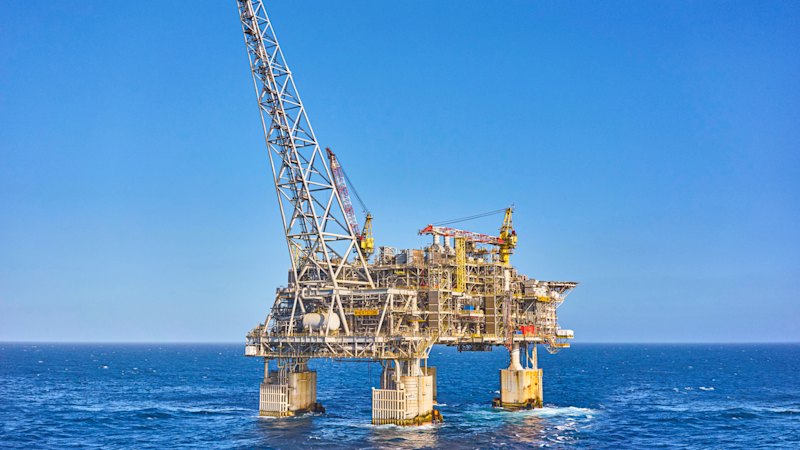
The United Arab Emirates (UAE) said a number of people had been injured in an Iranian strike on a key aluminium plant in Abu Dhabi, with significant damage reported by operator Emirates Global Aluminium.
Meanwhile, state-controlled Aluminium Bahrain said two employees were wounded by an Iranian attack on one of the world's largest aluminium smelting facilities.
Iran's Islamic Revolutionary Guard Corps (IRGC) said it had targeted the sites with drones and missiles on Saturday in response to US and Israeli attacks on its own industrial plants.
In a statement carried by Iran's semi-official Mehr news agency, the IRGC claimed the aluminium facilities were linked to the American military.
It came after Tehran had accused Israel of targeting two steel production sites crucial to its economy.
Elsewhere in the region, Oman said it was investigating "cowardly attacks" for which no one had yet claimed responsibility after a foreign worker was reportedly injured in a drone strike on its southern port of Salalah.
Kuwait's defence ministry meanwhile said the radar system at its international airport had been significantly damaged after being attacked by 15 drones.
With their economies and way of life on the line, countries in the Gulf insist they must have a say in any future peace talks. But they are split on the way forward - and on what the region's relationship with Iran or the US should look like.
The attacks came as Yemen's Iran-backed Houthis entered the conflict on Saturday, raising fears of further economic disruption should they target shipping in the Red Sea.
The group said it had launched a barrage of missiles against Israel targeting "sensitive" military sites, and vowed to continue such attacks. Israel said it had shot down two missiles coming from Yemen.
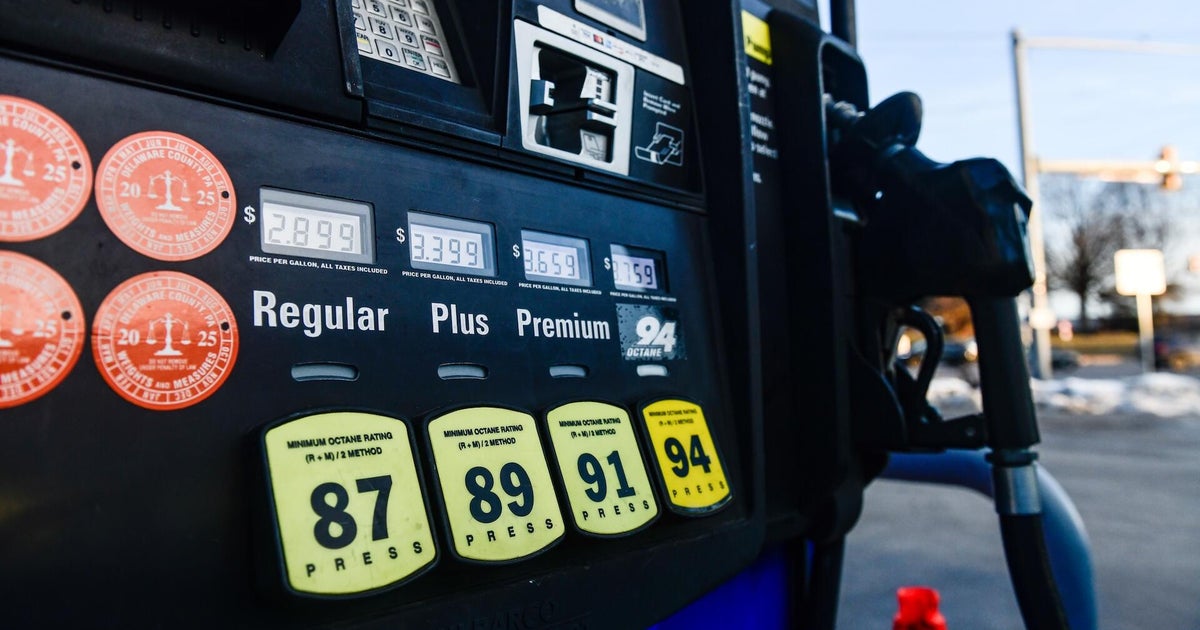
Oil and gas prices have already spiked as Iran has effectively shut the Strait of Hormuz, a key shipping route for global energy supplies between the Persian Gulf and the Gulf of Oman.
If the Houthis decided to attack shipping - as it did in support of Hamas after war erupted in Gaza, following the Hamas-led attacks on Israel on 7 October 2023 - it would risk sending energy prices higher.
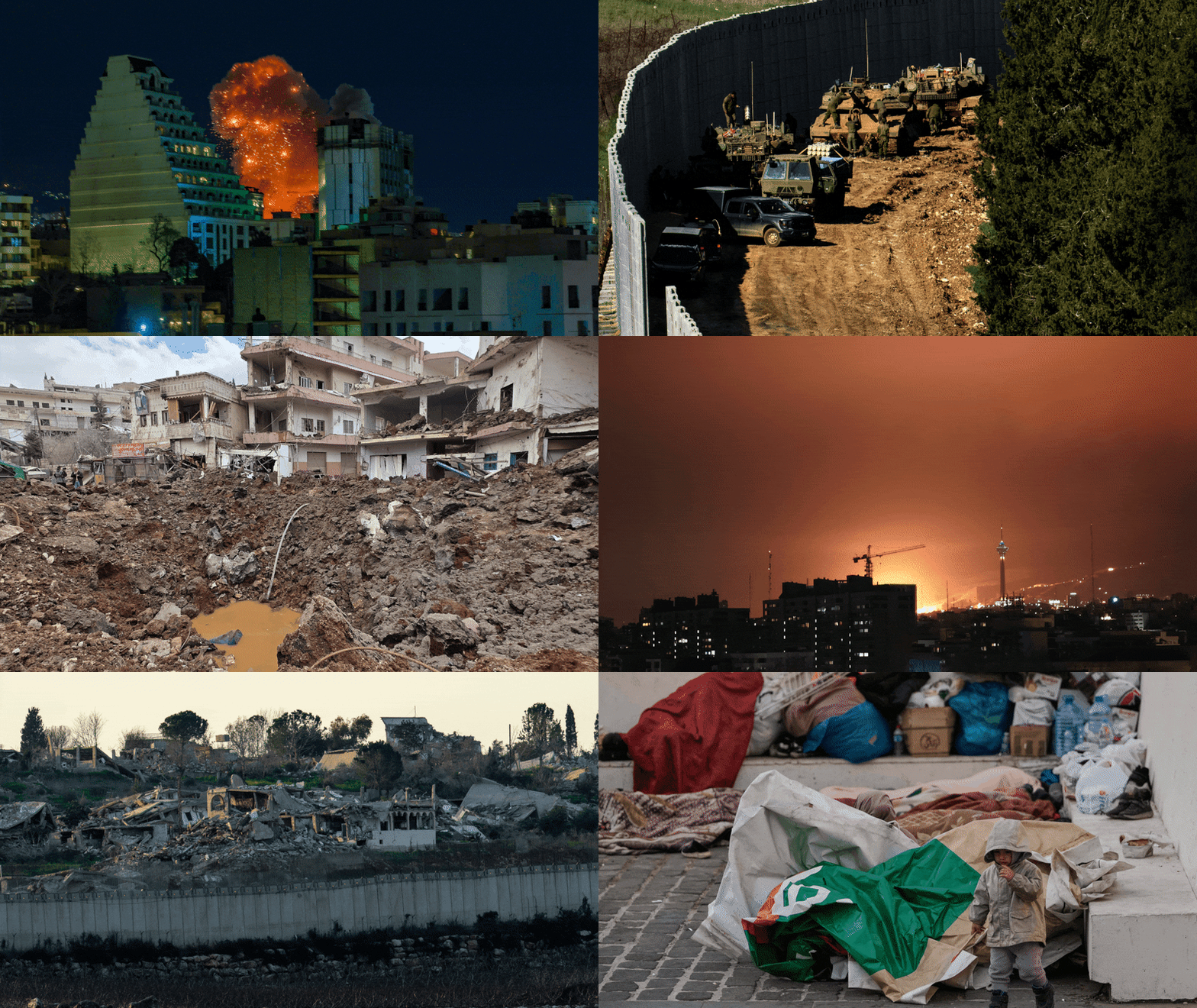
Meanwhile, Israel continued its strikes against Lebanon - where three journalists were killed in a targeted Israeli strike on Saturday, according to their employers.
The Israel Defense Forces (IDF) confirmed it had killed Ali Shoeib, who worked for the Hezbollah-affiliated Al Manar TV, describing him as a "terrorist" from Iranian-backed Hezbollah's elite Radwan Force who had "operated for years under the guise of a journalist".
It provided no evidence to support its claim that he had a military role, and did not comment on the deaths of Fatima or Mohamed Ftouni.
The same day, the World Health Organization reported nine paramedics had been killed in southern Lebanon within 24 hours - reaching a total of 51 health personnel killed in March so far.