 3 months ago
28
3 months ago
28
It’s early January when a curious post appears on Adam Bandt’s social media. A young woman walks the streets of Melbourne. She’s sticky-taping A4-sized posters to walls and street poles. “Have you seen Adam Bandt?” they read. Then, after some suspenseful music, the missing man appears, strolling along a city footpath, smiling. “Hey!” he says. “I’m here!” With outstretched open palms, Bandt, the new head of the Australian Conservation Foundation (ACF), invites people to join his “people-powered movement for a better world”.
The post marked the former Greens leader’s return to public life, eight months after the unexpected loss of his seat of Melbourne at last year’s federal election. That loss, he says, was stressful and a shock. “I was gutted.” (Interestingly, his wife Claudia Perkins – a former Labor staffer and now mental health nurse – says she had “an overwhelming sense of relief” when Bandt texted at about 8.30pm on election night that he might lose the seat he’d held for 15 years. “I was probably ready to live a bit differently,” she tells me.)
But let’s return to this social media post, because the reaction that followed speaks to the increasingly fractious nature of Australian society and the challenge ahead for Bandt, 53, as he takes over the nation’s premier environmental group with the goal of building a country-wide movement as big as 1983’s Franklin River dam protests.
On Instagram – dominated by Gen Z and Millennials – it was as if Jesus himself had returned. Just over 3000 people stamped the post with a heart and left messages like: “I miss Adam soooo much” and “I saw him while doing groceries, nice fella.” But over on Facebook, where users are from a wider age range, it was like an angry medieval mob had armed themselves with pitchforks. “Adam please stay lost mate,” said John. “People power did work … the people voted you out,” said another guy called Bruce.
When the ACF board chose Bandt as its chief executive officer last year – they said it was a unanimous vote after assessing 300 candidates – it was either a brilliant move or a fraught one. On the one hand, Bandt brings with him a ready-made army of environmentally concerned people: the ones showering him with Instagram love. He knows how to navigate Canberra’s halls of power. He could be the guy who holds Labor’s feet to the fire on the environment.
On the other, Bandt’s lost some paint on the way through, as all political leaders do. A chunk of Australians like him as much as an unwelcome blowfly: witness the Facebook posts. Many in the Albanese government detest him. How will he go lobbying key people, such as Environment Minister Murray Watt? But given Bandt’s stated objective – to build a huge people-powered movement that will sway elections on environmental issues – perhaps the more important question is whether he is the kind of person a broad range of Australians will follow?
The first interview I do with Bandt is terrible. It is partly my fault. I go in too hard, too early. I was told he’d be forthright about any regrets. He’d give his insights, ACF’s media people said, into why he lost Melbourne and -reveal what it felt like to lose so unexpectedly. So I barrel into that territory and come out empty-handed. It is tense.
There is, of course, much to ask Bandt about his party leadership. At the 2025 election, he led the Greens into an electoral ditch. In the upper house, the party maintained its position with 11 senators, but the lower house was a near-wipeout. Despite holding its overall vote at around 12.2 per cent, the party lost three of its four seats. Bandt had predicted a haul of nine but was left only with one, the Brisbane seat of Ryan.
I meet Bandt in early January in the 60L Green Building, an ACF-owned sustainable office space on the edge of the Melbourne CBD. He has just started in his role, but the office is deserted. Everyone is on holidays or working from home because of the day’s extreme heat. Several fires are burning across the state.
As we sit down in an upstairs meeting room, it becomes clear Bandt has no intention of adding to his initial analysis about losing Melbourne. The main factors were, he repeats, that more people voted Labor to prevent Liberal leader Peter Dutton from becoming prime minister. His seat also had a boundary change that brought in new voters. But when I ask him if he should have done more door-knocking in those new parts, he says he’d done enough. He does not want to talk about whether the Greens’ focus on Palestine – at the expense of core environmental issues – had affected the vote. He avoids questions about the party’s civil war over transgender rights that erupted under his leadership and caused many members to leave (veteran environmentalist and Greens co-founder Drew Hutton called the party “weird and unlikeable” and taken over by a cult).
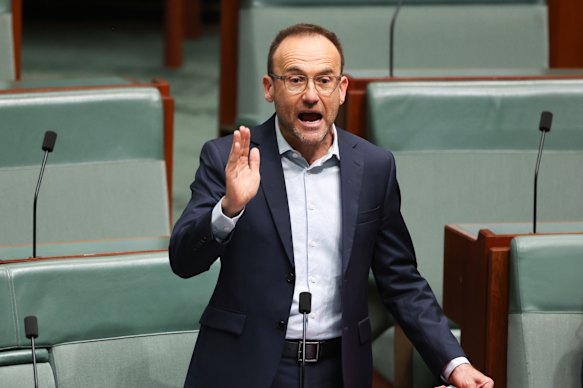
Instead, Bandt tells me, people from across the political spectrum had got in touch and advised him not to think about it too much; he’d never really know why he and the party suffered at the ballot box. “I’m not really best placed to mark my own homework in that respect. I’m going to leave it to others.” He repeats versions of that answer many times. I feel like I am talking to Bandt the politician – wooden and deflective – not Bandt the people movement leader.
It is only when Bandt discusses letting others down that any emotion is detectable. He holds it tightly, but it is there. He remembers getting an Uber and meeting Salah, a close constituent who’d helped on many campaigns. He told Bandt he and the community were very sad he’d lost, then invited him to his son’s wedding. “I had a little happy cry in the Uber,” he says. “The hardest moments afterwards were seeing other people upset. There was a lot of hope that we would go forward at the election … So when you are the leader and you don’t achieve that, of course you feel responsible.”
When he lost, Bandt gave himself six months to consider three future pathways. The first was getting his seat back. The second was returning to being an employment-law barrister (indeed, he did stints as a barrister post-election “to keep the money coming in”). The last option was something in nature and climate activism.
Eventually he decided against returning to politics. He wanted to be more present for his daughters Wren, 10, and Elke, 9, as they head into their teenage years. But he felt, too, that he lacked the drive to get re-elected. “I realised I couldn’t put my hand on my heart and say that I’d do everything I needed to do to climb that particular mountain again, so better to let someone else have a go.” During those six months, the ACF job came up and he applied.
At the end of the interview, I step outside into the oven-like air. It is 42 degrees and gusty. On the way home, I pass a giant Moreton Bay fig in Carlton Gardens, its leaves curling against the heat.
Four days later, I visit Bandt’s inner-Melbourne house. It is, appropriately, painted green and has a jumble of bikes on the front verandah. Wren and Elke meet me at the door. They’re about to film a homemade television show on their iPad. I’m shepherded through the house, past the living room, where Perkins is hanging out (they’ve been together since 2009 and met through mutual university friends). We sit outside on a porch couch.
ACF’s head of media and content, Freya Cole, who’d coaxed Bandt into being a little more open this time, is with us. The porch looks on to Bandt’s pride and joy: his native garden. With his “bible” – Marilyn Bull’s Flora of Melbourne – Bandt has spent seven years establishing his “inner-city bush retreat”, with blackwoods, lightwoods and golden wattle reaching for the sky in a modest-sized backyard. The only non-natives spared from the original garden is the fig tree and a persistent dahlia.
Bandt is much more relaxed, his body less rigid. He’s happy to talk about regrets. He makes no concessions about the party’s direction and inner turmoil, but says he feels he could have better supported former colleague Lidia Thorpe, who rocked the Greens by resigning in 2023 over the Indigenous Voice referendum. She wanted to vote no; Bandt wanted it to succeed. “I felt sad to see Lidia go and, like, wondered whether it was about me and my leadership,” he says. “I hadn’t heard the term ‘intergenerational trauma’ before getting into the last party room.”
He also felt he’d failed at his National Press Club speech in 2024. It was about how the economy was rigged against average people and younger Australians especially. But an ABC political correspondent called it “pure Donald”. As in Trump. Bandt realised he was failing to get his point across about building a fairer society. “I can complain about the media, or I can change what I do,” he says. So he made his argument more hopeful, he says. (Bandt also points to the things he’s proud of: pushing parliament on marriage equality, on an anti-corruption-commission bill, securing protections for firefighters who develop cancer and shifting how we talk about coal. “I took a deliberate decision to stop talking about percentage emissions reductions targets and to start talking about coal and gas,” he says).
Get the best of Good Weekend delivered to your inbox every Saturday morning. Sign up for our newsletter.
But Bandt’s task ahead is very different to his old life. Exactly how is he going to create this people-powered movement? “Old tactics and new tactics,” he says. Building the climate marches back up again. Using the internet to connect people so they don’t feel so alone. A major theme, he adds, will be fun. But when one thinks of Bandt, does fun spring to mind? What first comes to my mind is Bandt’s brilliant line to a journalist who was asking him about the wage price index: “Google it, mate.” But fun? He’s earnest, a little nerdy. His PhD thesis was called Work to Rule: Rethinking Pashukanis, Marx and law (in case you are wondering what or who a Pashukanis is: Evgeny Pashukanis was a Russian communist theorist -executed under the Stalin regime in 1937). In his pre-lawyer days, he was described by one associate as “incredibly earnest about Marxist intellectual politics”. Not exactly life-of-the-party material.
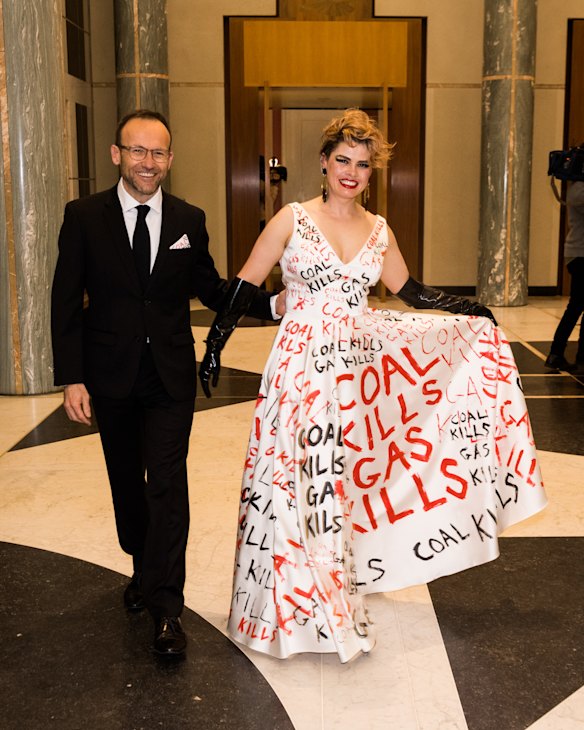
But then, I haven’t seen him DJ, which is his great passion (he loves electronic music, particularly German and French house). From where I am sitting on the porch, I can see his decks in the living room. During the election he did a DJ stint at the nightclub Revolver, a Melbourne institution. “Life goal, unlocked!” he says, grinning. He wants to play again: maybe an ACF bush doof or inner-city party, he says. ” ‘If I can’t dance, it’s not my revolution,’ as Emma Goldman used to say!” (Goldman, a famous Lithuanian-born anarchist who migrated to the US in 1885, probably did not say that, but she certainly believed in the sentiment.)
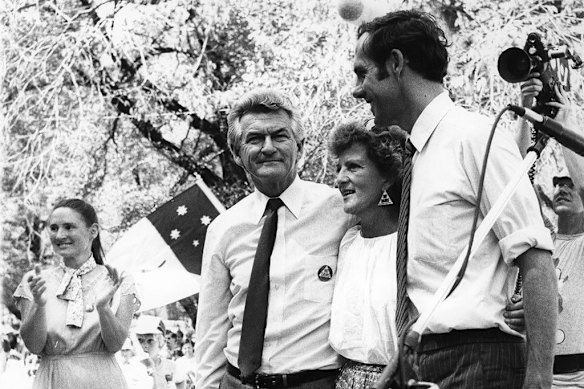
In late February 1983, about 15,000 people came together among the trees in Melbourne’s Treasury Gardens to protest Tasmania’s Franklin Dam. It was a week before the federal election. The star guest was Labor leader Bob Hawke, accompanied by wife Hazel, who was wearing little triangles on her ears saying “No Dams”. Before declaring that Bob Brown was “unequivocally … one of the great Australians”, Hawke declared the dam “an environmental obscenity and an economic absurdity” that shouldn’t proceed. The crowd went wild. Hawke harnessed a widespread environmental concern and, a week later, cashed in.
This is the moment in Australian history that’s been on Bandt’s mind (he included a picture of the rally in his ACF job application). “The Franklin Dam was a movement so big and powerful that governments and aspiring governments wanted to be a part of it,” says Bandt. “That’s the kind of movement I want to build again.” Younger generations don’t remember the Franklin Dam protests, he adds, so they have no memory of a big environmental win. It’s his job to foster hope, he says, and offer a positive vision.
‘I can complain about the media, or I can change what I do.’
Adam BandtBut things have really changed since 1983. As witnessed by the Jekyll-and-Hyde reaction to his social media posts, the public square is fragmented. “A really big thing about activism is that people have to know there’s an issue,” says Robyn Gulliver, a University of Queensland honorary research fellow who studies environmental and pro-democracy -activism. “Today, of course, we live in this massively fractured landscape where a lot of people won’t watch the news on TV, they’ll be looking at their mobile phones.” Also the biggest environmental threat of our time is climate change, says Gulliver, which is much less tangible than saving a specific wild river, forest or reef (though climate change will impact all these ecosystems). “When you think about a forest, it’s more obvious what you can do about it, right? There are trucks going into the forest. You go and stand in front of the trucks.”
Gulliver points out other differences between now and 1983. We are in a “poly-crisis”, she says, with many things going wrong: housing affordability, cost of living, the rise of the far right. People also underestimate, she says, the strength of today’s fossil fuel lobby and how the increasing criminalisation of protest may deter people. “These things don’t mean you can’t build a massive movement, though, it just means it’s different.”
The other stark contrast with 1983 is that the relationship between Labor and the environment movement is at a low ebb. The biggest environment decision of the past few years was the extension of Woodside’s massive North West Shelf gas operations off the West Australian coast. Environment groups called the project a “carbon bomb” and – based on the company’s own estimates – predicted it would release around four billion tonnes of greenhouse gas emissions during its extended life to 2070, the equivalent of at least 10 large coal-fired power plants. Acidic gases from the project also threaten the World Heritage-listed rock art at Murujuga – a collection of more than one million engravings or petroglyphs.
In March 2024, Labor luminaries such as former leader Kim Beazley, former WA premier Carmen Lawrence and former science minister Barry Jones were among 50 well-known Australians and Indigenous leaders who wrote to then-environment minister Tanya Plibersek urging her not to approve the extension. The letter cited Hawke’s action on the Franklin Dam, imploring her to “act in the national interest”. (Though Woodside’s extension was probably more significant than the Franklin Dam in overall impact, the fight against it failed to catch on as a national cause, partly for the reasons cited above, says Gulliver.)
Plibersek pushed the decision off until after the 2025 poll. But several weeks after the election, the new minister, Murray Watt, said he’d approve it with “strict conditions”, particularly on the acidic emissions. It was, says Bandt, a “gut punch” for the Australian environment movement. Then in November, the government announced changes to environment laws that, while more protective of native forests, did not include any assessment of climate impact.
On the bright side, Gulliver says there’s a lot of untapped potential in the environment movement. “There are over 4000 environmental groups across Australia, maybe even up to 10,000, and most of them are not connected to another group. Can you imagine if all these groups could be connected?” Bandt says he wants to support local groups that are aligned with ACF goals in something he calls the “empowerment model”.
A more activist Bandt-led ACF will see a distinct shift in how it has operated for decades, which is as a moderate, inside-the-tent, work-with-government environmental outfit. His predecessor, Kelly O’Shanassey, made significant gains on growing ACF’s supporter base – from 70,000 in 2014 to 500,000 today – but had a low public profile. In 2023, Bob Brown renounced his life membership of ACF, accusing it of not pushing the Labor government hard enough on emissions limits. Brown, who describes Bandt’s appointment as a “masterstroke”, told me: “Everybody knows that ACF have had that role [inside the tent]. They went quiet on the [Environment Protection and Biodiversity Conservation] Act. But I think ACF has got a huge future going back to its previous role in being active in the public domain and augmenting that with its political connections, not the other way around.” Greens co-founder Drew Hutton, who accuses Bandt of backing the party’s “extremist trans agenda” but has no personal beef with him, agrees. “If Adam wants to turn ACF into a campaigning organisation, then I’ll applaud him.”
In Canberra, Bandt doesn’t believe any ill-will from Labor will inhibit him. Things will be respectful, he insists. He sees his role as moving the window of what the government thinks is possible, counterbalancing corporate lobbyists, providing solutions when the government decides to act; calling them out when they don’t. “We’re all going to need to speak a bit louder,” he says.
After the interview, Bandt and I are ambushed by Wren and Elke. They want to show us their “television show”. It shows one of the girls on a top bunk pouring alarming amounts of water over the other sister, who is under an umbrella. Bandt is doubled over with laughter. “We cleaned it up, Dad! We cleaned it up!” They are obviously fond of their dad, but not afraid to tease him. “His awkward period started when he was born,” Elke advises me. “And it will finish when he dies!”
As I leave via the front gate, I see they’ve stuck a piece of paper to it: “TV show in the making.” If he’s successful, perhaps they’ll televise their father’s revolution.
Read more by Good Weekend’s Melissa Fyfe:
How Aussie star Jamie Melham got back on the horse
The ongoing menace of forced marriage in Australia
‘When someone says something nice to me, I just burst into tears’: Inside the mind of Lidia Thorpe