2 hours ago
3
2 hours ago
3
July 15, 2026 — 11:50am
An unexpected dip in the US inflation rate has reduced expectations of an imminent rate hike. With the influences that lowered the rate again under threat, however, the relief may be short-lived.
The US Consumer Price Index headline rate fell 0.4 percentage points in June, relative to May, with the year-on-year rate dropping quite sharply, from 4.2 per cent to 3.5 per cent.
“Core” inflation, which excludes energy and food prices, however, was flat – there was 0.0 per cent change in the month – which highlights how much the higher gasoline and diesel prices flowing from the war in the Middle East added to past inflation rates, and are now subtracting from them.
Oil prices, which peaked at almost $US120 a barrel in April, began dropping in May and the fall accelerated in June in the lead up to, and after, the signing of the ceasefire agreement between the US and Iran last month – even though neither side completely ceased firing.
The collapse of that agreement and the resumption of hostilities last week has seen prices, which had fallen back to pre-war levels of less than $US72 a barrel, spike again. They are now above $US85 a barrel.
That means the relief felt at the petrol pump will be short-lived and energy will shift back to being an inflationary influence.
Along with the flow-on effects of Donald Trump’s war in the Middle East, Trump’s tariffs have been the other policy-inspired source of inflationary pressures.
The 0.1 per cent tick up in core goods inflation might suggest that the impact of the tariffs has almost passed through the economy.
Producer price inflation that was running at an annual rate of 6.5 per cent in May, however, suggests that there is more inflation the pipeline – that companies are still passing on the cost of the tariffs to consumers.
With refunds from Trump’s first attempt at a global tariff regime – his “Liberation Day” tariffs – now flowing after the US Supreme Court deemed them illegal, that may also be having a moderating effect on goods inflation.
About $US81 billion ($116 billion) of the more than $US166 billion that could be refunded has been repaid, with some companies saying that they are using the proceeds to hold prices steady.
A new round of global tariffs, under a different and probably less vulnerable legislative heading, is, however, under way. Trump has also threatened 100 per cent tariffs on all imports from countries that, like the European Union, have digital sales taxes, which would definitely impact the inflation rate.
Thus, with the conflict in the Middle East continuing, with no obvious end point in sight, and gasoline and diesel prices likely to jump again, and with a renewed round of tariffs, the primary sources of the recent inflationary pressures remain latent.
Trump, of course, has prematurely declared victory over inflation, just as he has countless times of the war in the Middle East.
“Inflation is down,” he said on Tuesday, while blaming Joe Biden (as he does in relation to all America’s woes) for the previous run-up in the inflation rate, which was clearly sparked by trade wars and the war in the Middle East. The headline inflation rate when Biden left office was 2.7 per cent.
“Prices are coming way down, and we’re doing a great job,” he said.
His new US Federal Board chairman, Kevin Warsh, appearing before Congress, was more cautious, saying that he didn’t want to read too much in to one data point.
“There might be some that look at this morning’s data and say, ‘Oh, mission accomplished. Everything is swell’. That is not my view,” he said.
He said the Fed had no tolerance for persistently elevated inflation and that his number one objective was to get US monetary policy right.
“If we get policy right – and we will – the inflation surge of the past five years will be a thing of the past,” he told the House Financial Services Committee.
Along with oil and tariff-related inflation, the boom in artificial intelligence investment is creating a conundrum for the Fed.
In the long run, AI might drive big productivity gains and lower inflation and interest rates.
In the near term, however, it is driving up the cost of electronic components, energy and data centre-related construction costs significantly.
It is also providing massive competition for financial capital, at a time when the continuing rise in the US government’s deficits ($US1.4 trillion for the first nine months of this US financial year) is already putting pressure on interest rates.
Warsh, who said the Fed didn’t know the extent to which the economy would benefit from the AI build-out, said it would be monitored for its implications for inflation and the labour market.
The one certainty is that, in the build-out phase, AI will be another contributor to, not as subtractor from, the inflation rate.
There might be some that look at this morning’s data and say, ‘Oh, mission accomplished. Everything is swell.’ That is not my view.
US Federal Board chairman, Kevin WarshThe positive inflation print does, however, buy Warsh and his colleagues time. Where the markets were pricing in a near 50 per cent chance of a 25 basis point rate rise at this month’s meeting of the Fed’s Open Market Committee, the CPI numbers lowered the odds to 20 per cent – although at least one price rise is still priced in before the end of the year.
The reignition of the war in the Middle East is a particular threat to the inflation rate because, the longer it drags on, the more it damages the global oil market and the more the higher energy costs become embedded in global supply chains and flow through to consumer price.
Global inventories of oil, which have helped maintain global oil flows and provided a ceiling of sorts on oil prices, have been heavily depleted, raising the potential for a sudden significant global supply shock if the Strait of Hormuz remains effectively closed.
Refineries have been damaged, and some shut or switched from producing gasoline and diesel to higher-valued-added products like jet fuels. It will take months, once the war ends, to return refinery output to pre-war levels.
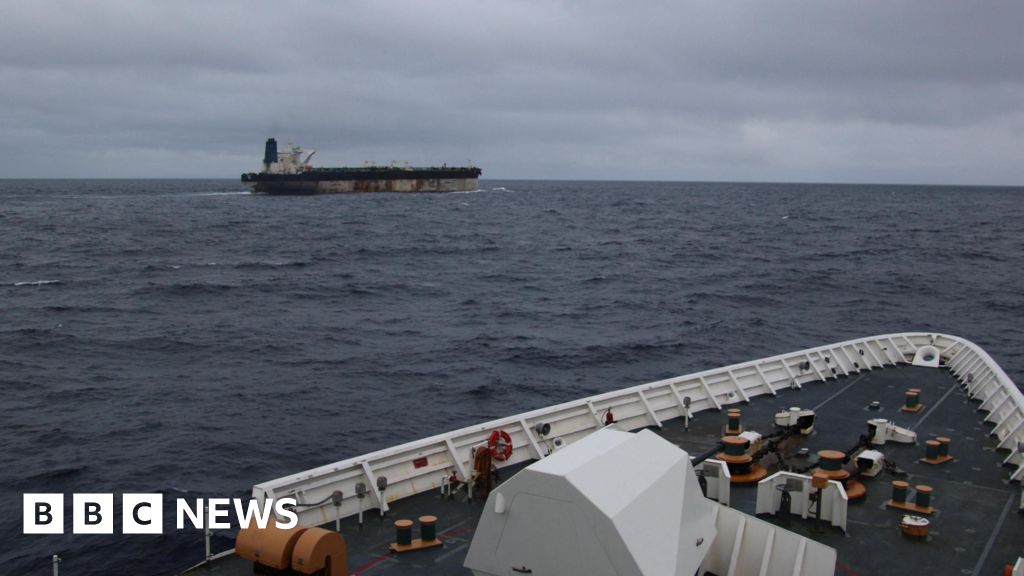
There is no apparent end to the war in prospect. It continues to throttle traffic through the Strait of Hormuz. On Tuesday, about 10 vessels made it safely through the strait. Before the war, more than 130 ships a day sailed through it.
As least Trump has abandoned – only a day after announcing it – his ludicrous plan to impose a 20 per cent toll on traffic through the strait to recover the US costs of trying to safeguard passages. That would either have halted traffic through the strait immediately, because of the higher costs, or caused oil prices to spike considerably.
“Based on highly productive conversations with Middle East leadership, I have decided to replace the 20 per cent United States Reimbursement Fee with Trade and Investment deals that the various Gulf states will be making into the United States,” he said.
Those conversations, with Middle Eastern leaders and, no doubt, those within his own administration who were blindsided by his announcement that the US would become the “Guardians of the Hormuz Strait” and charge a toll to recover its costs, would inevitably have had to involve Trump being told how impractical and counter-productive his most recent thought bubble was.
He has saved some face by claiming he has been promised big investments in the US, to go with the supposed $US19 trillion (an unbelievable 60 per cent of US GDP that has yet to show up in any data) Trump has claimed has been promised as part of trade deals he extorted from major trading partners.
By the time those claims can be tested, he may no longer be in the White House. The effects of the war in the Middle East and his trade wars on the US and global economy, however, may persist well beyond that moment.
The Business Briefing newsletter delivers major stories, exclusive coverage and expert opinion. Sign up to get it every weekday morning.