 3 months ago
28
3 months ago
28
House prices would fall only about 1 per cent if the capital gains tax discount were reduced or removed, experts said.
This masthead revealed last week that a reduction in the capital gains tax discount, which grants a 50 per cent concession on tax for assets held for at least 12 months, is likely to be a centrepiece of Treasurer Jim Chalmers’ budget in May.
But while advocates for reducing the concession have argued that reform could increase homeownership and reduce inequality, they agree with opponents that it wouldn’t significantly bring down house prices.
House prices have soared since the Howard government introduced the capital gains tax discount in 1999, which may suggest reforming it would reduce prices. But experts doubt this.
“It’s just not big enough to matter,” Brendan Coates, economic policy program director at the Grattan Institute said.
“The effect of halving the capital gains tax discount on house prices will be small because the value of that concession is small compared to an $11 trillion housing market.”
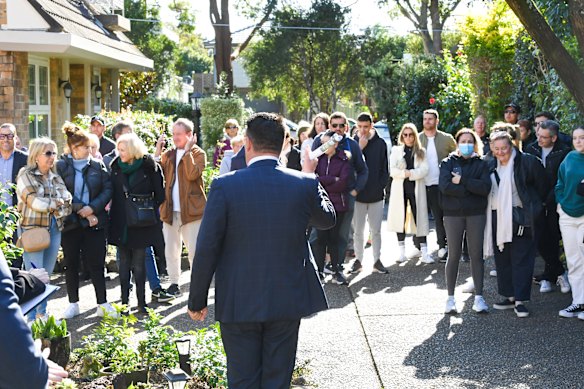
House prices have risen over the long term.Credit: Peter Rae
House prices have risen more than fourfold while consumer prices have doubled since 1999, but other factors have boosted house prices including migration, supply, interest rate changes and rising incomes.
The Grattan Institute argues a halving of the concession (to 25 per cent) would add $6.5 billion annually to government revenue, while only reducing the number of homes built by about 10,000 by 2030 and increasing rents by $1 per week nationally, based on NSW Treasury and Reserve Bank modelling.
Australia Institute chief economist Greg Jericho said removing the discount was unlikely to bring down prices, but it could help to bring them more in line with wages over time.
Loading
“We’ve got 25 years of bad policy to undo, and it’s probably impossible to get back to the level of affordability we had,” he said. “But if we keep doing the same thing, it’s only going to keep getting worse.”
Robert Carling, senior fellow at the Centre for Independent Studies, opposes any change to the capital gains tax discount. But he agrees any change would probably have minimal impact.
“If anyone is looking for this as the silver bullet for substantially lower house prices, they’ll be disappointed,” he said.
Carling said grandfathering the policy as well as fears from investors about the change could risk an immediate short-term increase in prices, but the longer-lasting effect would be more moderate.
Carling said that while discussion has focused on house prices, they make up only about 40 per cent of the assets affected by the tax, adding the government should keep in mind the need to encourage business investment.
Coates agrees that reducing the capital gains tax discount “isn’t really a housing policy”. He said that doesn’t mean reform should be abandoned.
“It raises $6.5 billion a year, largely from older, wealthier Australians that have done very well over recent decades,” he said. “That revenue can be used to either cut taxes, like income taxes, or do more to benefit younger Australians who are currently working.”
Carling and Coates both argue other factors such as migration, rising incomes, interest rate changes and diminishing supply were likely to have had a greater impact on prices soaring since 1999.
Coates argued that while halving the discount would not significantly reduce prices, it would increase the share of owner-occupiers, which the NSW Treasury modelling shows could grow by 5 per cent.
“For a million dollar home, the value might fall by only $10,000, but over time you’d see fewer investors in the market and more first time home buyers,” he said.
Jago Dodson, professor of urban policy at RMIT University, believed over time, reducing the discount would mean house prices would slow.
“But it’s not going to drag down [prices] down by 20 per cent or anything like that,” he said.
Loading
RMIT sustainability and urban planning lecturer Liam Davies argues that limiting the discount to new builds, rather than existing properties, could help encourage investment in housing supply.
“If we want to incentivise supplies through taxation arrangements, do that intentionally and specifically,” he said. “Don’t just have a general housing incentive and hope that somehow spills into the supply.”
Master Builders Australia chief executive Denita Wawn said any policy change should be focused on building more homes, but argues any reduction in the discount would result in fewer homes being built.
“Changes would make investment in housing riskier, with flow-on effects for rental supply and rents,” she said.
For Dodson, the immediate impact on house prices is less important than the government taking steps toward addressing housing affordability and inequity.
“It requires government to have the policy wherewithal and fortitude to start pulling on all the little levers,” he said. “It’s a bit like trying to turn around a very large ship.”
Most Viewed in Property
Loading