
 3 months ago
29
3 months ago
29
There’s an anecdote often told to illustrate the difference between price and worth: Pablo Picasso is sitting at a Parisian café when an admirer approaches his table and asks for a sketch. Picasso whips out a napkin and, with a few quick but skilful strokes, draws a figure. Upon handing the sketch back, he tells the admirer it will cost 10,000 francs. She baulks; it is a lot of money for something that took so little time to create. When she demurs, Picasso furrows his brow and says: “No, madam. It took me my whole life.”
The “fairytale debut” is a narrative I’ve encountered often, and one that readers love. British author Florence Knapp’s first novel, The Names, was the breakout international success of 2025 – the kind of sudden ascent that invites such labels. But much like in the Picasso anecdote, Knapp’s success and skill did not come out of nowhere.
At 49, she has raised two children, curated a sewing blog in the early days of the blogosphere, and published a non-fiction book on the intricate art of English paper piecing. Throughout it all, she was writing fiction. “I’ve had a lot of half-finished novels and also a whole finished novel that was rejected by every single publisher it was sent out to,” she says.
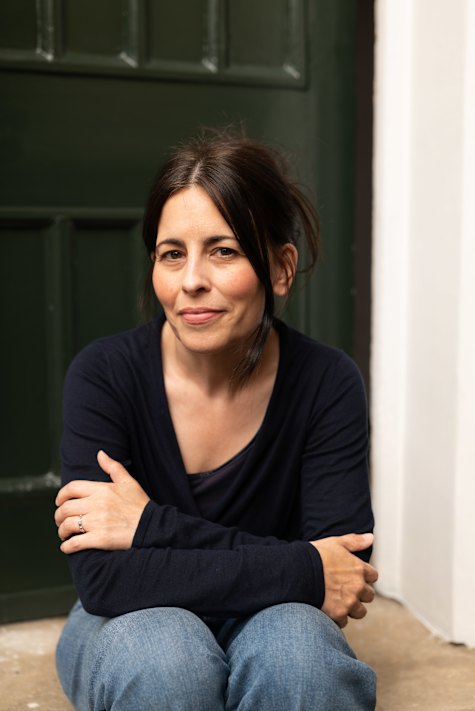
After studying sociology at university, Knapp immediately attempted her first novel. Lacking the industry knowledge that one must present a finished manuscript, she sent a half-completed draft to a literary agent and that agent’s then-assistant, Carolina Sutton. The fish did not bite. Today, more than two decades later, Knapp is represented by Sutton. “It feels like I’ve come full circle to be back with her,” Knapp says with a smile.
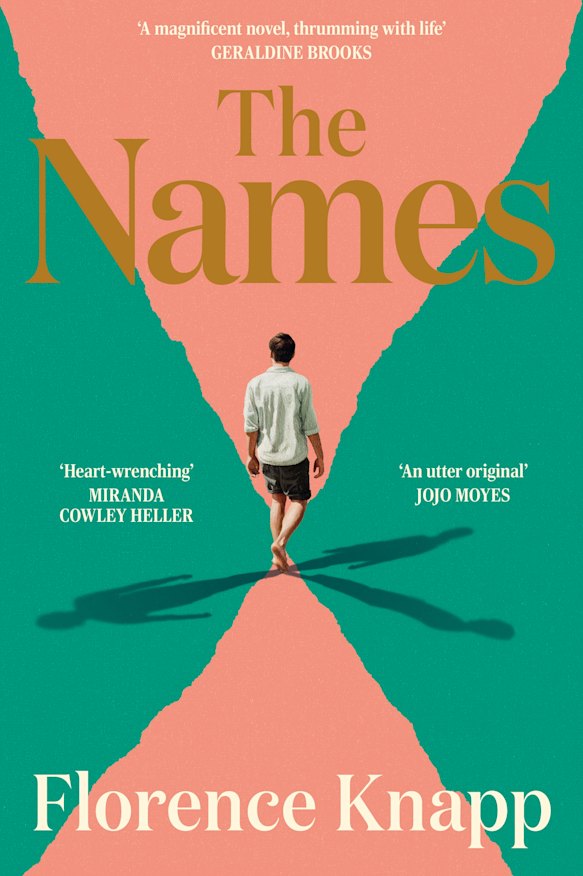
The Names is a novel that investigates the power of – wait for it – names. In October 1987, a new mother named Cora registers her newborn son’s name. In one timeline, she names him Bear; in another, Julian; in a third, Gordon. Cora’s husband, also named Gordon, is abusive, and he reacts differently to each iteration of his son’s identity. These reactions set vastly different lives in motion for his wife, his son, and his daughter, Maia. It is a Sliding Doors-esque premise that tenderly interrogates the stifling effects of domestic violence and the tension between nominative determinism and personal agency.
Now a name feels at the root of what makes us, it’s the first thing that we’re given in life and we carry it everywhere we go with us.
Knapp says her interest with names began with a formative childhood experience. When she was six, her family moved from the UK to a suburb just outside of Melbourne. “When you go to live somewhere new, and your accent is odd, it’s a struggle to fit in,” she says. “My name was not common at all at that point. I was an outsider. And what that means is that I ended up being extremely watchful, trying to work out group dynamics.” We agree that, as novelists, we must often hoard these painful childhood lessons for decades before they become useful.
“Yes!” Knapp exclaims. “And now a name feels at the root of what makes us, it’s the first thing that we’re given in life and we carry it everywhere we go with us. And people will often hear it before seeing us and bring their own associations. Photographs capture us in specific moments in time, whereas a name - it’s a way of accessing every single thing you know about a person.”
I ask about the origin of her own name, winking at the possibility of a romantic honeymoon in Italy. The answer is less exotic than my insinuation. “There was a French stop-motion animation called The Magic Roundabout that my mum was watching while she was pregnant,” Knapp explains. “There was a character in it called Florence who had these big, white, clumpy lace-up shoes. My mum just fell in love with her shoes.”
So was Knapp’s mother trying to make her daughter chic by association? Knapp laughs. “Yes, I think so. But to me, the show is quite psychedelic and off-the-wall. I don’t see ‘chic’ at all.”
When the conversation turns to whether Knapp went on a power trip naming her own children, she humbly defends her choices. “No… I suppose I was thinking about the qualities that I don’t have that I would like to give to them,” she says. “I think of myself as being maybe a slightly more reserved, highly strung person. So when it came to naming my son, I thought, I’d quite like to give him a kind of surfer-ish name, so that he’d be a bit more of a free spirit.”
Though Knapp references her own shyness several times, she doesn’t project it. Her answers are considered, thoughtful: she has had half a lifetime to come into herself, and this confidence is evident in the pacing of The Names, as well as in the speed at which she wrote it: “I started in January 2022 and finished at the end of that June,” she says. “It was the quickest thing I’ve ever written.”
Perhaps the novel’s tripartite structure is what lends it such an assured air. Knapp’s time in Australia also influenced this, in that her child mind was divided between the life she was living in Victoria, and the life that her old friends were still living in the UK.
“I always had another version of my life, where I’d be sitting in my classroom thinking: What would I be doing now if I was back home in England?” she says. “And then when we moved away from Australia, suddenly there were three versions of my life in my head. So that preoccupation with alternate realities started young.”
It is impossible to discuss The Names without addressing the domestic violence sitting insidiously at its heart.
“I wanted to write about how people are shaped by their upbringing,” she says. “And then several months before I started writing I met with a woman called Henu Cummins who ran a women’s refuge. She told me about the day-to-day of her work and it was so harrowing. I think I had understood [domestic violence] on an intellectual level but not an emotional level. I didn’t really get… why doesn’t someone [in that situation] leave?”
As with any novel, one can’t write a general story; every story is specific. One cannot write the “comprehensive domestic violence novel”. Instead, Knapp began to understand the nuances of her fictional family through the act of writing them. “When I’m writing,” she says, “I’m just trying to understand the world and people better myself.”
The tense atmosphere of patriarchal control in The Names evokes the stifling power of John McGahern’s Amongst Women. Knapp hasn’t read it; so she writes it down. All good novelists are readers first. Knapp’s own love of reading was very much seeded by her parents: by her mother, who read to her and her sister until their teenage years – Anne of Green Gables was an early favourite – and by her father, who would get his children to address him by the name of the primary character in whatever book he was reading at the time. “He would want to start embodying certain characters,” Knapp explains. “He is deliciously eccentric.”
From character impersonations to worldwide literary fame, Knapp is navigating the strange transition into the public eye. It’s a peculiar feeling as a debut novelist to start seeing nuggets of information about yourself accruing on the internet. “A fact file of your life gradually appears,” she agrees. And the book auction – such a strange experience! “Yes! You’re going to all these meetings with your agent, and you’re feeling out publishers, and then people are emailing in their bids, and then there’s a second round of bids that have to be in by a certain time, and you know your agent’s going to call you, and I was in disbelief.”
What was Knapp doing while waiting for the auspicious call? She makes a funny face, half-embarrassed. “I… I was driving around to different shops thinking, I just have to find some hummus. Nowhere seemed to have hummus...” Why hummus? “I don’t know, I just thought, hummus will be really grounding, I need to be eating hummus while I take the call.”
To end our conversation, we reflect on the strangeness of our writing being such an inherently private act while the publicity requires such performance. Knapp says that being on American television, for example, was “terrifying” and that she spent the year prior as a “ball of anxiety”. Meanwhile, I am basking in the relative safety of my role today; it is a relief to be the interviewer rather than the interviewee. After our talk, Knapp emails me, letting me know I can feel free to leave out the hummus anecdote. “No,” I respond, kindly. “The hummus is the story, Florence. It’s just you and the hummus.” Knapp graciously accepts this, now a consummate performer. Perhaps if I have a daughter, I shall name her Hummus. It’s very grounding.
Florence Knapp appears via video link at Sydney Writers’ Festival (May 17-24).
Madeline Gray is the author of novels Green Dot and Chosen Family and is also a guest of the Sydney Writers’ Festival.

















































