 1 hour ago
2
1 hour ago
2
Opinion

July 17, 2026 — 5:00am
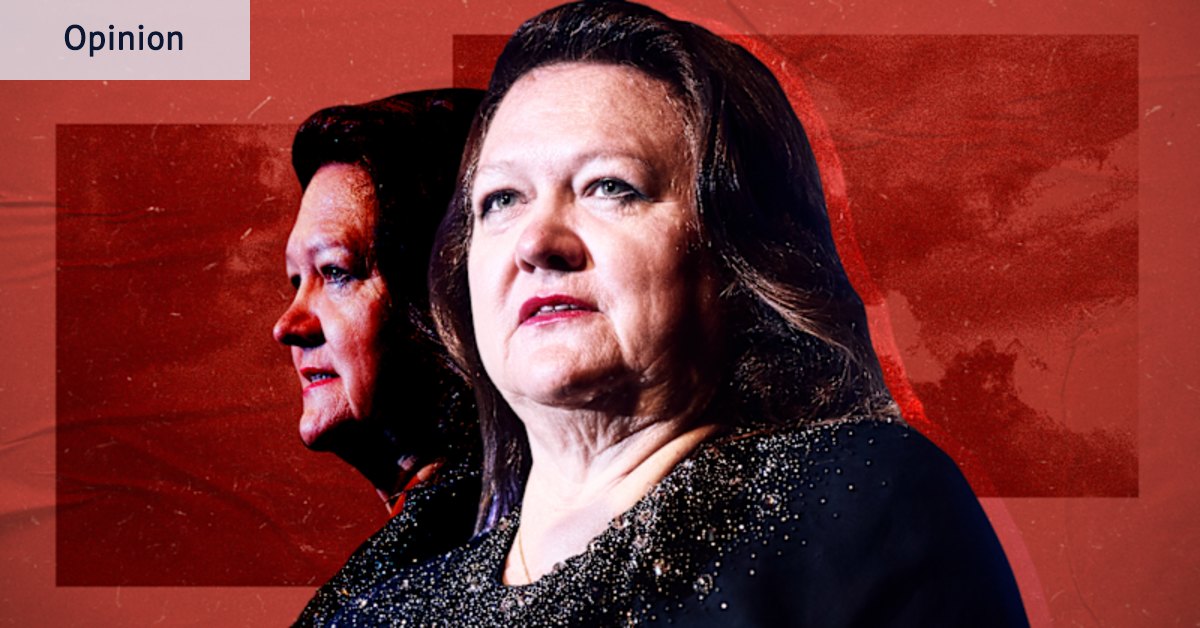
What are we calling this? A fall? The ceiling? I’m not sure it’s wise to opt for anything nearly so final, so I’m going with a softening. Whatever you call it, several polls over the past fortnight now show One Nation support dipping slightly and Pauline Hanson’s approval dropping more. The turning point seems clearly enough to be Hanson’s National Press Club appearance, in which the public first got the full Hanson experience – all her main positions, her overarching worldview in one place.
Until then, the One Nation surge was a mood. “It’s not ideological,” said Redbridge pollster Simon Welsh recently, summarising what he’s hearing from people moving to One Nation. “It’s not about moving right, it’s not even necessarily about policy.” Rather “they’re coming across to One Nation … often in spite of One Nation’s position on issues like immigration”. Nothing quite kills the mood as much as when things become more about policy. The question was always whether, when, and to what extent that would happen. At this stage, all signs point to it happening enough to apply some kind of political brake.
We shouldn’t overstate this. The softening is real, showing up in enough polls to confirm it, but only roughly equivalent to the margin of error. Of more interest is that Hanson’s own softening approval significantly outstrips this. That suggests two things: one, that her popularity is fragile and impressionistic; two, that One Nation’s support is not entirely tied to her. It seems there are those who, having taken a closer look at Hanson, might not love what they see, but still like the idea of rejecting the establishment. One Nation is a mood, still. Hanson is still considerably more popular than other major party leaders, and we’re still talking about polling that only months ago would have shocked us.
We can think of One Nation’s support roughly in three groups. Members of the first are the true believers, those who’ve always been attracted to One Nation’s stance on issues like race and immigration and have never really wavered. Past election results suggest that group sits somewhere between 4 and 6 per cent of voters. A second group are those in revolt against the system who’ve made up their minds and have nothing more to consider. A third group is disillusioned but engaged, and who are therefore still up for grabs. They might move to the second group, or back to the traditional majors. From here, so much will depend on how big that third group is, and what is likely to turn those voters.
Events of the past few weeks have some themes emerging. The major fallout of the Press Club appearance has been well explored by now: Hanson’s monoculture musings, her attacks on paid parental leave, and her opposition to higher wages for “lazy” workers. What’s interesting in this collection is how they interact. The monoculture pines for a time redolent of the white working man’s paradise, where work was secure and family was valued. “Monoculture” was always an overreach – too bludgeoning for the mood and falling apart further each time Hanson tries to clarify it – but I take it as code for stability and security. The trouble is that the other two policies work so blatantly against that.
Attacking paid parental leave is an anti-family policy. Complaining about lazy workers isn’t what happens in a working man’s paradise. Both positions seem to make stable, secure family life even more of a vanishing prospect. It’s telling that these policies have proven a pothole in One Nation’s road.
The whole point of populism is to assail the prevailing order. Among the most bracing features of both Brexit and then Donald Trump’s first election in 2016 was their sheer audacity: the way they took so unapologetically to the unchallengeable wisdom of the global free market. That was not a moment in politics but the beginning of a new orientation that called time on liberal orthodoxy and announced a new post-liberal style. It hasn’t conclusively won, but it hasn’t gone away either, which is why Trump ran so hard on tariffs in 2024, and Nigel Farage’s Reform, despite Farage’s recent travails, remains Britain’s most popular party.
One Nation very much strikes that pose. Its attacks on immigration, its pledges to slash climate expenses and foreign aid, and its politics of heightened military spending and greater sovereignty over trade and energy, all these are in tune with the season. It’s not that people need to support each of these policies, but they can easily grasp the spirit in which they are offered: a desire for greater control and more stability. These are the moods inducing the Coalition to follow, and Labor to counter. But things can get complicated quickly when you begin to sound like the old order you’re trying to dismantle.
Recently, I wrote of how Donald Trump’s largely uncritical embrace of AI is perhaps his greatest political weakness, placing him in sharp opposition with his voters. Republicans are worried it will be a definitive issue in November’s midterms, especially as community-level anger grows over the proliferation of data centres.
Here, Trump sounds most quintessentially like the big business Republicans against whom he launched a revolution: plumping for his billionaire donors over the working-class communities who have known for a long time what it is to be hollowed out by the latest corporate project. Hanson has escaped this trap, perhaps because she’s not reliant on tech donors. She channels popular anxiety over the technology.
But when she sounds off on paid parental leave, and when she talks up the interests of employers over those of lazy employees, she doesn’t sound remotely like an insurgent. She doesn’t sound fresh, like she’s acknowledging something voters feel but the mainstream parties refuse to say. She’s instead saying things that would roll easily off the tongue of a hard-nosed Liberal party leader.
Waleed Aly is a broadcaster, author, academic and regular columnist.
The Opinion newsletter is a weekly wrap of views that will challenge, champion and inform your own. Sign up here