Italy denied U.S. warplanes use of major base for Iran operation mid-flight, report says
Italy denied permission for U.S. military aircraft to touch down at the Sigonella air base in Sicily as they headed to the Middle East recently as part of operations against Iran, Italy's Corriere della Sera newspaper and the Reuters news agency reported, citing anonymous sources.
According to the Corriere, one of Italy's most widely-circulated broadsheets, "several U.S. bombers" were denied permission to land at the base as the U.S. military had failed to seek prior authorization or consult with Italian military leaders, as required by access agreements governing the use of joint military installations in the country.
The U.S. Navy operates Air Station Sigonella as part of the larger Italian base at the site.
Italian center-left opposition parties have urged the government of right-wing Italian Prime Minister Giorgia Meloni for weeks to follow Spain's example and block all U.S. use of bases in Italy for offensive operations in Iran. Madrid has gone a step further, barring all use of its airspace by U.S. miltiary aircraft taking part in the attacks on Iran.
Meloni's administration has assured lawmakers that it would seek parliamentary authorization if any requests were made by the U.S. for such use of bases.
Corriere della Sera said the decision to deny the U.S. warplanes use of the base was made several days ago, after initial checks suggested the flights were not part of normal exercises or logistics maneuvers, and were therefore not covered under the U.S.-Italy treaty governing use of bases.
The newspaper said it was General Luciano Portolano, chief of staff for Italy's defense forces, who informed U.S. commanders of the decision.
Water desalination plant on Iran's Qeshm island in Strait of Hormuz reportedly offline after strike
Iranian media said Tuesday that an Israeli or U.S. airstrike had taken a water desalination plant on the Persian Gulf island of Qeshm offline.
According to the Iranian government affiliated Borna News, the head of the Ministry of Health's Environmental and Labor Health Center said all drinking water on Qeshm is supplied by desalination and that the strike had taken the plant out of service. Borna cited the minister as saying repairs were not possible in the short term.
There were unconfirmed reports that a power plant on the same island was also hit by a strike, and power and desalination plants are often linked.
Qeshm is Iran's largest island in the Persian Gulf, home to about 150,000 people according to the United Nations.
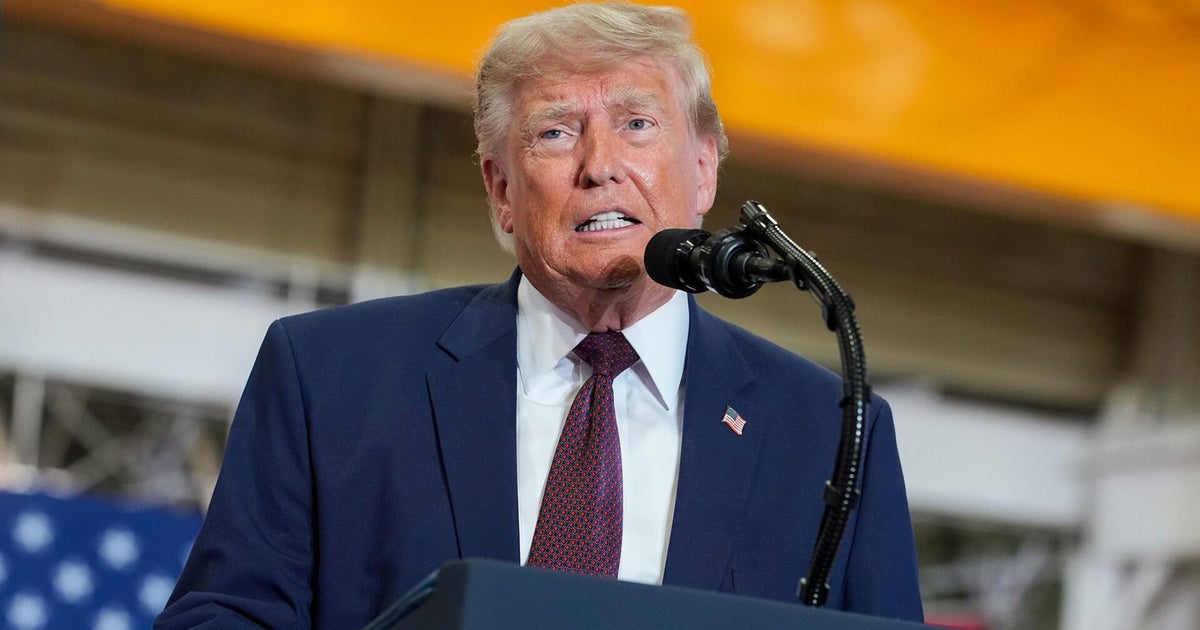
President Trump warned on Monday that, unless Iran makes a deal to end the war, "we will conclude our lovely 'stay' in Iran by blowing up and completely obliterating all of their Electric Generating Plants, Oil Wells and Kharg Island (and possibly all desalinization plants!), which we have purposefully not yet 'touched.'"
Kuwait's Army said Monday that an explosion likely caused by an Iranian drone had caused serious damage to one of the country's power and water desalination plants, killing a worker.
Iran and most Persian Gulf states rely heavily on desalination plants to produce fresh water for everything from crop irrigation to human consumption, making them vital civilian infrastructure and a major point of vulnerability in conflict.
According to the Center for Strategic and International Studies, Kuwait relies on desalination for 90% of its drinking water, with at least half a dozen plants operating to meet the need.
Iran strikes Kuwaiti oil tanker at Dubai Port, state media report
An Iranian attack sparked a fire on a Kuwaiti oil tanker at Dubai Port, state media reported on Tuesday local time.
"The Kuwaiti giant crude oil tanker was subjected to a direct and malicious Iranian attack while in the anchorage area of Dubai Port in the UAE," official news agency KUNA reported, citing Kuwait's state-owned oil company. The Kuwaiti Very Large Crude Oil Carrier (VLCC) Al-Salmi was targeted, according to state media.
KUNA reported there were no injuries and that Dubai authorities confirmed specialized maritime firefighting units were continuing to suppress the fire.
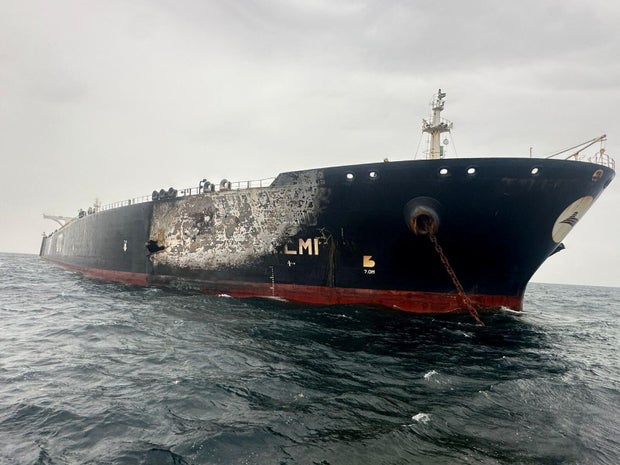 Damage to the Kuwait-flagged Al-Salmi crude oil tanker, following a reported Iranian drone strike, is seen off the coast of Dubai amid the U.S.-Israeli war with Iran, March 31, 2026.
Kuwait Petroleum Corporation/Handout/Reuters
Damage to the Kuwait-flagged Al-Salmi crude oil tanker, following a reported Iranian drone strike, is seen off the coast of Dubai amid the U.S.-Israeli war with Iran, March 31, 2026.
Kuwait Petroleum Corporation/Handout/Reuters
According to KUNA, the tanker was fully laden at the time of the attack, which had caused "material damage to the ship's hull" and "the possibility of an oil spill in the surrounding waters."
Kuwait's military also said on Tuesday its air defenses were responding to "hostile missile and drone attacks," according to a post on X.
Netanyahu says goals of Iran war achieved "beyond the halfway point"
Israeli Prime Minister Benjamin Netanyahu said Monday that the war on Iran had achieved more than half its aims, without putting a timeline on when it would end.
"It's definitely beyond the halfway point. But I don't want to put a schedule on it," Netanyahu told Newsmax in an interview.
He added that he meant the war was more than halfway "in terms of missions, not necessarily in terms of time."
When asked about the plan to open the Strait of Hormuz, Netanyahu said there are military solutions that the United States is leading, but declined to go into details, including regarding whether the U.S. would send troops to try to take Kharg Island.
Speaking of a long-term and post-war solution, the prime minister floated the idea "to divert all the energy pipelines, oil and gas, from the Gulf where the Iranians have a geographic chokepoint to across Saudi Arabia, to the Red Sea … and up there to the Mediterranean port — our ports in Israel."
CBS/AFP
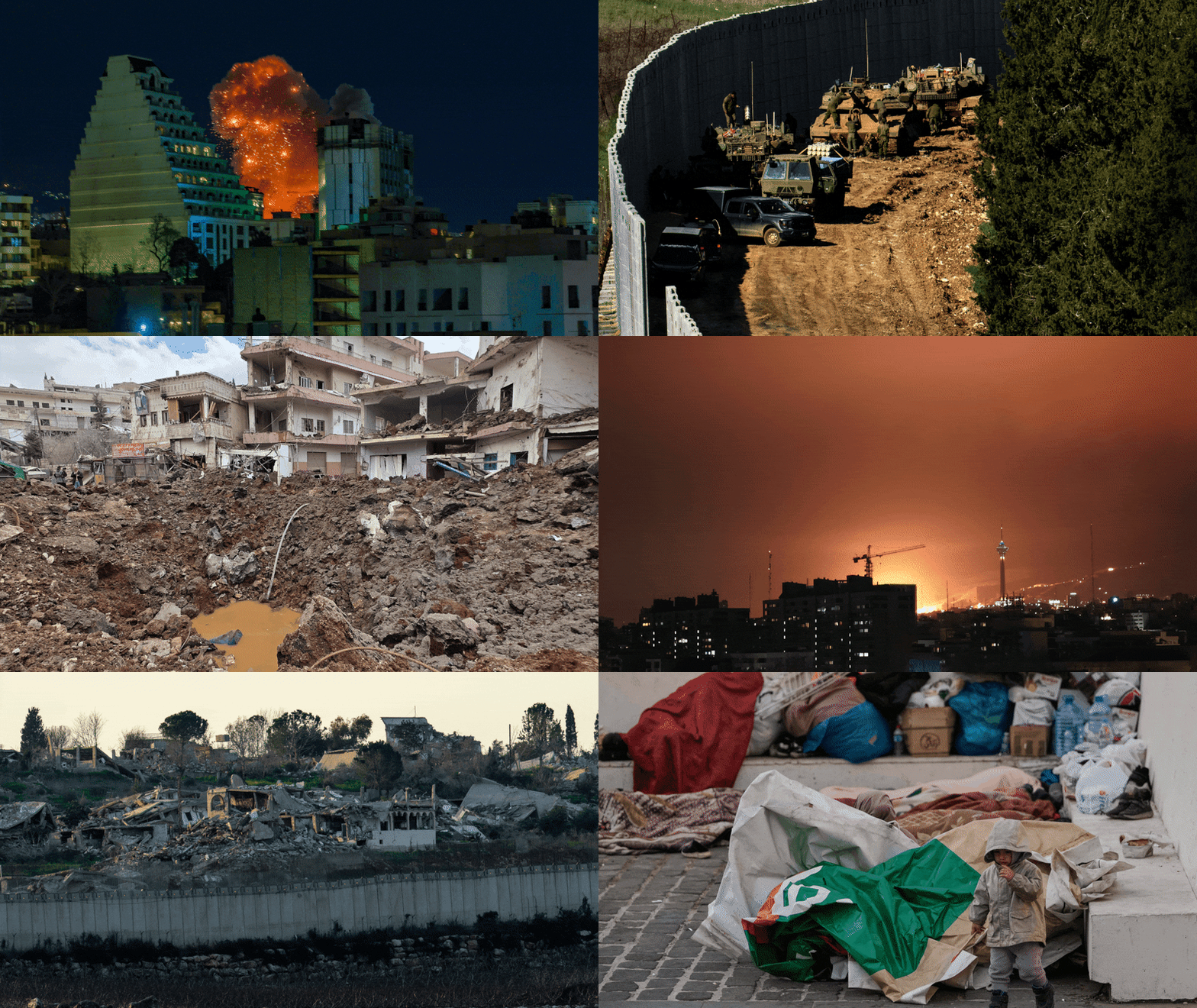
4 Israeli soldiers, 3 U.N. peacekeepers killed in Lebanon
The Israeli military said Tuesday that four of its soldiers had been killed in combat in southern Lebanon, where its forces are clashing with Iran-backed Hezbollah.
A military statement named three soldiers from the same battalion who "fell during combat" and a separate statement said another soldier, who hadn't yet been publicly named, had died in the same incident.
Another soldier was severely wounded and a reservist moderately wounded, according to the second statement.
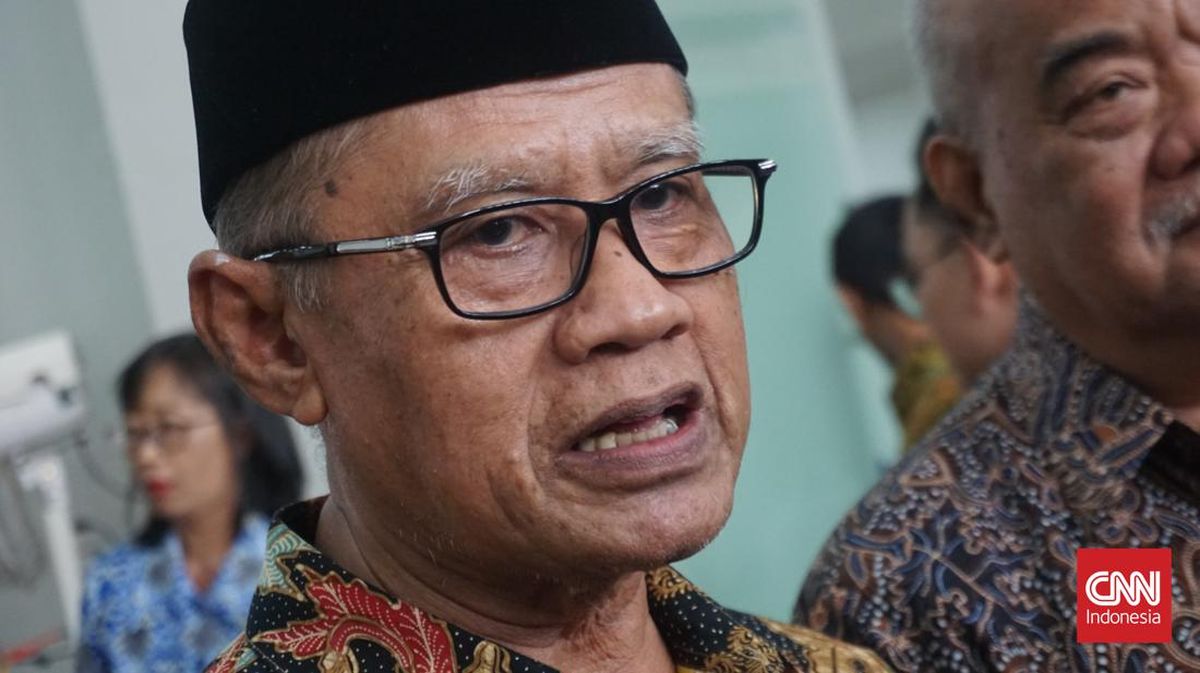
In addition, the U.N. mission in Lebanon said two Indonesian peacekeepers were killed when "an explosion of unknown origin destroyed their vehicle" and two other peacekeepers were wounded, one seriously. A third peacekeeper was killed Sunday.
The Israeli military said early Tuesday that it had opened an investigation to determine if it or Hezbollah was responsible.
France, a key player in Lebanon, called for an urgent U.N. Security Council meeting, which was subsequently scheduled for Tuesday.
CBS/AFP
U.S. bombs Isfahan, likely home to some of Iran's highly enriched uranium
A likely strike by the United States hit the central Iranian city of Isfahan early Tuesday, sending a massive fireball into the sky. President Trump, who has insisted this week that talks with Iran are making progress toward a possible peace deal, shared video of the attack on Isfahan, with fiery explosions lighting up the night sky.
Isfahan is home to one of three nuclear facilities attacked by the U.S. military in June 2025, and it is believed to be where at least some of Iran's highly enriched uranium is stored, possibly buried after the June strikes.
A satellite image taken just before the 12-day war in June between Iran and Israel suggests Tehran transferred a truckload of highly enriched uranium to the facility at Isfahan.
The image from an Airbus Defense and Space Pléiades Neo satellite shows a truck loaded with 18 blue containers going into a tunnel at the Isfahan Nuclear Technology Center on June 9, 2025. Israel launched the war on June 13. The United States joined, bombing the Isfahan facility along with two other nuclear sites on June 22.
François Diaz-Maurin, an analyst with the Bulletin of Atomic Scientists, wrote that the truck likely carried 18 secured containers of as much as 534 kilograms (1,177 pounds) of uranium enriched up to 60% purity, a short, technical step from weapons-grade levels of 90%.
The Washington-based Institute for Science and International Security also suggested the vehicle was transferring the highly enriched uranium. The French newspaper Le Monde first reported on the images.
CBS/AP
U.S. Gulf allies quietly trying to get Trump to continue the war: AP
Gulf allies of the United States, led by Saudi Arabia and the United Arab Emirates, are urging President Trump to continue prosecuting the war against Iran, arguing that Tehran hasn't been weakened enough by the monthlong U.S.-led bombing campaign, according to U.S., Gulf and Israeli officials.
After private grumbling at the start of the war that they weren't given adequate advance notice of the U.S.-Israeli attack, and complaining the U.S. had ignored their warnings that the war would have devastating consequences for the entire region, some of the regional allies are making the case to the White House that the moment offers a historic opportunity to cripple Tehran's clerical rule once and for all.
Officials from Saudi Arabia, the United Arab Emirates, Kuwait and Bahrain have conveyed in private conversations that they don't want the military operation to end until there are significant changes in the Iranian leadership or there's a dramatic shift in Iranian behavior, according to the officials who weren't authorized to comment publicly and spoke on the condition of anonymity.
The push from the Gulf nations comes as Mr. Trump vacillates between claiming that Iran's decimated leadership is ready to settle the conflict and threatening to further escalate the war if a deal is not reached soon.