
 4 months ago
41
4 months ago
41
This week’s reviews range from feminist thrillers and quirky to sci-fi to the fragile environment of Antarctica and the joy of our back gardens.
FICTION PICK OF THE WEEK
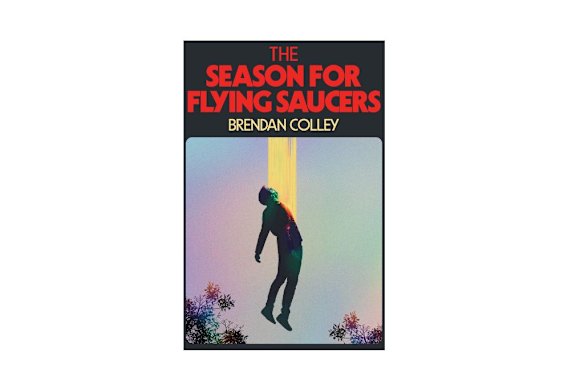
The Season for Flying Saucers
Brendan Colley
Transit Lounge, $34.99
Tasmanian writer Brendan Colley attracted attention and acclaim with his debut The Signal Line, about a ghost train arriving in Hobart. His second novel, The Season for Flying Saucers, expands from the spectral into the extraterrestrial, with a dysfunctional family reunited at a house that appears to be a target for alien abductions. The Greys have experienced such an event before. Paterfamilias Warwick had been obsessed by aliens since childhood and searched the skies until the lights came, willingly abandoning his family to embrace another world. For his adult son Noah, the change inspired an affinity for poetry; for his estranged wife Patricia, a gift for seeing the spirits of the dead, and for his daughter Martha, a talent for communicating with dogs that outstrips her ability to talk to humans. Forced by financial need to live together, the Greys must navigate ghosts and old wounds just as Warwick suddenly reappears. A sci-fi with intrusions of humour and a philosophical bent, the novel yokes the essential strangeness of UFO sightings to the familiarity, however weird it might seem in practice, of familial love.
The Endling
Keely Jobe
Scribe, $35
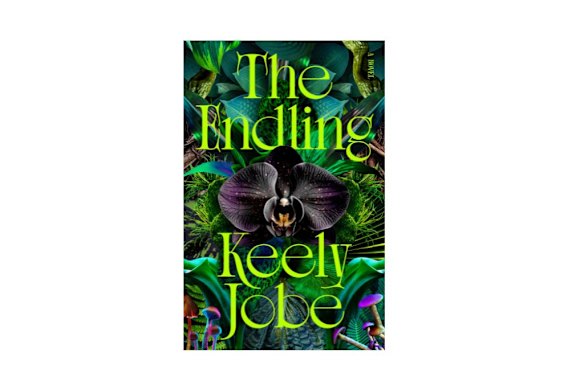
The Endling is another literary novel set among fringe-dwellers – not the tin-foil hat-wearing brigade, but a remote feminist commune peopled exclusively by women who’ve retreated into the forest. It’s the 1990s. The women’s utopia has been around for decades – self-sufficient, off-grid – and it faces a test of its ideological commitment when Mila becomes one of several women who falls pregnant through seemingly immaculate conception, after wild nights communing with nature. The children they bear are strange and quiet, which causes less concern than the fact that Mila’s child appears to be a boy … Meanwhile, Mila’s aunt Frank – a venerable recluse – is succumbing to illness in even deeper forest, with only her dog for company. Frank’s discovery of a black orchid, the last of its kind, might’ve set in train the unexpected fecundity in the commune, and the cycle of life will draw the reader into contemplating extinction, as well as the changes wrought to the community of women by the unexpected arrival of new life. It’s a lush, slightly uncanny utopian novel that delves into feminine power and desire.
One Night at Silver Lake
Katherine Scholes
Penguin, $34.99
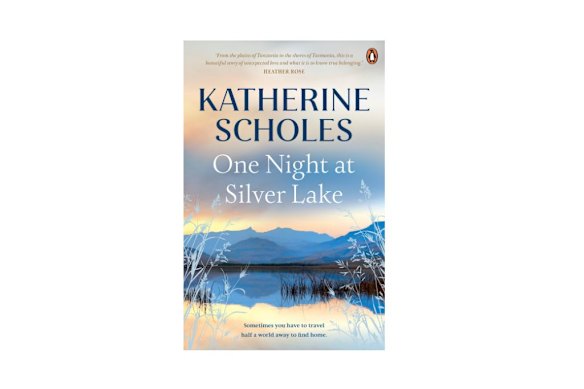
Bestselling author Katherine Scholes (The Rain Queen) is a quiet international publishing success story, and was the first artist to travel to Antarctica as a guest of the Australian Antarctic Division. Her latest novel draws on her own background – growing up in Tanzania, moving to Tasmania – to lend vividness and authenticity to this tale of a woman finding unexpected love and a place to call home. It’s the 1960s. Sarah Brayden lives in a remote mining community in Tanzania, wife to Richard, a manager at the mine. Sarah’s a fish out of water, feeling closer to the nomadic herders of the Serengeti plains than the folk of the town. Sarah also longs to be a mother, and she’s surprised and saddened to discover that her husband is medically infertile. The possibility of having Richard’s brother Troy donate sperm is something Sarah knows that Richard wouldn’t approve, so she drives to Troy’s base at Silver Lake to take matters into her own hands. What happens will echo across time and place, as Sarah moves to the coastal wilderness of Tasmania, and her dream of motherhood becomes a reality. This is a sweeping and elemental novel, enriched by the natural beauty and complicated by the colonial history of two continents.
Body Double
Hanna Johansson
Scribe, $29.99

A young transcriber haunts the frame narrative of Body Double. Each day this solitary figure collects tapes from the office of a ghostwriter, before she trundles home to type out the stories. One day, the tape contains something different – not someone else’s novel, but a message addressed only to her … Elsewhere in the city, two women swap coats accidentally in a department store. Laura and Naomi are strangers, but when they do meet, again by chance, a whirlwind romance develops. Piece by piece, Laura begins to mirror and then to become Naomi – copying her gestures and her appearance, taking over her identity and her life. As the identity theft narrative shifts into psychological thriller territory, the transcriber in the framing story begins, slowly and implacably, to disappear. Closer to Ingmar Bergman’s Persona than it is to, say, Single White Female, this is a disconcerting doppelganger novel that splinters into a dual tale of betrayal and uncertainty in romance and in literary art.
Dove
Georgina Harper
Penguin, $34.99
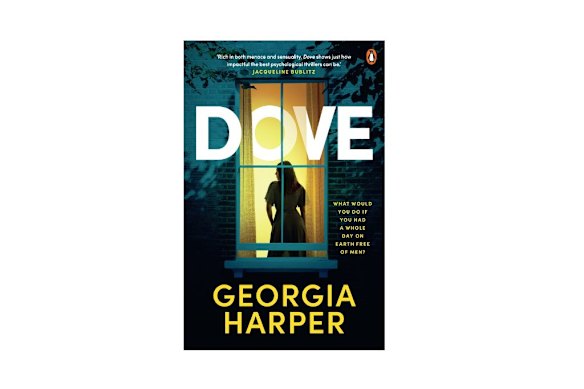
Following a violent encounter with a neighbour, the fiercely independent Dove – an outsider in her small Queensland town – vents by writing a question on a wall of her farm. “WOMEN: what would you do if you had a whole day on Earth free of men?” The message is visible from the main road, and the women of the town start to add their own contributions. Some are aspirational, others publicise the misogyny and mistreatment many of the town’s women have experienced. The wall soon attracts media coverage, and threatening messages start appearing on it, as the uglier side of male behaviour in this patriarchal place comes under scrutiny. Georgina Harper’s debut What I Would Do to You (2024) was set in a future Australia which had reintroduced capital punishment with a ghoulish proviso. Dove tackles a feminist flashpoint in a less speculative way. This slow burn of a novel does work in a late, thriller-like plot point but finds most of its fuel in the dissection of destructive forms of masculinity, the culture of silence that develops around them, and what breaking it unleashes.
NON-FICTION PICK OF THE WEEK
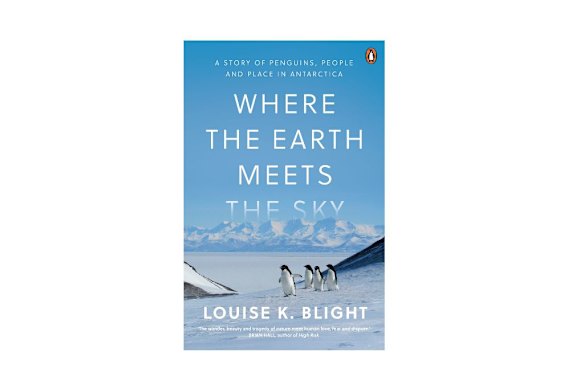
Where The Earth Meets The Sky
Louise K. Blight
Penguin, $36.99
Louise Blight was still mourning her sister and her father when she arrived at remote Ross Island in Antarctica to study the Adelie penguin population there. She thought she was escaping to a place “blissfully free of humans” where her suffering would feel insignificant. But she was wrong on both counts. While there are days of splendid isolation, there are also regular visitors and interactions with other scientists. It is here that her grief catches up with her, and here that the searing beauty of this immense white world weaves its healing magic:“We are wounded by the loss of our connection with wild beings and wild places without quite knowing what it is that we have lost.” Blight’s immersive work gives a personal dimension to this universal truth. At the same time, it is also very much about the practicalities of scientific research and the impact of global warming on this extreme yet fragile environment. It’s a story of how, when life is pared back to the basics, what really matters shines through.
Journey to the End of Time
Alex Miller
Allen & Unwin, $34.99
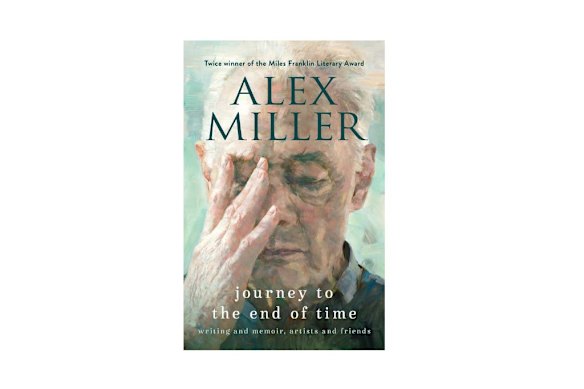
All autobiography is a process of selection: what to put in, what to leave out. In this case, the selection has been made by Alex Miller’s wife, Stephanie, from Miller’s works of prose, poetry and short stories. As such, Journey to the End of Time is memoir-as-collaboration, a portrait of the artist as an old man looking back on key moments, experiences and people from his life. It opens with a deeply felt piece about his boyhood in wartime London recalling the times he spent with his mother and sisters in the air-raid shelter in their backyard; how he loved the shelter more than his bedroom because it brought him “closer to the night and to the world and to the war … closer to the extraordinary.” Spare, direct prose that goes straight to the heart of experience is a hallmark of Miller’s style. His words never draw attention to themselves but are pointers to unspoken depths, whether he is writing of much-loved dead friends, how an audience with the Queen liberated him from his past, the joy of his children living close by, or the mysteries of the creative process.
Let It Be Tough
Ant Williams
Simon & Schuster, $36.99
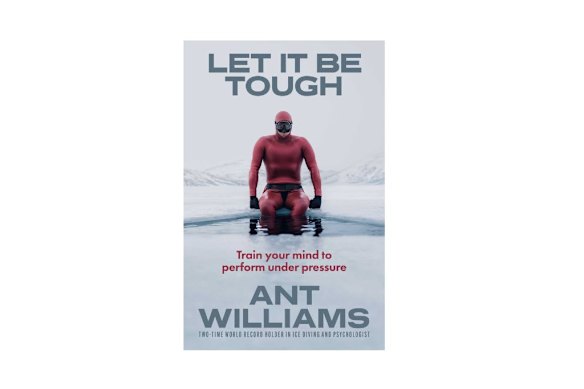
The film Le Grand Bleu, about two kids from a Greek village who compete diving for coins, and a crisis in his professional life spurred Ant Williams to take up freediving. He was a sports psychologist working with athletes in high-risk sports, but had no experience of what it meant to confront danger as a contestant. In competitive freediving, where the challenge is as much mental as physical, he found an antidote to the feeling of being a fraud. Despite the macho title, it’s not about “toughing it out” in a traditional sense. The crucial words are “let it be”, a mindset straight out of Buddhism 101: learn how to accept, rather than resist, pain. In this case, it means getting comfortable with the inevitable crushing discomfort that goes with hydrostatic pressure or build-up of carbon dioxide. It’s an approach that gives Williams’ memoir-cum-life-manual broad appeal, even if you have absolutely no desire to break world records for diving deep or swimming under ice on one breath, as Williams has done.
On Censorship
Ai Weiwei
Thames & Hudson, $29.99
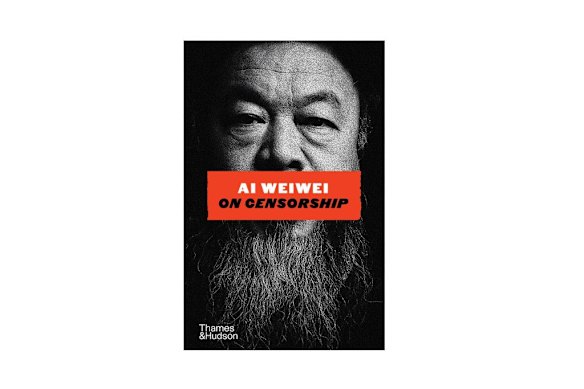
If anyone understands the insidious and corrosive nature of censorship, it’s Chinese dissident artist Ai Weiwei. He has been surveilled, jailed, bugged, erased from official histories and had his passport confiscated. Even Chinese AI refuses to speak of him. Now living in the West, he is also aware of how censorship operates in democracies. When corporate sponsors learn that he is to be part of international exhibitions, they invariably withdraw funding out of fear for their business interests in China. Comments he has made on social media have led to the cancellation or postponement of exhibitions in Paris, London, Berlin and Boston. So it is not surprising that he holds grave concerns for the future of freedom of expression and thought worldwide. “The scope, depth and reach of modern censorship are unparalleled in human history, surpassing even the most dystopian visions of science fiction.” This bracing polemic might be called a wake-up call – were it not for Weiwei’s fear that we are beyond the point of no return.
Why We Garden
Hannah Moloney
Affirm Press, $34.99
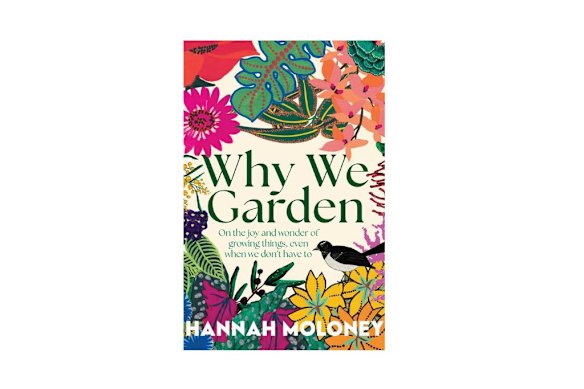
While Hannah Moloney’s mum was at church on a Sunday, her dad would go commune with creation in the back paddock, marvelling over the way life can resurrect. The link between soil health and soul health is central to why Moloney, a permaculture practitioner and presenter on ABC’s Gardening Australia, loves to garden. But she knows from her own experience, and from the many people she has surveyed and spoken to, that the impulse to garden has a complex root system. While we are out nourishing our gardens, they are nourishing us, literally through the food we grow, emotionally through the joy of fostering new life, aesthetically through the creation of beauty and socially through the communities built around gardens. This is a playful, thoughtful reflection on the ancient activity of reconnecting with the earth.
The Booklist is a weekly newsletter for book lovers from Jason Steger. Get it delivered every Friday.

















































