 2 months ago
48
2 months ago
48
When the FIFA World Cup kicks off in June, hosted by 16 cities across Canada, the US and Mexico, you can expect the global spotlight to swing firmly onto the countries of North America.
But that is only revealing part of the story of the Americas, a vast land mass that stretches from the deep north of the globe to the far south.
Taken together, the three contiguous Americas – North, Central and South – form one of the world’s most compelling destinations. They account for about 30 per cent of the Earth’s land area and are home to more than a billion people spread across 35 countries.
This is where you will find the Andes mountains, the Amazon rainforest, the Atacama Desert and the Patagonian Ice Field, along with other wonders such as the world’s oldest trees and its highest freshwater lake.
Look beyond landscapes and there is even more to marvel at. The Americas are home to some of the world’s biggest cities, with São Paulo, Greater Mexico City, New York City, Los Angeles, Buenos Aires, Rio de Janeiro, Bogotá and Lima all with populations upwards of 10 million people.
The region’s history is just as impressive, with ruins left behind by remarkable indigenous civilisations including the Cahokia and the Sinagua, the Olmec and the Toltec, the Inca and the Moche, the Teotihuacano and Zapotec, the Maya and the Aztecs.
Sign up for the Traveller Deals newsletter
Get exclusive travel deals delivered straight to your inbox. Sign up now.
With so much to choose from, where do you start your adventures? With our list of some of the area’s most memorable experiences. Traversing the territory from top to bottom, some of these experiences are world-famous, others less so – but you will only find them in the Americas.
NATURAL HIGHS
Be dazzled by the world’s largest salt flat in Bolivia
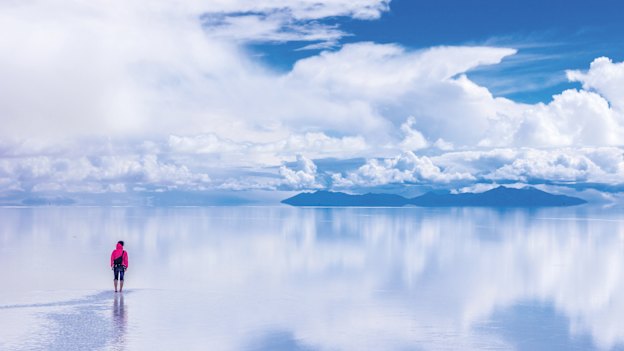
Bolivia is home to some stunning landscapes, but few can compete with the Uyuni salt flat. Covering more than 10,000 square kilometres – or almost two million football fields, if that helps – standing on this glittering expanse feels like being transported to another planet. The uncanny lack of perspective has launched millions of Instagram posts, but there is plenty to see and do here beyond feeding your social media habit, from soaking in hot springs to visiting lakes filled with pink flamingos. The train cemetery, a sight befitting a Mad Max film, is a surprising highlight. See salardeuyuni.com
Cool off in Brazil’s seasonal lagoons
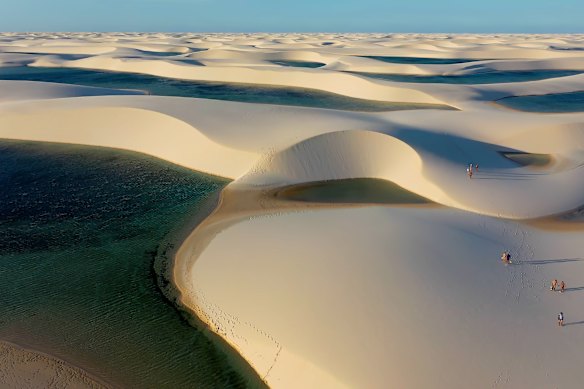
If the only thing to see at the Lencois Maranhenses National Park, in the north-eastern state of Maranhao, were the dunes – seeming to rise out of nowhere and stretching up to 40 metres high – it would still be impressive. But come between January and June and you will see something even more striking. During the rainy season water collects in the dips of the dunes – which rest on a layer of impermeable rock – creating glorious lagoons which will disappear mid-year. Lounging in these shallow, crystal-clear pools is a delight; keep an eye out for the fish that lie dormant underneath the surface during the dry season and emerge when the water returns. See visitbrasil.com
Explore a natural laboratory in the Galapagos
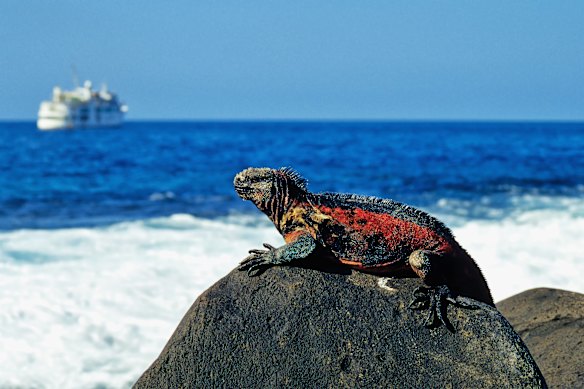
Visit the Galapagos Islands, 900km off the coast of Ecuador, and you are following in the footsteps of Charles Darwin, whose theory of evolution was in part inspired by the genetic adaptations of the local wildlife. What is really remarkable is how little these uninhabited islands have changed since Darwin’s time. Book a cruise through the islands and, just like Darwin, you will find that the area’s distinctive fauna – including sea lions, giant tortoises and blue-footed boobies – are utterly unafraid of humans, but, of course, do maintain your distance. See galapagos.org
Feel small at the largest canyon in the US
The numbers make it clear that the Grand Canyon is impressive: 446km long, 29km wide, 1.5km deep, and around six million years old, although some of the exposed rocks are up to two billion years old. Even if you know the numbers, however, you won’t be prepared for the canyon’s jaw-dropping vastness. Allow at least a day, preferably two, to come to grips with it. A hike into the canyon is highly recommended, but if that isn’t an option enjoy the views from the different lookouts, and take in a cultural demonstration from one of the 11 tribes linked with the canyon at the Desert View Watchtower. Outside the Grand Canyon National Park, the Skywalk is a thrill for anyone with a head for heights. See nps.gov
Marvel at Iguazu Falls, Brazil and Argentina
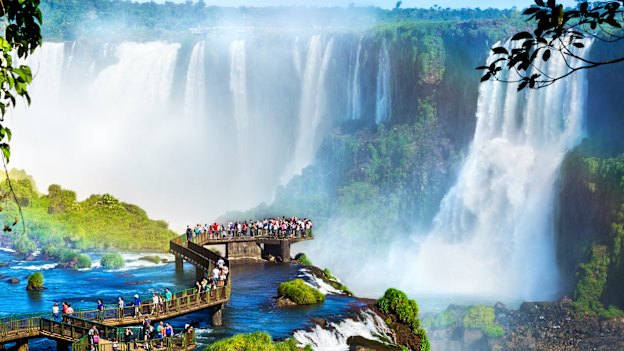
How good are the Iguazu Falls? So good, you have to visit two separate countries to fully appreciate them. Unlike Africa’s Victoria Falls, with their vast curtain of water, the Iguazu Falls consist of multiple cascades surrounded by rainforest. It is impossible to view the whole thing at once, giving a visit here a sense of discovery. You can get closer to the falls on the Argentine side, which also has more walking trails and boat rides; the Brazilian side offers more panoramic vistas. Both sides are worth visiting and, while you’re there, keep an eye out for local wildlife, from macaws and toucans to the cute little mammals known as coatis. See argentina.travel; visitbrasil.com
THRILLS AND SPILLS
Celebrate life during Mexico’s Day of the Dead
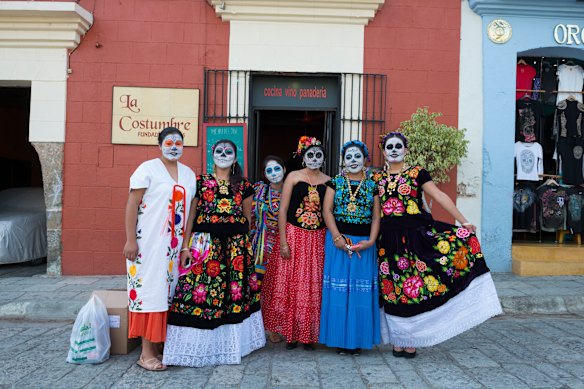
Cutesy Halloween this ain’t. The dates of Mexico’s Dia de los Muertos (Day the Dead) may be a near match with Halloween – festivities often kick off on October 31, although the official dates are November 1 and 2 – but this blend of Toltec, Aztec and Catholic customs is an altogether different beast. Head to the city of Oaxaca for the most over-the-top celebrations. Families flock to candlelit cemeteries for all-night vigils, honouring their dearly departed with ornate altars and elaborate feasts. Doorways are decorated with colourful sand carpets, and street parades feature marching bands and performers in eerie skull face paint. See oaxaca.travel
Get grizzly in Canada’s bear-spotting capital
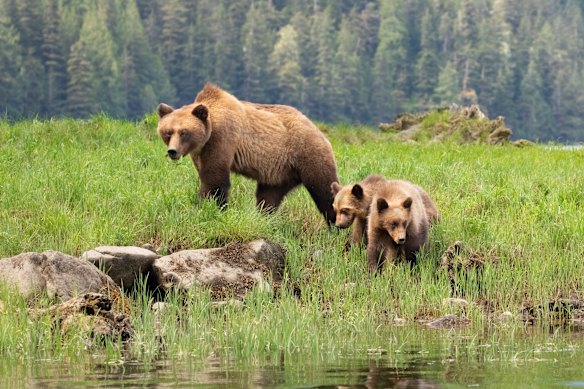
The name says it all. The Great Bear Rainforest, more than six million hectares of temperate rainforest in the province of British Columbia, is the prime place to come if you want to chalk up an ursine encounter. The best time to spot some of BC’s 15,000-strong population of grizzly bears is between August and October, when the bears can be seen feasting on spawning salmon. Keep your eyes open for other wildlife, especially the rare “spirit bears”, black bears with a mutant gene that creates white fur. Settle in for a stay in a wilderness lodge such as Knight Inlet Lodge, or book a cruise along the coast. See supernaturalbc.com
Hike Argentina’s most active glacier
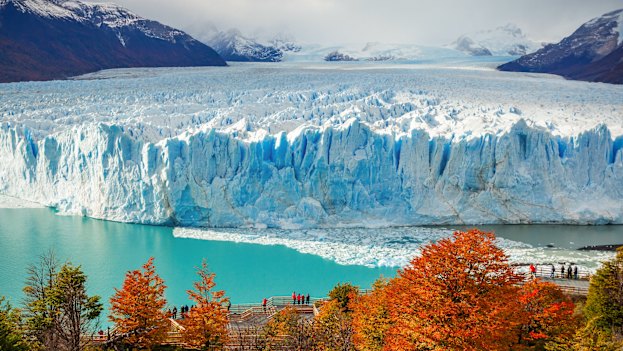
Glaciers are retreating right around the world, but Argentina’s Los Glaciares National Park offers an exception. The Perito Morena glacier – a mighty blue behemoth towering more than 60 metres above Lago Argentino, with a total surface area of 250 square kilometres – is advancing by a couple of metres a year, accompanied by a soundtrack of cracks and booms. There are a number of ways to get close to this showstopper, including taking a cruise, or simply following the boardwalk trail, but for a true up-close experience sign up for a short glacier trek with one of the tour companies based in the nearby town of El Calafete (they’ll even supply the crampons). See argentina.travel
Join the fun at Rio’s biggest party

About eight million people headed to Rio for this year’s Carnival celebrations – a new record – so if you want to get into to Sambadrome for the main event, where 100 of Brazil’s top samba schools vie to outdo each other with over-the-top floats and dance displays, you will need to book many months ahead of the February celebrations. There are other ways to get into the swing – try some of the blocos, themed street parties where costumed crowds dance their cares away. See riotur.rio
Soar above La Paz in its incredible cable car
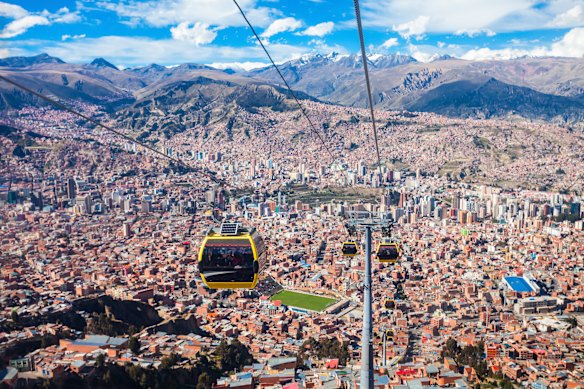
Sydney has its metro, Melbourne has its trams, but for the most thrilling public transport system around, the Bolivian capital of La Paz, at an elevation of 3650 metres, takes some beating. The Mi Telerifico system is both the world’s longest and highest urban cable car system, covering around 30 kilometres. This breathtaking ride lifts you high above the gridlocked streets, which also makes it the most practical way of getting around the city – and with a one-way ticket costing three bolivianos, or around 60 cents, it is also a bargain. See tourismbolivia.com
FOOD + WINE
Go hacienda-hopping at Chile’s wineries
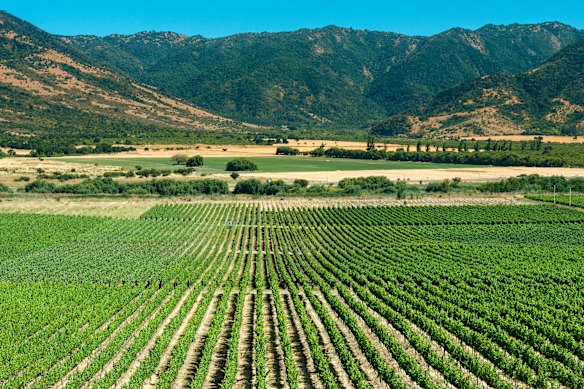
Sheltered by mountains on one side and the ocean on the other, Chile has an abundance of excellent wine-growing country, and no shortage of family-run businesses producing award-winning wines. Some of the best-known regions, including the Maipo Valley, the Rosario Valley and the Casablanca Valley, known for its cool-climate whites, are just a short drive from Santiago. A little further away (allow around three hours) is the Colchagua Valley, which produces excellent cabernet sauvignon and carmenère, a varietal believed lost before it was rediscovered in Chile. See chile.travel
Steak your claim at an Argentina parilla
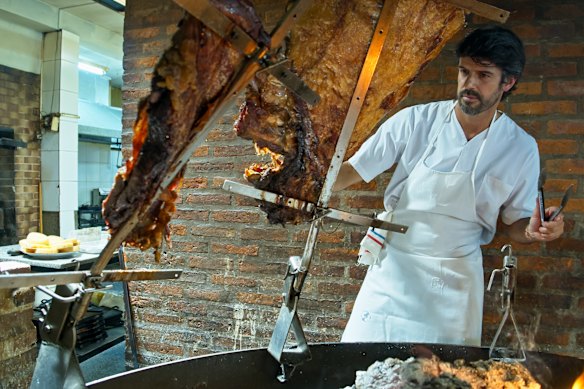
There is a reason why Argentines are such enthusiastic carnivores, chowing down on 49 kilograms of beef per person, per year – their beef is among the best in the world. Queues regularly form outside Buenos Aires’ favourite parillas, or steakhouses, such as La Cabrera and Miranda, but you can shorten the wait by dining at lunch instead of dinner. Steak is obviously the main game but sides such as grilled vegetables and even cheese, grilled with a smoky flavour, are part of the experience. See turismo.buenosaires.gob.ar
Follow the taco trail in Mexico City
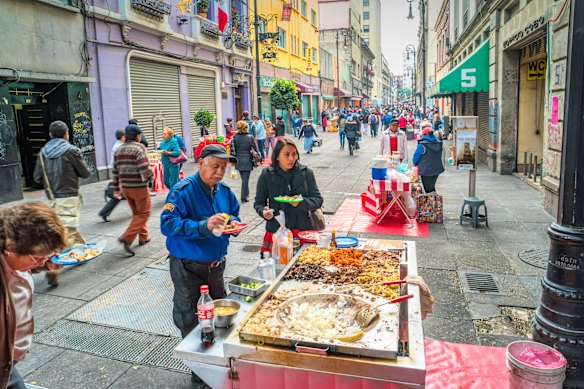
You could spend several weeks sampling Mexico City’s most-loved street food and still find something new to try, with an extraordinary range of fillings on offer. For every person championing tacos al pastor (stuffed with slivers of spit-roasted pork), you will find someone else singing the praises of fish tacos, tacos campechanos (which mix steak and sausage), or the stew-filled tacos de guisados. For those with adventurous appetites, try tacos de lengua (tongue) or tacos de chapulines (toasted grasshoppers). See mexicocity.cdmx.gob.bx
Tuck in at Lima’s star-studded restaurants

It’s not often one restaurant irrevocably changes the reputation of a country, but that is precisely what happened to Peru. Back in the 1990s, chef Gaston Acurio opened Astrid y Gaston in Lima, a French fine diner that gradually moved towards Peruvian flavours and ingredients – everything from quinoa and blue corn to alpaca and cuy, or guinea pig. His success inspired a new generation of chefs whose restaurants are now world-famous. You will need to book ahead if you want to eat at Central, Maido, Merita or Maito, but there are plenty of lesser-known eateries where you can tuck into mouthwatering local favourites such as ceviche or lomo saltado. See peru.travel
Pick a side in the US barbecue wars
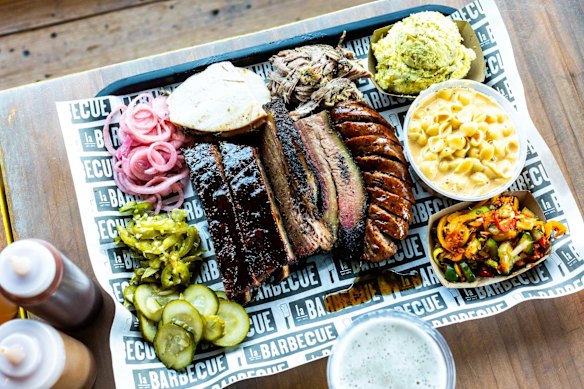
Every southern state has its own twist on the culinary institution known as barbecue – beef brisket or pork slow-cooked over fires of hickory or oak - and of course each state reckons theirs is the best. We love ’em all, from the classic Texan brisket to Memphis’ dry-rub pork ribs and Kansas City’s pulled pork, also known as pig salad. Expect a long wait at the most famous barbecue joints, including La Barbecue in Austin, Central BBQ in Memphis and Joe’s Kansas City Bar-B-Que. Don’t hold back on the sauces. Variously made with vinegar, tomato or mayonnaise, they are a key part of the experience. See visitusa.org.au
MAGICAL MONUMENTS
Encounter an Easter Island statue as heavy as a Dreamliner
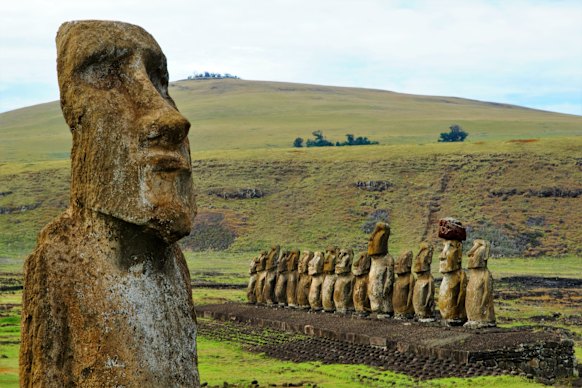
Rapa Nui is a tiny speck of land just 24 kilometres long, floating in the ocean 3700 kilometres from the nearest landmass, Chile (which governs the territory). Yet, the inhabitants of the place formerly known as Easter Island weren’t afraid to think big. Over several centuries, they erected almost 1000 giant stone structures known as moai, some of which stand 10 metres high. Some are still standing, others have been largely buried in centuries of sediment, with only their heads showing, and some were left uncompleted. They include Te Tokanga (The Giant), the largest moai, which measures more than 21 metres in length. See rapanuinationalpark.com
Plunge into jungle-shrouded Mayan ruins in Guatemala
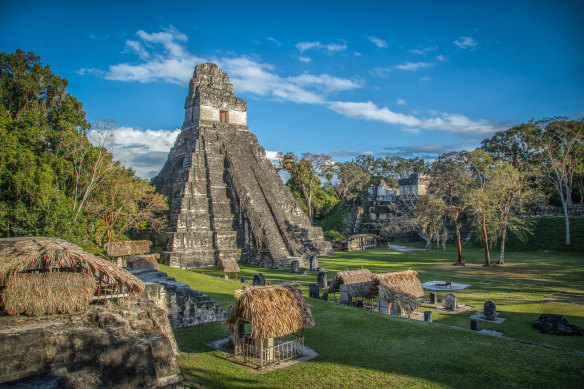
More than 4000 Mayan ruins are scattered across Central America and Mexico, but none can compare with Guatemala’s Tikal. Once the centre of one of the most powerful of the Mayan metropolises, Tikal is best-known for its huge six huge pyramid temples, the tallest of which stretches 65 metres into the sky. Wooden steps allow you to climb to the top for views across the surrounding jungle. As you wander through the sprawling site, bear in mind that the structures on show are believed to be a small fraction of the total still covered by forest. See tikalnationalpark.org
Make a pilgrimage to Brazil’s most distinctive cathedral
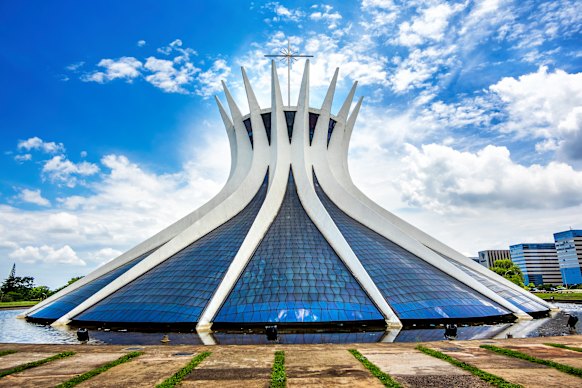
Brazil has hundreds of beautiful baroque churches, but its national cathedral has a very different aesthetic. Designed by modernist architect Oscar Niemeyer as part of his designs for Brasilia, the country’s created-from-scratch capital, this eye-catching concrete and glass design symbolises hands reaching towards the sky. And while the outside is striking, the inside – filtered with blue and white light through stained-glass panels – is simultaneously serene and spectacular. See visitbrasil.com
Be awed by Peru’s most intact Incan ruin
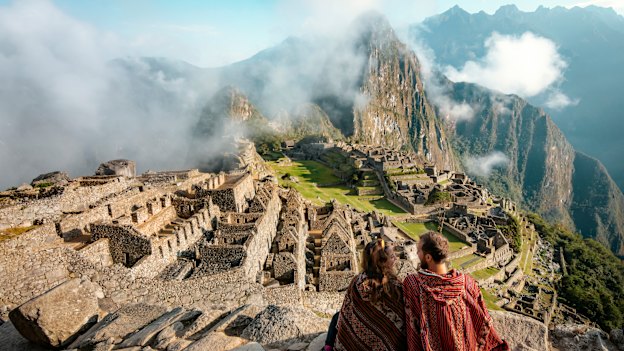
It is difficult to imagine that, just a little over a century ago, Machu Picchu was still unknown to the wider world. Shrouded by cloud forests and sitting 2430 metres above sea level, this remote Incan citadel is now considered one of the wonders of the world. Getting here is always an adventure, whether you go hard-core with a multi-day trek or take the scenic train ride to the gateway town of Aguas Calientes. The Incan ruins, featuring dry-stone construction, will not disappoint – just remember to book your tickets well in advance. See machupicchu.gob.pe
Step inside a giant sphere in Montreal, Canada
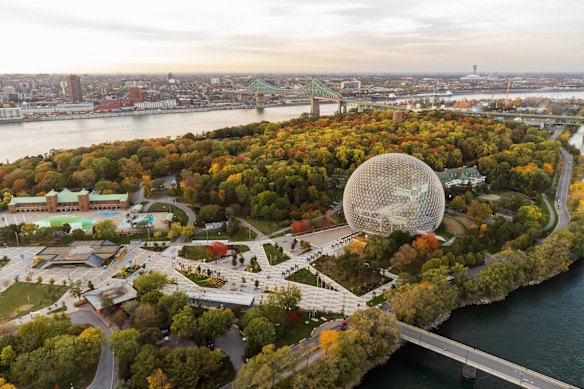
Few architectural designs have had as big an impact as Buckminster Fuller’s geodesic dome. Lightweight yet super-strong, these hemispherical domes were designed as super-cheap housing but captured the world’s attention when a 76-metre wide, 62-metre high example housed the US Pavilion at Montreal’s Expo ’67. The structural principles have since been applied to create ever-larger architectural spaces but this classic example – now housing the Biosphere environmental museum – is one of a kind. See parcjeandrapeau.com
ADVENTURES WITH CAPITAL ‘A’
Slide down Nicaragua’s black volcano

There are more than two dozen volcanoes in Nicaragua and most of them are lush and green. Cerro Negro (black hill), near the city of Leon, is different. The 400-metre-high volcano gets its name from its ash-covered slopes, which provide the perfect setting for a spot of volcano boarding. The uphill hike is tough – it takes around an hour to reach the top, from where you slide down the slope on a piece of plywood. Your tour operator will provide jumpsuits and goggles to guard against flying ash. See visitnicaragua.us
Bathe in the majesty of the largest forest in the US
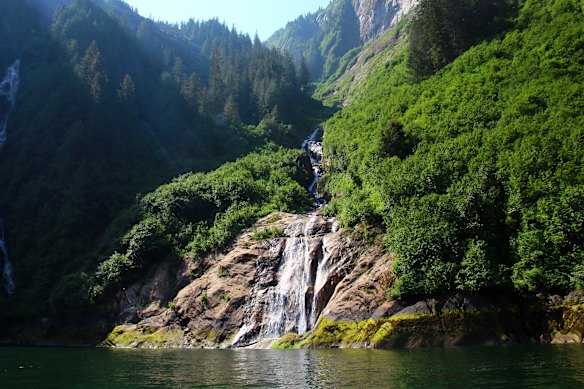
You will never breathe fresher air than while walking through the Tongass National Forest. Think Alaska and you probably think glaciers and peaks, but much of it is covered by the largest forest in the US. Stretching almost 70,000 square kilometres, this is a world of its own, a place where only soft light filters through the tall stands of cedar, spruce and hemlock, and where footfalls land quietly on the moss and leaf litter. As you walk, keep your eyes peeled for deer, eagles and, yes, bears. See travelalaska.com
Cruise among icy giants in Canada’s Iceberg Alley
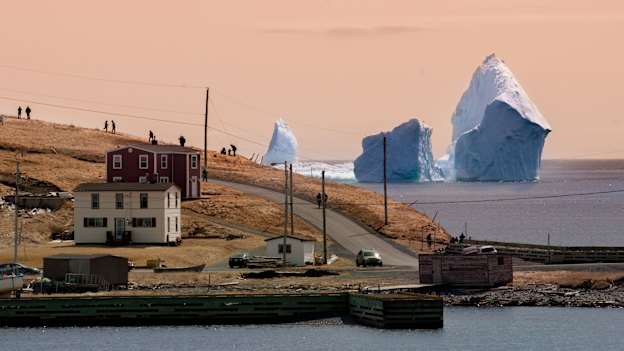
They come every spring: hundreds of icebergs, freshly calved from the glaciers of western Greenland or the Canadian Arctic, floating through the area known as Iceberg Alley. Coming in all shapes and sizes, ranging in colour from icy white to a rich turquoise, you can view them from anywhere along the coast of Labrador, all the way to the southeast coast of Newfoundland. Watch from shore or, even better, head out on a boat to admire the icebergs from all sides. Top spots include Battle Harbour, Fogo Island or Witless Bay. See newfoundlandlabrador.com
Sink into Mexico’s magical cenotes
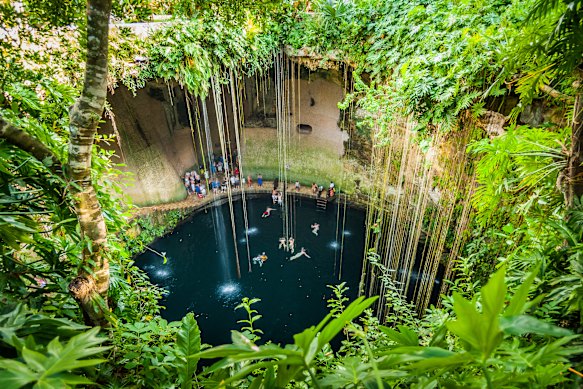
The Yucatan Peninsula is known not just for its Mayan ruins but also for its thousands of cenotes, water-filled limestone sinkholes that come in a wide range of shapes and sizes. The Mayans used them as wells or, in some cases, as sacred sites – today they are top tourist attractions. For every tourist-thronged cenote such as Ik Kil, near Chichen Itza, there are a dozen more off-the-radar delights, such Xux Ha near Valladolid, a tranquil spot to cool off. See yucatan.travel/en
Zip line through the rainforest canopy of Costa Rica
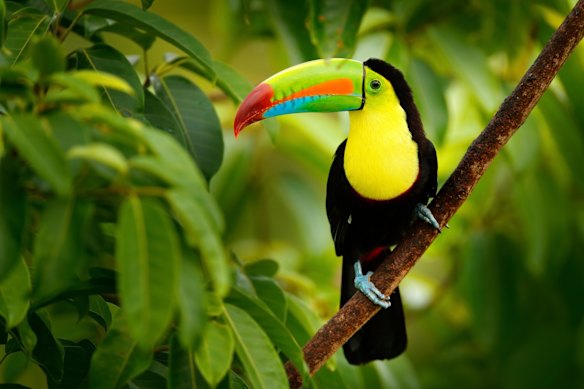
Home to hummingbirds and three-toed sloths, capuchin monkeys and toucans, Costa Rica’s rainforests are a hotspot for global biodiversity. Ninety per cent of Costa Rica’s animals live in the rainforest canopy, so a zip lining adventure is an exhilarating way to explore this rich habitat. In between bouts of high-speed “flying”, you can observe this remarkable ecosystem in a more leisurely way from hanging bridges, or simply enjoy the view from the aerial tram. See visitcostarica.com
NEVER IN THE AMERICAS – FIVE PLACES TO AVOID
Cancun, Mexico Overpriced, overbuilt and overrun with US tourists, this famous beach town is now a washout.
Havana, Cuba Even before the current crisis, Cuba’s tourism industry was in freefall due to blackouts and shortages.
Ambergris Caye, Belize This once-lovely island is increasingly dilapidated, its beaches eroding, and its streets clogged with traffic.
Uros floating islands, Peru The high-altitude Lake Titicaca is a delight, but the Uros islands experience feels exploitative and staged.
Times Square, New York, US No-one quite knows why Times Square still attracts so many tourists, but locals wisely avoid the neon-lit throngs.