
 3 months ago
31
3 months ago
31
I lament our media’s obsessive focus on the “broken promises” framing of political decision-making (“Albanese insists broken negative gearing promise will benefit nation”, May 13). Any aspiring government presents its ideas on policy during an election cycle, and I consider my (hypothetical) vote for them is endorsement of their judgment and a mandate to govern, not handcuffs to what has been presented. This mandate should rightly include developing and changing policy as the external environment and circumstances change, including their ability to pursue more bold reform. Tori Edwards, Annandale
Could we please have no more bleating over broken election promises? I might promise a child we’ll have a picnic in the park, but if a cyclone’s coming I’ll change the plan and break my promise to save everyone. Jim Chalmers is trying to save society from the economic cyclone of generational inequality. As I’m a little older than three, I understand that rather than a “broken promise” this is an adaptation to an existential threat. Elisabeth Goodsall, Wahroonga
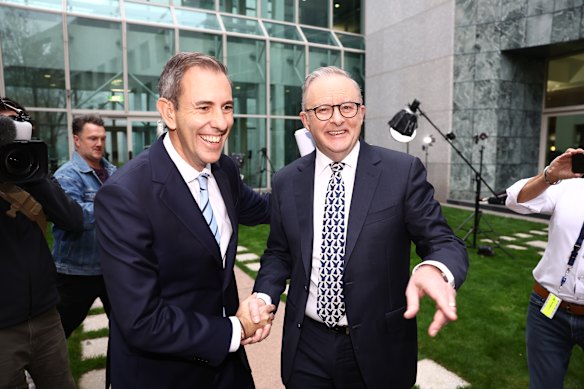
With complaints about broken election promises, would we prefer to continue with the current capital gains tax and negative gearing arrangements while our children and grandchildren have no hope of achieving home ownership? I would like to congratulate the government on taking the brave steps required to try to increase housing availability for first home buyers. Katriona Herborn, Blackheath
I am surprised at the uproar over Labor’s “broken election promises”. How often in federal, state and local government are promises made then broken owing to changes in circumstances? Sometimes a change of direction is just what’s needed to keep up to date with current issues. What might have been acceptable before the last election is obviously not acceptable now. For all the negative rhetoric the Liberal Party will come out with, they only need to remember the absolute towelling they got at the last election, an indication that the majority of Australians did not want them governing. Nothing has really improved for them, so their comments should fall on deaf ears. Alan Leitch, Austens Ferry (Tas)
Ditch stamp duty
While I applaud Treasurer Jim Chalmers for digging into options that might improve access to home ownership, it seems obvious to me that dumping housing stamp duties would have had a huge and immediate impact on affordability. Without these costs, many Boomers might well downsize, leaving their bigger suburban houses to younger and growing families. The federal government could easily add a pinch to GST to recover the revenue and compensate the states that play ball. I see no reference to what seems a fairly simple and effective contribution to this housing dilemma in today’s analysis of the budget and missed opportunities. Bruce Hall, Avalon
I agree wholeheartedly with Alison Pennington’s call for lifting wages (“Tax reform is not enough – to help the young, wages need to buy more”, May 12). I’d add one more measure needed if younger people are to be able to live in a home that they own. Banks assess a household’s capacity to pay when they issue a mortgage. Unless banks are required to limit the proportion of household income going to repayments, any wage increases will be snaffled by banks who see increased capacity to pay. And house price growth won’t slow down. Janet Burstall, Lilyfield
Address the deficit
While I welcome many of the budget measures, the Commonwealth is still projecting deficits of about $30 billion a year for the foreseeable future (“Five charts that explain the country’s finances”, May 13). This is costing us, coincidentally, about $30 billion a year in interest, or about $2000 for each of the 15 million people who file tax returns. That is dead money. We need an honest discussion about the levels of tax needed to support government expenditure. Of course, we should restrain spending and I welcome the government’s plans for the NDIS. But cutting it more generally is easier said than done, since most expenditure is actually going towards deserving causes, and the remainder is spent on badly targeted benefits for rich people. We gave the Coalition nearly nine years to restrain expenditure and the best they could come up with was robo-debt, while running huge deficits. To raise the necessary revenue, we should be taxing gas exporters. We should also be taxing people with high superannuation benefits so they pay the same tax as working people. It makes no sense to disincentivise work while rewarding those with large assets and high passive incomes. And it also makes no sense to run deficits at a time when the Reserve Bank is raising interest rates. Nicholas Reid, Hughes (ACT)
Gas giants reined in
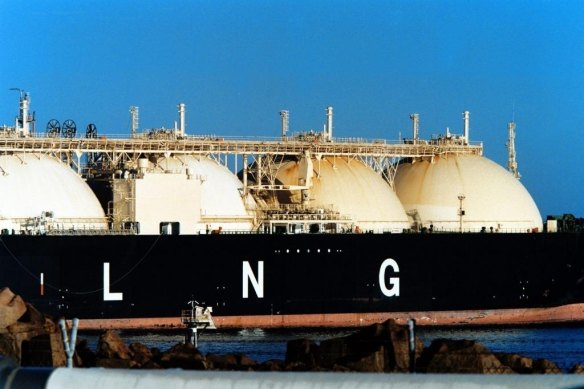
Strange that Matthew Knott lists gas exporters among the losers in this year’s budget (“Game of risk has winners and losers”, May 13). It’s hard to feel sympathy for multinational gas corporations being asked to reserve a modest 20 per cent of their output for Australian households. These companies continue to pay far less in Petroleum Resource Rent Tax than Australians pay in beer excise each year, all while reaping super-profits and driving up pollution. The real losers are Australians – losing revenue, losing climate safety, and losing faith that our natural resources are being managed in the public interest. Voters are increasingly aware that we are missing out on almost $50 million every day as the great gas giveaway rolls on. The Albanese government continues to ignore this at its peril. Karen Lamb, Geelong (Vic)
Clinics take the pressure off
The government is to be commended on providing $1.8 billion for more Medicare Urgent Care Clinics (“Five-minute budget: Everything you need to know”, May 13). We are fortunate to have one in Bathurst, where it is taking the pressure off the already overworked emergency department at the local hospital. I feel sure anyone who has used the new facility will agree it’s an excellent initiative and has saved patients waiting for hours in the emergency department at the hospital. Robyn Lewis, Raglan
Weed control pruned
The budget has cut nearly $200 million over five years from agriculture, fisheries and forestry and redirected one-third of it towards agricultural export and trade. The tragedy is that pests and weeds cost Australian agriculture more than $5 billion a year, and with $104 million being cut from pest and disease programs there may well not be enough produce to meet the hoped-for increase in exports. It seems like an example of cutting off one’s nose to spite one’s face. Peter Nash, Fairlight
Boomer bubble burst
If statistics are to be believed, then we can be certain that there is a large discrepancy between the average net worth of Baby Boomers, stated as $2.46 million (“Here’s what the budget means for every generation – from Boomers to babies”, May 13) and their median net worth. The median worth of Boomers would provide us with a far lesser amount and a truer picture of what life and retirement looks like for the typical Boomer. The average makes us all look wealthy and that’s just nonsense. The reality is that only some of us are wealthy, but most are not. Articles suggesting that Boomers are all living on Easy Street are irresponsible and incorrect. Irene Buckler, Glenwood
In his excellent analysis, Nick Newling refers to KPMG analysis that states that the average net worth of boomers is $2.46 million. This is at odds with correspondent Francis McMahon (Letters, May 13) who has hand-picked some analysis to present a view that Baby Boomers are not wealthy. Fortunately for future generations, this budget goes some way towards redressing the inequality and even though I am a Boomer, I am glad. Tom Meakin, Port Macquarie
If Ross Gittins is happy, the party’s over, we can all go home and rejoice (“Chalmers bursts Boomers’ bubble”, May 13). Is he mellowing, or is this truly a progressive budget? Ashley Berry, Toolijooa
Protect the children
The grief Senator Jacinta Nampijinpa Price showed in Parliament over the death of her niece was raw, and her utter frustration was palpable (“Senator in tears over the death of her niece”, May 13). I can’t forget the role she played in destroying the Indigenous Voice to Parliament, but I believe we must accept that much of what she is saying is true – her damning indictment of current Aboriginal child safety measures. A well-meaning, culturally sensitive approach demonstrably failed Kumanjayi Little Baby. Money spent on upgrading ramshackle living conditions in town camps and remote communities is demonstrably not yielding proper outcomes. The bottom line is that resources allocated over many years are not working. Can the senator be enlisted as part of a new, bipartisan approach? Because the Labor government, in its focus on big-picture, intergenerational inequality, must not shirk its fundamental responsibility towards our most vulnerable children. Margaret Johnston, Paddington
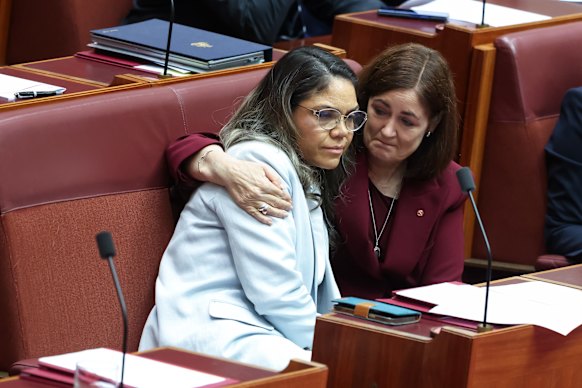
I thought the Voice, which the Albanese government tried to introduce, was a system that would attempt to highlight and debate all the problems that Jacinta Price spoke of in her speech about the tragic death of her niece. I will never understand why she stood beside Peter Dutton to lead the No campaign against the Voice. Mark Nugent, Lugarno
Safety issue not NIMBYism
Don’t be fooled by the argument that opposition to the Castlecrag monstrosity is a case of NIMBYism (Letters, May 13). The community has already agreed to a plan for a three-storey development, which has been approved by council. Among many problems, there is effectively just one winding and narrow road in and out of the bushland suburb (a second leads off the main road – and past possibly burning bush). If there is an emergency such as a fire, having two 11-storey towers at the entrance to the peninsula will create a choke point right at the exit, which is a safety risk. Fire trucks will not be able to get in. There are schools and a hospital which will require evacuations. It will be a nightmare. Another problem is that these units will not help alleviate the housing crisis. Only 10 out of 150 are to be set aside as affordable housing. Other units being built in the area have multimillion-dollar price tags. Also, the building is not on a train, metro or tram route so it fails the test of a TOD development. It is served by buses that run more frequently at peak hours but sporadically during the nights and weekends. The developer is using the housing crisis as a Trojan Horse to create the illusion that it is helping the state’s housing problems. It is not. And all of this to eradicate the heritage created by the world-renowned architects who also designed Canberra. Yvonne Takis, Willoughby
Centre of debate
Why should data centres be directed towards regional areas (Letters, May 13)? I agree that placing such huge industrial-type buildings in the suburbs isn’t ideal – noise, taking up yet more land, huge use of energy and water. But neither are they suitable for the country. One is proposed for Moss Vale. It will take over agricultural land, use enormous amounts of water (Australia is the driest continent on earth), and become a huge eyesore in a beautiful, successful tourist area. And for what? To store those millions of photos, texts, emails, social media posts, documents that we can’t be bothered to delete from our devices. The greatest euphemism must be the iCloud! And yes, important medical and government documents are also now stored and need to be accessed. A huge building is a great target. It is time we started to really look at the risks and environmental damage these data centres pose. Penny Ackery, Baw Baw
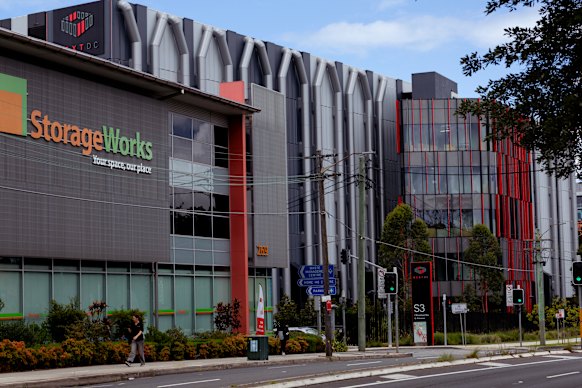
The federal and state governments must carefully scrutinise all new data centre proposals and insist that they provide their own power and water. Ideally, they should be located outside the capital cities and perhaps built in declining centres like Whyalla, Port Augusta, Port Pirie, Latrobe Valley and Bell Bay. Higher construction costs would be offset by much cheaper land there, while far fewer residents would be affected. Tony Simons, Balmain
Data centre planning rules need to constitute the following: 100 per cent off-grid electricity supply from rooftop solar panels, supplements by batteries at night, all cooling water collected off the roof and stored in tanks. If I can do it, they can do it. Tony Lewis, Mount Victoria
Unis for academics
Iris Freeman assumes that the poor management of Australian universities is somehow connected with the teaching of business management within those institutions (Letters, May 13). Sadly, the core problem with university management is that academic leadership has long been replaced by the managerial class. It is time to return the academy to the academics. Joanna Mendelssohn, Dulwich Hill
E-bikes power joy
Like Sally Rawsthorne, I love my e-bike (“There’s glorious reason my kids and I love our e-bike”, May 13). Like Sally, my commute to work along an excellent bike path, shopping and getting around my local suburbs, are now a joy. I really don’t need my car. Fresh air and a smile on my face; I am in the world. My e-bike has changed my life. Ridden responsibly and pedal assisted, they are good for people and good for the environment. If you are able, do yourself a favour. Lisa Williams, Dulwich Hill
Out of cash
While out walking the other day, I was cast into the sweetest melancholy by a bloke accompanying himself on guitar as he sang the Rolling Stones’ Wild Horses. I wanted so much to sling him some money in gratitude, but I had none. Dehumanised, we were both victims of the cashless society. John Campbell, South Golden Beach
- To submit a letter to the Sydney Morning Herald, email [email protected]. Click here for tips on how to submit letters.
- The Opinion newsletter is a weekly wrap of views that will challenge, champion and inform. Sign up here.

















































