
 3 months ago
32
3 months ago
32
Elijah* was 10 when he watched a woman in a fluorescent green bikini walk into a bedroom. Giggly and confused, his friend had wedged an iPod between them and typed “porn” into a search engine. He didn’t know what the word meant.
A man stepped into the frame. The woman took off her bikini. They began having sex, and the sex was hard. Really hard. There was no romance, no talking, and Elijah was afraid – but unable to look away. He felt a surge of distress and anger, then, something brand new. In hindsight, it was the first time he’d ever been aroused. “It was almost like doing a drug,” says Elijah, now 26. “It’s a really big memory.”
Elijah, of course, is not alone. For more than a decade now, the sexual socialisation of millions of children has been left in the hands of online porn companies. Exposure to hardcore pornography has become an immutable truth of adolescence, if not a rite of passage – at least, until recently, that is, with the announcement of Australia’s new codes banning minors from accessing porn.
“Users will be asked to confirm their age when accessing age--restricted material on pornography websites and services,” read the eSafety Commissioner’s media release on Friday, March 6. “Clicking a button that says ‘I am 18 years or older’ is no longer sufficient.”
It felt like a potential game-changer. For boys and men, many of whom have unwittingly had their views on sex distorted and skewed by addictive websites always within reach. For women and girls increasingly subjected to sexual aggression – or welcoming it in the misled belief that they should. For the medical experts, legal professionals and counsellors trying to pick up the pieces after countless problematic encounters, who are trying to steer a generation away from the “manosphere” and porn culture more broadly, and have for too long been locked in a losing fight.
The new codes also prompted a tantalising question: What might happen in a society where children are free to explore online without being led down ever darker algorithmic rabbit holes?
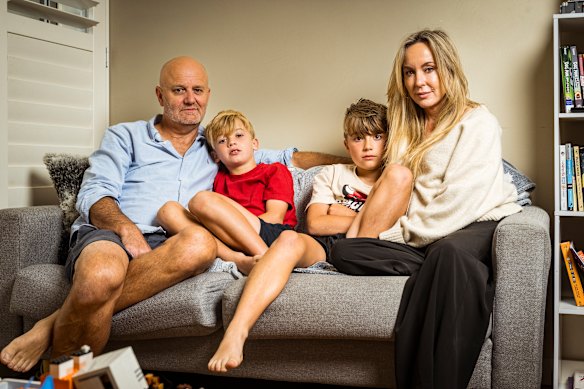
Melbourne mother Laura Laing, for one, can’t wait to find out. Two years ago, her elder son, now aged nine, came home from school and asked her what the number “69″ meant. “I was horrified,” she says. “I was like, ‘Oh my gosh, it’s starting in primary school already.’ ”
Today, she’s curled up on a couch in her townhouse in Melbourne’s south-east, surrounded by family photos of her boys – the youngest now aged eight – as they both play Nintendo in the next room. The ban felt to her like validation, and also “a turning point”, she says, her voice lowered to a hush, lest the boys overhear. “We’re going to clamp down on what they’re watching. We’re going to clamp down on access to devices. We’re getting help now from the powers that be.”
This reaction was not universal. Many parents were understandably dubious that the new codes would work. And then there was a third camp: the more than 3 million Australians who had previously accessed the Pornhub website daily, for whom the fallout seemed like a collective blindsiding.
The official media release had offered a lengthy explanation about the new “age-restricted material codes”, which would apply only to children, but the effect of the online porn changes on adults was buried further down. Regular adult porn viewers are paralysed by the prospect of regulations that compel them to hand over their personal data to companies in order to verify their age, fearful of identity theft and data leaks. “Nanny state”, came the cries.
Within hours of the ban being announced, the world’s biggest porn company – Aylo – released its waiting wrecking ball. Rather than comply with the conditions of the ban, its websites – Pornhub, RedTube, YouPorn and Tube8, among others – simply went dark. Visitors to Pornhub from Australia were instead met with “safe for work” podcasts, lifestyle segments and ads for paid content. If they attempted to watch porn videos, they were blocked by a message: “Pornhub is not currently accepting new account registrations in your region.” And just like that, porn was harder to find.
eSafety Commissioner Julie Inman Grant emphasises that the regulations are “not a moral judgment about pornography or adult sexuality”. Nor do they (technically) prevent adults from watching porn. “They require platforms to restrict access only for minors,” Inman Grant tells me. “They are a child-protection measure that simply brings protections that have existed in the physical world for generations to the online world.”
But there’s no denying that these codes – even more so than the frequently ridiculed and flouted under-16s social media ban introduced in December last year – have dramatically altered Australia’s online landscape, the dominant audience for which is adults.
The response from porn providers should have been expected, too, given examples elsewhere in the world. A similar industry protest played out in the UK after age-verification laws came into effect there in July 2025. Pornhub initially complied with the new British laws, giving users multiple verification options including credit cards, and the email-based system Verifymy (which compares an email address’s digital footprint against financial institutions, utility companies and public records to estimate a person’s age). But after traffic fell by up to 77 per cent, Aylo blocked new British users entirely while condemning the UK’s new system as a failure. (Pornhub has also blocked users in about half of American states because of local age-verification laws.)
‘Now, if you talk to 16-, 17- and 18-year-olds having heterosexual sex, strangulation is part of it.’
UK feminist academic Fiona Vera-GrayAylo argues that almost half of the UK’s porn users are now using other websites that aren’t complying with the age-verification rules. A spokesman tells me that the Australian and UK models don’t effectively protect minors “and instead create harms relating to data privacy and exposure to illegal content on non-compliant platforms”. The sites continue to push, instead, for device-level age verification (where the device manufacturer verifies a user’s age using its own system) as the only viable option.
The eSafety Commissioner, however, isn’t blinking. Inman Grant says Aylo “of course” has the capacity to roll out the required age-verification technology – it simply made the business decision not to do so.
Her office began investigating the age-verification scheme five years ago, and it extends far beyond porn sites, applying equally to everything from AI chatbots depicting or discussing high-impact violence, to online content pushing disordered eating, suicide and self-harm. “The codes are here to stay,” Inman Grant says.
So, too, are the workarounds. VPNs (virtual private networks) allow users to access the internet without revealing their location, and have surged in popularity, with two products climbing more than 100 places in app store rankings within hours of the ban coming into effect. Those VPN users are just as likely to be adults as children, and Inman Grant notes there was no uptick in children using VPNs in the four months after Britain’s age-verification laws were enforced. Still, cybersecurity expert Susan McLean describes an example of a 14-year-old boy being caught watching live porn using a VPN only weeks ago in an Australian classroom.
These products do come with their own risks, including potentially handing users’ data over to cyber criminals, whether as a result of a scam or being hacked. But for many, the temptation of using VPNs is too great. As is the ease of doing so.
After researching several highly rated VPNs, I open the Apple app store and type in the name of the product I’m looking for. I hit the “get” button, wait seven seconds for the app to download, agree to a privacy notice, then click “create account”.
I’m immediately given an account number and prompted to “add time” – I choose 30 days for $8.39 – and am presented with a world map. Now it’s just a matter of hitting a green “connect” button, and then, “switch location” to somewhere porn is not restricted. From a scrolling list, I select Chicago, then open a Google Chrome tab and type Pornhub.com.
I’m immediately presented with more than 60 videos with sexually graphic titles, some of which refer to incest and aggressive acts. The whole process takes about three minutes. And yet, even digital natives may not be taking up the option of VPNs as eagerly as expected.
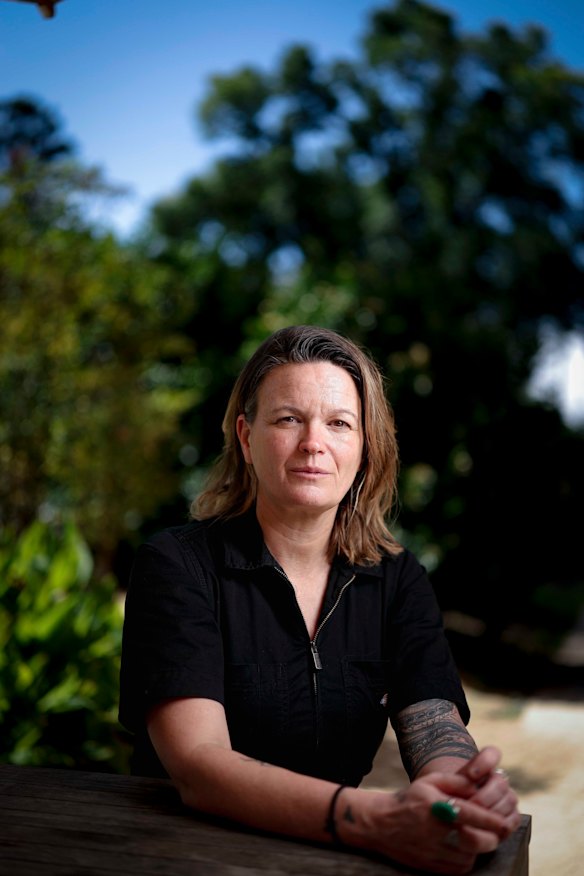
Leading UK feminist academic Fiona Vera-Gray notes that Gen Z have perhaps unexpectedly been happy to lead the calls for change. The eldest of the generation, now in their late 20s, were the last to go through puberty without unfettered access to online porn, but have still seen its effects first-hand. Those only a handful of years younger, however, were coaxed into their first IRL (in real life) experiences of rough sex by the types of video titles alluded to above – and far worse.
It’s not gone unnoticed. Throughout history, Vera-Gray points out, what society considers “normal” in sex has usually taken decades to evolve. Yet since the internet came of age in 2014 – with wider smartphone use, high-speed streaming and access to 4G – what we do in the bedroom has changed swiftly and dangerously. “Now, if you talk to 16-, 17- and 18-year-olds having heterosexual sex, strangulation is part of it,” Vera-Gray says. “It is something that girls are asking for. It is something that boys are doing.”
Nine years after Elijah saw the video of the woman in the green bikini, he and his girlfriend Sarah* – both products of a generation raised or groomed by online pornography – were regularly having rough sex. Sometimes Elijah choked Sarah. Sometimes he pulled her hair. He always assumed she liked it, until one day they were talking about a friend who was being choked very hard by her boyfriend. Elijah confessed that he wasn’t really into it, and Sarah agreed that she wasn’t either. “It was so liberating,” says Elijah. “It was like, ‘Oh my god, thank f---‘.”
They are not outliers, either. More than half of young Australians report being strangled, or strangling someone else, during sex, perhaps oblivious to serious risks of cumulative brain injury, blood clots, “thyroid storm”, delayed stroke, miscarriage and death. Physicians repeatedly emphasise there is no safe way to use choking during sex, and yet in school gyms and assembly halls across Australia, teenage girls and boys tell McLean about the fallout from copying the “fun stuff” they’ve seen on the internet.
‘Who the hell wants to confront what we have done as a society and how much harm has been allowed to unfold?’
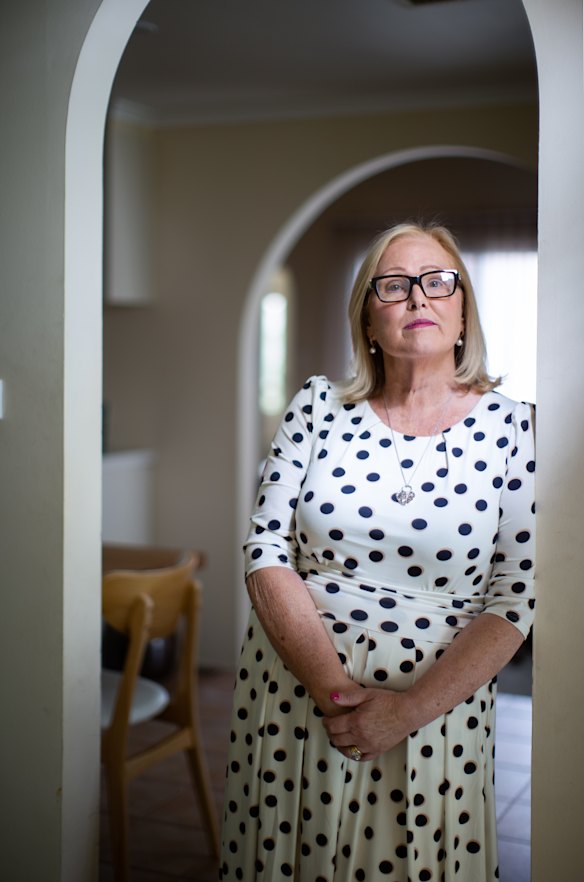
Youth advocate and educator Daniel PrincipeA girl tosses aside her hair to show the bruises on her neck from being choked by a boyfriend, while a young man in Sydney recalls snapping the shaft of his penis after imitating the rough sex he saw online. (“It had to be surgically attached,” McLean says.) Doctors have told her of teenage girls with vaginal-tear injuries and, just last year, a midwife in Alice Springs confided to her that four out of five pregnant women she saw told her they had been choked during sex.
“I can say categorically that what young men are being exposed to on the internet in relation to pornography is giving them a skewed view of reality, and causing harm, not only to themselves, but to female partners,” says McLean, a former Victoria Police officer of nearly three decades. “There’s nowhere else it’s coming from.”
The entire issue, she adds, has been wilfully ignored for too long as a result of everything from parents’ discomfort with discussing taboo topics to misconceptions harboured by older generations that modern mainstream porn is the equivalent of what you might find in Playboy magazine, instead of an endless scroll of depravity.
Ben Vasiliou, CEO of The Man Cave, a preventative mental health charity for boys and men, is under no such misapprehension. “I’d be quite comfortable with my kids watching some missionary sex on the internet, if that’s what they thought was interesting and arousing or educational,” he says, speaking loudly over the noise of a busy Melbourne cafe. “The problem is what they’re looking at is f---ing incest and strangulation and domination, thinking that threesomes are normal for 16-year-olds. Sixteen-year-olds generally shouldn’t be watching strangulated three-ways.”
There’s a palpable frustration here among those who have long sounded the alarm on the issue, only for the wider community to finally take notice years later. Prominent youth advocate and educator Daniel Principe throws up his hands in exasperation about 15 minutes into our Zoom call. It’s worth noting he personally believes porn is harmful for everyone – adults included – but he’s also spoken to tens of thousands of boys about porn at thousands of schools across Australia, and long argued we’re feeding these teenagers “a horrific diet of misogyny”.
“Prior to probably Adolescence on Netflix, most people have been asleep at the wheel as to the carnage, scale of pornography and the exposure where children have been impacted by this,” he says. “Let’s be honest, who the hell wants to talk about this and confront what we have done as a society, and how much harm has been allowed to unfold because we haven’t reckoned with this sooner?”
There are ample statistics to back up Principe’s argument. Prior to the ban, one in six young men in Australia watched porn daily, compared with about one in 70 young women, according to research co-authored by Maree Crabbe, director of sexual violence prevention project It’s Time We Talked. Teenage boys were first seeing porn at an average age of 13 – at least three years before their first sexual experience with a partner – but many were even younger.
There isn’t a case that Cassie Russell deals with that doesn’t involve porn, including that of her youngest client, who is six years old. Russell is a sexual assault counsellor and harmful sexual behaviour specialist in Victoria’s north-west, and says her team members – who work with children aged five to 17 – have seen a significant increase in referrals for those exhibiting harmful sexual behaviour over the past six months.
“We’re getting several referrals a week,” Russell says, talking from an office cubicle at the Mallee Sexual Assault Unit, and pornography is involved in every one, “whether the child has been exposed to it, or they’re exposing other people to it”.
By age 10, one in 10 children has accidentally come across online porn, according to research from the eSafety Commissioner, rising to one in three kids by age 13. If there’s one effective change Australia’s online porn ban will bring, experts say it’ll be to stop accidental exposure. Basically, when young kids search terms like “penis”, “vagina” or “lesbians” out of curiosity, they won’t be confronted by porn. The roadblock will be there.
As for teenagers, the ban should at least act as a speed bump. And if that bump delays teenagers’ first exposure to porn by even a year or two, says paediatric nurse Jack Muscat, that could equate to hundreds of thousands of kids who are psychologically better equipped to deal with it.
We’re chatting over a pint at a pub in Melbourne’s inner-north, and Muscat is arguing the real issue isn’t one porn website or company. Instead, it’s the “industrialisation of sexual socialisation”, as platforms designed to maximise engagement train young men’s desire, intimacy, masculinity and, ultimately, their attention. “I don’t think that big tech companies are looking at helping with childhood development,” he says dryly, “no matter what they’re saying.”
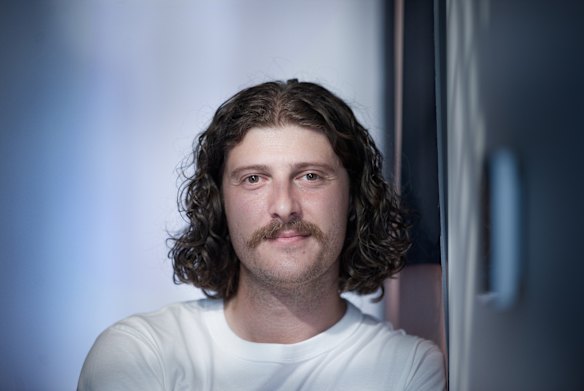
My computer mouse hovers over the “start” button for the Zoom call, but I hesitate, instead taking a deep breath. I’m about to enter what’s usually a men-only meeting of seven porn addicts and, to be frank, it’s daunting. The group’s coordinator, Markus* – an addict himself – is passionate and professional over email, but he never includes his surname, so I haven’t looked him up.
Click. “Hi, all,” I say, waving at the screen. Tiles filled with faces gradually appear. Markus is an athletic-looking guy in his early 30s. Then there’s Stephen*, a 50-something who holds the camera close to his face. Luke* – a 30-something with dark hair and glasses – comes into view, as do a handful of other men. Bald, polo shirts, one guy with tattoos. I exhale.
Each of them talks about when they were first exposed to porn. The guy with his camera off – the youngest in the group, who joined at age 22 – says he was 10, and encountered it accidentally. Luke, who is softly spoken, reveals his father tortured him by making him read porn magazines and watch videotapes from the age of three. I flinch at that. “I remember being worried that I would never be able to get a girlfriend or a wife,” Luke says, “or be able to please a fully grown adult woman with my little, tiny, boy body.”
I’m frantically typing when Stephen’s baritone makes me falter. He says he’s been hooked on porn since he was first exposed to magazines in the ’80s, and his addiction escalated when he and his wife bought their first desktop computer just three months into their marriage – 18 years ago. “If I don’t deal with it now, my marriage is over,” he says, voice now thick with anger, and wobbling. “The thing that gives me the most shame of all is that the dopamine hit is so strong and all I want to do is objectify women all the time, but my value system is completely, utterly against that.”
The men each talk in turn about the incredible shame they feel, and how isolating it is not to be able to confide in others for fear of being branded “paedophiles, sex offenders or molesters”. Many of the men have tried blocking software to stop themselves accessing porn. Markus says his addiction has reached the point where he can’t own any internet-connected devices. Chris* – a former alcohol and drug counsellor – deleted all internet browsers from his phone, but access to porn is still ubiquitous – almost inevitable. “You can get it on Telegram, on Discord – I know because I’ve had to go through the process of blocking them,” Chris says. “There’s YouTube videos that are highly inappropriate … and every single social media platform outside of probably Facebook.”
Edith Cowan University researcher and sexologist Giselle Woodley fears the new codes will only replicate this sense of shame in others, further stigmatising porn use generally. Porn, she adds, is often blamed in discussions about gendered violence, yet little consideration is given to what harm it may actually be preventing. Following the rise of the internet in the ’90s, Woodley says Western countries saw significant reductions in both child sex abuse and sexual violence.
“Fellowships” offering support in Australia include Sex Addicts Anonymous Australia (SAA), and Sex and Love Addicts Anonymous (SLAA). While pornography addiction isn’t recognised as a formal diagnosis in clinical guidelines, porn use lights up certain areas of the brain that align with other behavioural addictions, according to neuroscience literature. “Safe spaces to play – like porn, like with sex workers, like kink clubs – are actually so vital in terms of managing sexual violence,” says Woodley, “because when you don’t have those spaces is when they manifest as harmful sexual behaviours.”
Sex workers offer a similar argument: by pushing porn users off legitimate websites, we’re shepherding them into shadier places. The ban also spells financial ruin for many sex workers, according to the Scarlet Alliance, which represents them – because many rely on porn websites for cross-promotion. Then there’s the additional issue of websites that have useful content on sexual health, sexual education and LGBTQ awareness being suppressed when algorithms can’t demarcate between their offering and porn.
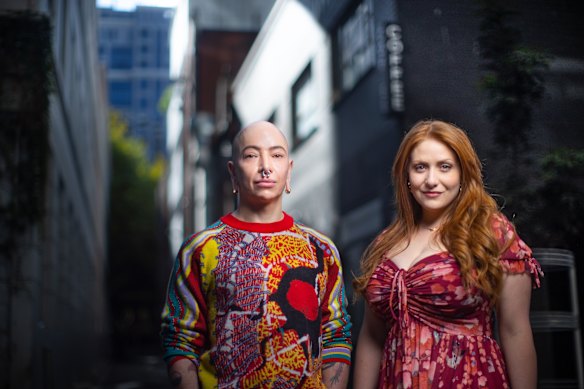
Ultimately, it feels like the “pendulum is swinging” against the sex industry, Scarlet Alliance chief executive Mish Pony says. “We’re back in the ’70s sex wars. There are certain advocates in Australia, but also internationally, who are very strongly anti-porn, and they have the ear of the government and policy-making. I’m very concerned.”
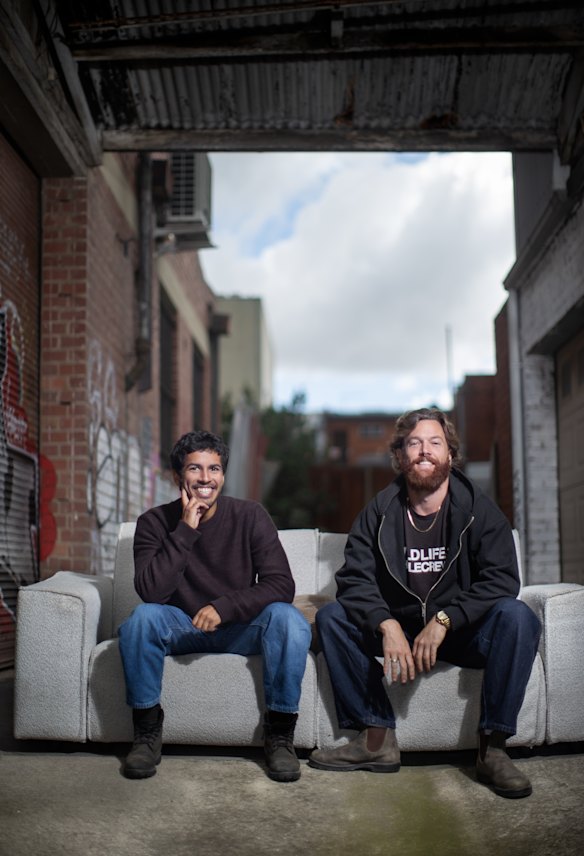
Rather than age verification, the Alliance instead supports stronger oversight of porn websites’ algorithms and, even more importantly, comprehensive sexuality and consent education.
The need for more education is an area of alignment for most experts. The Man Cave’s Vasiliou says this effort should extend to preparing young people for porn – they’re going to watch it anyway – with radical honesty and “messy” conversations about what porn might actually be healthy to watch. He talks to his own 16-year-old daughter and 20-year-old son about everything from foreskins to penis size, sex positions and sexual hygiene. “The challenge,” Vasiliou says, “is we’re not having this broad debate, because we’re scared about national conversations.”
That’s what The Man Cave’s work is largely about. I see it first-hand, sitting in a classroom in a working-class suburb in coastal Victoria, filled with 40 teenage boys on red plastic chairs, all of them having just rumbled in from the corridor, a cacophony of chatter and banter.
A pair of skilful facilitators leads them through the free-form session – a forum for the boys to discuss fears, hopes, dreams and insecurities. The facilitators are prohibited from raising the topic of porn unless the boys do so organically. But it’s come up in the past few weeks anyway – boys in workshops mentioning using VPNs so they can access “the Hub”. There are flippant references to Bonnie Blue, the porn star who infamously targets “barely legal” young men. And a 15-year-old boy secretly approached facilitators one day to confess his porn addiction.
None of that arises today, but the discussion is honest and raw in its own way, exploring volatile living situations and dangerous choices, suicide and the silence that often follows. Their day is filled with connection and vulnerability, honestly and reflection and sharing. And there’s a strength they project together as a group – a warm confidence blended with sensitivity. These boys have so much capacity to learn and reflect. We just have to invite them.
Back in the Laing family home, the boys’ father, James, is shooting hoops with his eldest boy in the driveway. The front room of the house is cluttered with toys and games – a foosball table, tubs of Lego, and a bookshelf stacked with titles like The Chronicles of Narnia. The dining table beside the kitchen is covered with crafts, and a trampoline takes up most of the backyard. “It’s just bloody hard to keep them as children,” says James, his head in his hands, now sitting in an armchair opposite his wife. “What is childhood now – does it finish at six, seven years old?”
Principe says Australia should keep educating its children about pornography – but the bottom line is, they just shouldn’t see it, which is why the ban is so welcome to so many. Otherwise, “how do parents compete with billion- and trillion-dollar industries that are pervasive and reach their children before they do?” Principe asks. “When does it end?”
The Laings strictly monitor their sons’ devices, but only recently the boys came home from school and started making moaning sounds, copying a classmate imitating porn. (Laura told them it’s the sound female tennis players make.) Another classmate started humping his friends at recess, saying things like, “Come to the bedroom, daddy”. “Straight away, I knew it was because his older brothers are watching porn at home,” Laura says. “It’s just very scary to think that even in school, they’re not safe from this.”
Nowhere seems immune. Their sons started playing the online game Roblox, then Laura and James discovered Instagram videos about how boys are now “raiding” female players’ clothes. “So, not only did I have to worry about what older kids were saying at school, it was also in technology,” Laura says, exasperated. “I’m feeling like this is just grooming on a really weird, sinister level.”
The parents have agreed they’ll start talking to the boys about sex when they are 13, but for now, they deflect their questions and shut down innuendos. There’s a longing for innocence here.
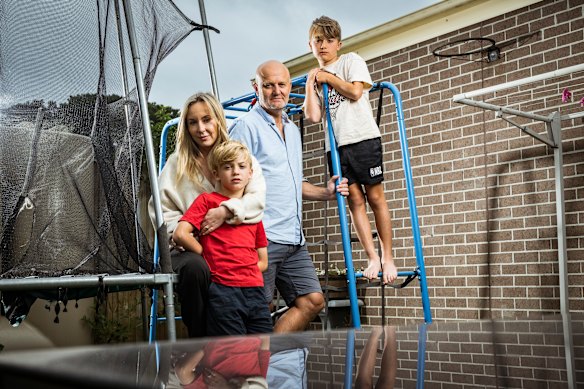
James, who is in his 40s, reminisces about the time he was nine, and told his mother about his first crush – a girl he met on the school bus. He mourns the fact that his sons will probably never have the same conversation, but his worst fear is they will be exposed to material that objectifies women, ruining their capacity for something as fundamental as connecting with the opposite sex. “If boys don’t even understand how to form relationships with girls at a young age and respect them and become friends with them, and they’re seeing them in another way, then we are done,” he says. “We are done.”
But they do have hope. During a backyard photo shoot before I leave, Laura wraps her arms around her elder son. When the photographer asks him to sweep the hair out of his eyes, Laura does it for him instead. He smiles up at her.
* Names have been changed.
If you or someone you know is affected by sexual assault, domestic or family violence, call 1800RESPECT on 1800 737 732. Kids Helpline: 1800 55 1800.
Get the best of Good Weekend delivered to your inbox every Saturday morning. Sign up for our newsletter.
Read more from Good Weekend:

















































