
 4 months ago
82
4 months ago
82
In 2019, director Jeremy Workman was inside the Stavros Niarchos Foundation Cultural Centre in Athens, filming YouTuber Lily Hevesh, regarded as the world’s greatest domino-toppling artist, for his documentary Lily Topples the World. Michael Townsend, an artist and educator who does masking-tape art in public places, was working on a project in the same building. The Americans introduced themselves, became fast friends, and started hanging out in their downtime.
One night, Townsend asked the question that would change everything: “You want to hear something incredible? I was one of those people who lived in the secret mall apartment.”
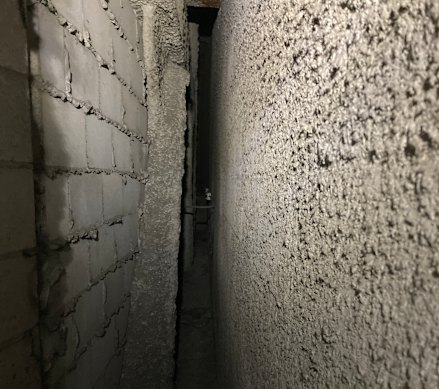
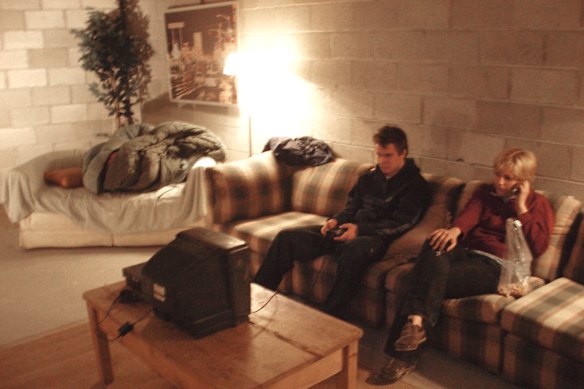
Workman had no idea what he was talking about. Townsend explained that in 2003 he and seven artist friends and collaborators found a way to sneak into a hidden space in a new shopping mall in their home town of Providence, Rhode Island. In what became part prank, part protest, part public/private performance art, they gradually furnished the space, even building a cinder block wall with a locking door, and hung out there on and off for four years before being caught.
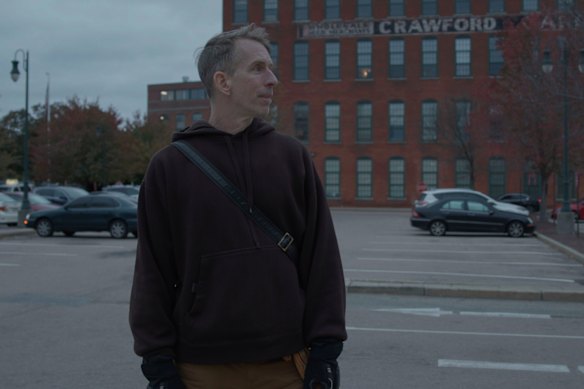
As a documentary maker, Workman couldn’t believe that no one had approached Townsend to make a film about this. It turned out they had. A lot of them. By Townsend’s estimate, around 30.
“We were bombarded by producers and directors, but we said no to all of them,” Townsend says from his home and workspace in a former mill building in Providence. “They only wanted to focus on the prank aspect of the story. The ideas became dumber and dumber. There was this top-tier Hollywood actress who … wanted to turn it into a romcom.”
Workman admits that the prank side of the story did appeal. But speaking from Auckland, where he is making a documentary about Rube Goldberg machines (which are engineered to over-complicate routine tasks), he says his interest went beyond that. “From the get-go I told Michael that I was really interested in the art they were doing. When I got to meet everyone, I was intrigued by who they were as artists and people, and how the secret apartment fit into a much bigger story.”
Workman has runs on the board in this area. His films often focus on someone doing something unusual or unique, but then branch out into something much bigger. His 2018 film The World Before Your Feet followed former engineer Matt Green as he systematically walked every street of the five boroughs of New York City. Although his quest was the quirky hook, the film became a meditation on slowing down, observing our world, seeing the extraordinary in the ordinary, and opening ourselves up to be more human. Workman saw similar possibilities in Townsend’s story.
Before the mall went up, Providence had multiple mill buildings in the downtown area known as Eagle Square that had been largely abandoned as industry left the city. Artists and musicians poured in during the ’80s and ’90s, taking advantage of cheap rents and huge spaces where they could live and work. Townsend lived in a building known as Fort Thunder, paying $US150 a month for a 900-square-metre space. Those halcyon days ended when developers began moving in.
The mall opened in late 1999 and proved to be the first domino, as more developers swooped in to buy up the cheap mill buildings, ousting the artists in the process. Townsend spent the next couple of years campaigning against the destruction of their homes, attending city meetings where he kept hearing the same phrase: “If there’s a space that’s undeveloped, then we have a responsibility to develop it.”
It was a phrase that took on greater significance when Townsend remembered seeing an anomaly in the mall structure during its construction. He had been jogging near the building site one day when he noticed a vacant space high up in the half-finished building that seemed to serve no purpose. The secret apartment project was born.
When he and the other artists agreed to Workman telling the story, they revealed 25 hours of footage they had filmed on small digital cameras, documenting the discovery of the space, the planning stages, furtively carting in furniture, building the internal wall, and evading detection.
Workman was true to his word about not making the apartment the sole focus of the film. The most emotional parts of the documentary occur as we follow the artists on their various projects, such as working with sick kids and teens to create murals with masking tape at a children’s hospital, and the ambitious Hope Project, for which they spent five years making tape portraits of emergency workers and airline passengers who died on 9/11. The portraits were placed at strategic locations around Manhattan so that when they were connected on a map, they formed four giant hearts.
“I describe the film as a Trojan horse,” says Workman. “It can be challenging to get people to see a documentary, so you bring them in with this story about the secret apartment, but then you find out that these people are doing all these incredible art projects, and they are helping other people, and they’re doing it for no money.”
Townsend was eventually sprung in 2007. He was arrested, fined $60, given six months’ probation (“which meant speaking to a lovely probation officer every couple of weeks and eating cookies together”) and was banned from the mall for life. The ban was overturned 19 years later after the documentary won 12 film festival awards and reached number four on US Netflix’s top 10 list. Its theatrical premiere was held at the mall’s cinema complex last year and Townsend took part in Q&As after each screening. The film ran there for 32 weeks.
Perhaps the loveliest scene in the film is when the artists hold up the apartment keys they’ve held on to all those years. What does that say about what the place meant to them?
“I think it says that we were bound to each other,” says Townsend. “Because of the projects we did together, especially the 9/11 project, which was a hyper-emotional, very illegal art project, we had an intense amount of love and trust and determination and artistic integrity. Nobody was getting paid, but we were committed to each other and to what we were doing … those keys mean a lot to each of us.”
Secret Mall Apartment streams on DocPlay.
Must-see movies, interviews and all the latest from the world of film delivered to your inbox. Sign up for our Screening Room newsletter.

















































