 3 months ago
55
3 months ago
55
Will Australians be able to use the term Prosecco?
By Brittany Busch
One of the sticking points in the EU-Australia trade deal negotiations has been European producers’ desire to restrict the use of so-called “geographic indicators” – names given to products that originate from a particular place.
The new deal means those rules are changing.
Take our quiz to see what’s in a name.
Dairy farmers say trade deal worse than what was on table two years ago
By Brittany Busch
The Australian Dairy Industry Council has also lambasted today’s trade deal as unfair, arguing it would disadvantage local producers.
Chair Ben Bennett said the deal would expose Australia to more dairy imports – and increase competition for domestic producers – while failing to secure reciprocal access for exports to the EU:
This is neither a free nor fair deal for Australian dairy, and it is a worse deal than what was on the table in 2023.
We are being asked to give up established commercial freedoms without securing meaningful market access.”
‘A great deal more access’: minister bats away criticism
By Brittany Busch
Resources Minister Madeleine King has dismissed immediate criticisms from the agricultural sector upon the signing of the Australia-EU trade deal.
“The truth is, for the agriculture industry, it is a very good result. We’ve got a diversified agricultural export industry,” King told Sky News.
“What I can assure cattle farmers … it is a significant improvement on where they were yesterday.
“I understand they wanted more, and it’s a very ambitious industry, and I really get that. They work really hard. It’s difficult conditions. They have withstood some really tough times, but the EU trade agreement, nonetheless, does get them a great deal more access the European Union than they did before it was signed.”
‘Simply appalling’: cattle farmers slam trade deal
By Brittany Busch
Cattle Australia has accused the government of rolling over and selling out Australian producers in the EU-Australia trade deal signed today.
“The deal that has been struck is simply appalling for agriculture and regional Australia and delivers nothing to address the trade imbalance to the EU,” Cattle Australia chair Garry Edwards said in a statement.
“The quantities agreed are pathetic, with headline trivial volumes not reached for 10 years. At the same time, Australia is inundated with massive volumes of tariff-free EU meat protein and dairy products, which highlights the hypocrisy of promoting a genuine free trade agreement.”
The agreement guarantees Australian exporters will be able to sell 35,000 tonnes of beef to Europe a year, up from the current annual quota of 3389 tonnes.
Australia’s distance ‘no longer a protection’, von der Leyen says
By
Alongside flat whites, and pavlovas, Australia’s notoriously long flights have also been given a shoutout by the European Commission president:
It takes longer to cross Australia, than to fly anywhere within Europe.
Your “far horizons” – identified so eloquently by the iconic Australian poet Dorothea Mackellar – are a reminder that the distance has traditionally been a barrier to our relationship. But today, geography is no more our destiny.
And distance is no longer a protection or a luxury.
The world has changed, but we get to choose how to shape our responses.
Europe, Australia to ‘have each other’s backs’ when it comes to China
By
Towards the end of her speech, European Commission President Ursula von der Leyen also brought up the topic of China.
“We cannot and will not absorb China’s export-led growth model and its industrial overcapacity,” von der Leyen told parliament.
“Last year, every single EU member state ran a trade deficit with China.”
She went on to say:
Both the threat to our supply-chain security and the shock to our industrial base need urgent responses. These are responses we can only devise together.
For both Europe and Australia, getting China right is a strategic imperative. This is why bringing life to our critical minerals partnership will be crucial to our success. We cannot be overdependent on any supplier for such crucial ingredients.
And that is precisely why we need each other. Our security is your
security.
And with our new security partnership, we have each other’s backs.
Yesterday’s ‘comfort blanket’ ripped away: von der Leyen
By Brittany Busch
Von der Leyen has now concluded her speech, but it’s worth pointing out that while she painted a grim picture of the state of the world, she also repeatedly emphasised those conditions created an opportunity for greater collaboration between allies:
The world we live in is brutal, harsh and unforgiving. It feels upside down. What we knew as certainties are in question. The comfort blanket of yesterday is ripped away.
It is confronting, but the world we are living in is also a more honest one. We are saying out loud what has changed and how we are changing against this backdrop, my visit is not a symbolic trip. What we signed today will unleash a new era of economic and security partnership.”
Decarbonising, rearming: Europe turning to ‘independent’ future
By Brittany Busch
The European Commission president said today’s Europe was different to the one the world has historically known.
She said the trade deal inked with Australia showed Europe was open for business, and it was also changing its approach engaging with countries around the world, from India to Latin America.
“We are rearming. We are decarbonising. We are preparing. We are becoming an independent Europe,” she said.
‘Sunburnt country’: von der Leyen gives climate rallying cry
By Brittany Busch
Ursula von der Leyen has pointed to the 2008 financial crisis, the COVID pandemic, the war in Ukraine, and today’s oil shock as reasons for energy diversification.
“Diversification was and remains a necessity,” she told the parliament.
“This is why I am proud that we have made decarbonisation a defining pillar of our free trade agreement. It is hard-headed common sense.”
She said in her six years as president of the European Commission, she has seen climate change ravage her continent.
“From floods in Valencia, to the wildfires which Australian firefighters came and helped put out. We all know what we are seeing is more severe,” she said.
“Dorothea Mackellar wrote of Australia’s droughts and flooding rains affecting your sunburnt country. But the point is, these climate events have become more frequent and more intense, and it is our common responsibility to find solutions to power the planet we leave our children.”
From Perth to Paris, challenges are the same, European leader says
By Brittany Busch
Von der Leyen said Australia and the EU were facing similar challenges, such as climbing energy prices, and could work together to overcome them:
So many of the issues that challenge you in Perth are the same as in Paris.
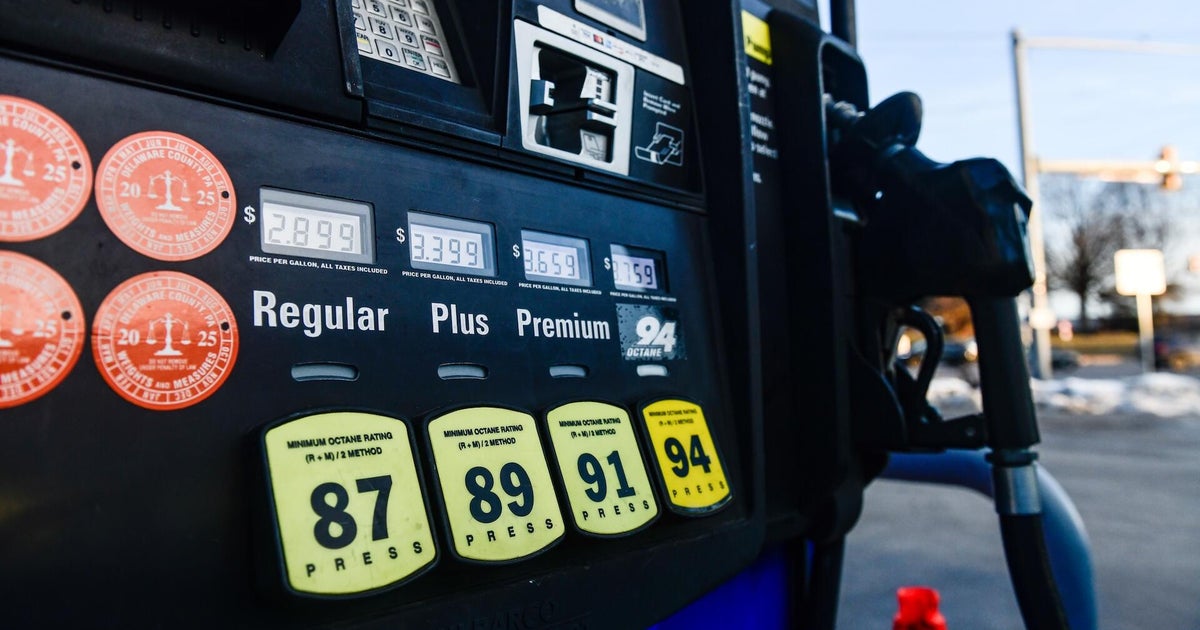
None of us is immune to the shocks, both geopolitical and economic, that the war in Iran brings to our populations. Pain at the pump is hard for our citizens, and just another reminder that building our resilience is today’s job.”
1 of 3