
 2 months ago
47
2 months ago
47
For a month, a cadre of barristers, witnesses, journalists and interested members of the public have spent almost every weekday squeezed into a windowless, wood-panelled room on the seventh floor of a Sydney office block, following an engrossing corruption inquiry.
For 19 long days, through 18 witnesses, 11 f-bombs and four teary breakdowns, the Independent Commission Against Corruption’s public inquiry into the City of Parramatta council has heard allegations of cronyism, nepotism, misuse of council resources, processes and information, and spying on staff and a councillor by its former boss Gail Connolly. Her friends - known to each other as the Pink Ladies – Angela Jones-Blayney and Roxanne Thornton, are accused of subverting recruitment processes to benefit their friends.
The inquiry might be being held in the Sydney CBD, but its impact is being most strongly felt 23.2 kilometres away: in the council’s two buildings, where its elected officials remain divided over the severity of the allegations, and its staff drudge through low morale and continued suspicion of colleagues.
At an evening legal briefing last Monday at PHIVE, the red-panelled civic building containing council chambers at the heart of Parramatta Square, two councillors told their colleagues that the allegations being raised at the inquiry were not that bad.
Labor councillor Patricia Prociv, who voted against Connolly’s sacking in October, told shocked colleagues that there were “different degrees of corruption”, according to multiple independent accounts.
Liberal councillor Georgina Valjak, who had abstained from the sacking vote, told the confidential meeting that headhunting was usual in the private sector, and questioned what was wrong about revelations Connolly had done the same thing at the council. (Counsel Assisting Joanna Davidson SC said last week that section 349 of the Local Government Act requires appointments to be based on merit.)
This ICAC inquiry is not like many others. Often, the commission’s public inquiries come in the years after an alleged act: the organisation’s first investigation into Eddie Obeid in 2012 occurred years after his first misconduct took place in the early 2000s; former premier Gladys Berejiklian’s 2016 actions around her then-boyfriend and a clay target club were only examined in 2021.
But in Operation Navarra, matters are being discussed in the present tense. Many employees who are being investigated or hauled before the commission, including those who were hired by the “Pink Ladies”, currently work at the council. Several remain working in key decision-making positions. (Connolly’s niece, who told the inquiry about being offered a job at the council by her aunt via text, has since left the organisation.)
Thornton – who, in her own words, “admitted to everything” about making a “charade” of council recruitment processes when she changed job descriptions, edited her friends’ applications and provided interview questions and answers in advance – is being paid by the council despite being on leave since last year. Jones-Blayney is too.
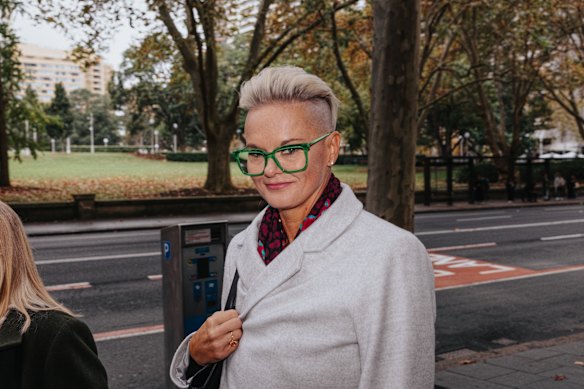
Others, like Michelle Carter, the council’s events and festivals manager who the inquiry heard had been appointed to the role despite having previously failed a job process for a lower position at the council, are still working there.
Multiple staff who spoke to the Herald said they feel deeply invested in the inquiry and its outcome because they care about their workplace and the local community. They have been instructed not to watch the inquiry or speculate about it while on the job, but several have been reading through interview transcripts and trawling through thousands of texts, emails and documents regularly uploaded by the commission. Others secretly listen on their phone in the office.
Current leadership pushes calm
The saga is causing a headache for the council’s leadership: both elected officials and executive staff. The council has paused its search for a new chief executive and has also put a temporary stop to its refer-a-friend bonus, which was referenced in passing at the inquiry.
Acting chief executive George Bounassif, who is generally well-regarded by staff, has sent email updates each week and held in-person and online Q+A sessions about the investigation.
The council has also introduced a new Speak Up hotline that allows anonymous whistleblower reporting, unlimited employee assistance program usage, and optional training on psychosocial safety.
However, some staff have expressed concern about using systems that the inquiry has revealed to be so easily accessible by leadership: the inquiry has heard evidence that anonymous matters submitted to a whistleblowing service were identified and read by senior leadership.
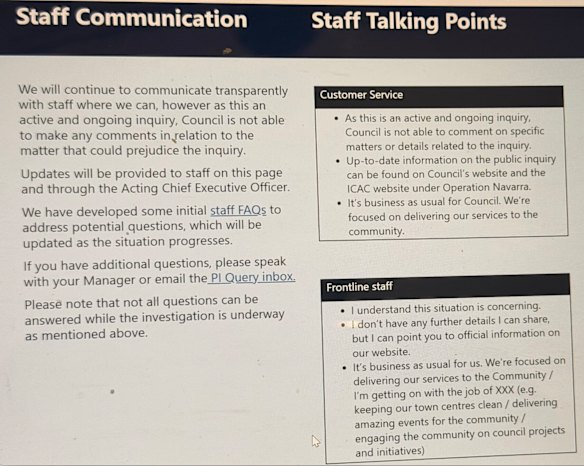
An online staff information page, seen by the Herald, provides talking points for frontline and customer service staff if the matter is raised in outside conversations.
“I understand this situation is concerning,” frontline staff have been coached to say. “It’s business as usual for us. We’re focused on delivering our services to the Community / I’m getting on with the job of XXX (e.g. keeping our town centres clean/delivering amazing events for the community/engaging the community on council projects and initiatives).”
A spokesperson for the council said: “The wellbeing of staff continues to be of the utmost importance during this time. Communication has increased across the organisation with a focus on being transparent about the ICAC public inquiry and offering support to staff, while providing opportunities to ask questions and raise concerns.”
Meanwhile, Parramatta’s councillors – who are responsible for the hiring and firing of the chief executive – are meeting weekly for legal briefings and discussions about the process of decentralising power. The majority support reform. The two who asked questions remain cautious.
Valjak, responding to questions from the Herald about her comments, said: “As you are aware, councillors under the code [of meeting practice] are unable to comment on confidential briefing sessions. I have not been in contact with the former CEO Ms Connelly [sic]. No further comment.”
Labor’s Prociv didn’t respond to requests for comment. When the Herald called from a different number and identified ourselves, she hung up.

















































