It was a week of chaos at airports across the country.
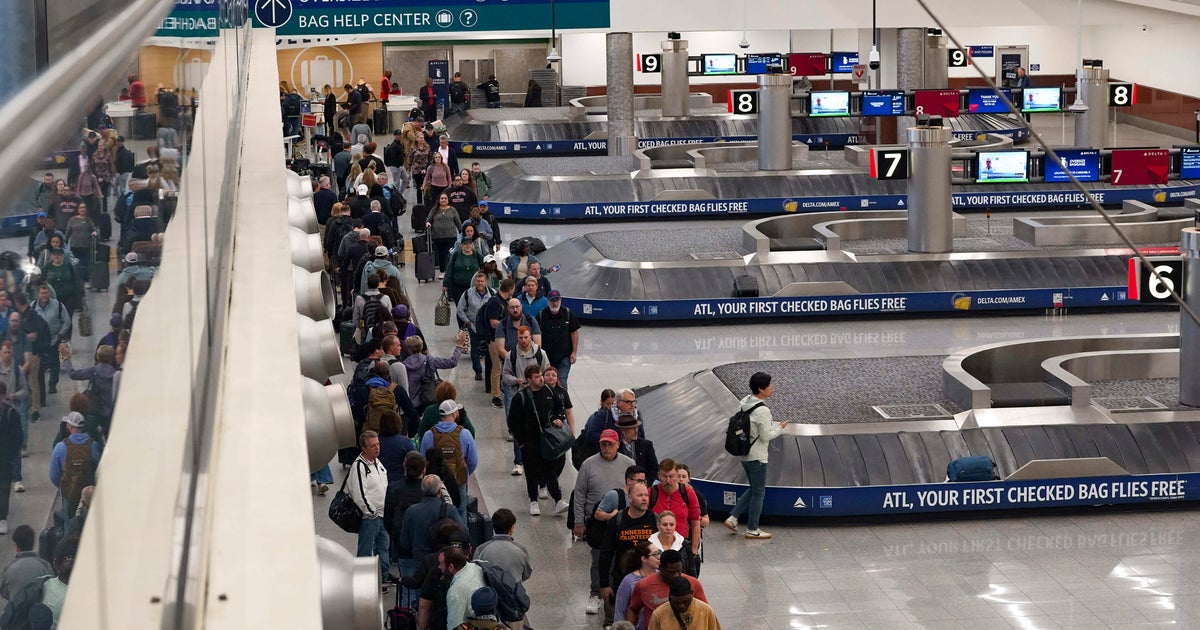
Gridlock in Washington left TSA workers without pay, triggering four-hour security lines in some of the nation's busiest airports.
Last Sunday a commercial jet crashed into a fire truck while landing on a runway at New York's Laguardia airport. Dozens were injured and two pilots were killed.
Authorities are investigating. But the air traffic controller on duty said they were dealing with an earlier emergency — and soon after the accident said "I messed up."
It is a chilling reminder of just how thin our aviation system is stretched. Last year, American Airlines flight 5342 and an Army helicopter collided over the Potomac River near D.C., the deadliest aviation disaster in almost a quarter century.
Tonight, you will hear from an air traffic controller who was inside the tower the day of that collision. She tells us why controllers at Washington's busiest airport have been warning of danger for years.
It is a story of a system pushed to the breaking point, and the shattered families left to pick up the pieces.
In southern Maryland, seven widows whose husbands were on Flight 5342 agreed to share their story, together, for the first time.
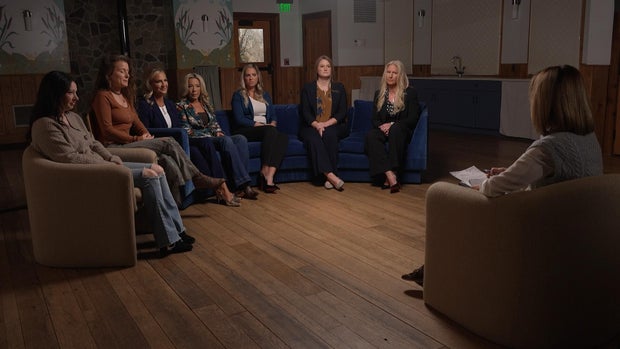 Widows whose husbands were on Flight 5342 speak with Sharyn Alfonsi
60 Minutes
Widows whose husbands were on Flight 5342 speak with Sharyn Alfonsi
60 Minutes
The men, all work buddies, met up with friends in Kansas for a week of duck hunting. The women shared these photos with us, and the excitement their husbands felt leading up to the trip.
Kayla Huffman: Alex got home from work, he was like "Before you say anything, it's already paid for." and I was like, "When do you leave?" Like, there was no asking any more questions. He was so excited to go. Like, it literally looked like Christmas morning in his face so…
Kayla Huffman's husband Alex posed with the crew and their trophies. Bridget Johnson was married to Steve for 19 years. Kylie Pitcher's husband, Jesse, owned a plumbing company. Ashleigh Stovall's husband Mikey was a steamfitter. So was Charlie, Heather McDaniel's husband.
Heather McDaniel: I met Charlie on the softball field. and he basically from that day always said, you know, "I knew I was gonna marry that girl."
Sharyn Alfonsi: 'Cause you were that good of a softball player?
Heather McDaniel: Well, that too. Yes. I gave him a run for his money.
When the hunting and fun was over, the men headed to the airport. Sarah Boyd's husband Jon checked in from the plane.
Sarah Boyd: Jon had texted me when he first boarded and said, "Boarded, bourbon in hand." And then, right before they landed he said, "About to land this bird."
Jill Clagett was tucked into bed with her young daughters, waiting for her husband Tommy, when the phone rang.
Jill Clagett: And then I kinda slid out of the bed, not to wake them up. And I turned on the TV and I remember just seeing the explosion.
Families raced to the airport as divers searched the icy Potomac. By morning, they were told the rescue mission was over.
Kayla Huffman: I literally screamed, "What am I gonna do?" It got to the point where, like, his friends were calling me at, like, 5:00 in the morning and they're like, "Is he okay? Is he okay?" I said, "No, he's dead. He's gone. And it's no longer a rescue. It's a recovery, which means there's no survivors, none."
As the wreckage was pulled from the river, federal investigators began a year-long forensic autopsy of the collision. Video shows the American Airlines jet, seen here on the right of your screen, pulled up just before it and the Army helicopter collided.
Emily Hanoka: There were obvious cracks in the system, there were obvious holes.
Emily Hanoka says she saw those holes during her time as an air traffic controller at Ronald Reagan Washington National Airport, commonly known by its airport code, DCA. Her shift in the control tower ended a few hours before the fatal crash. She is speaking for the first time about the stressed conditions that she believes set the stage for tragedy.
Emily Hanoka: You had frontline controllers ringing that bell for years and years, saying this is not safe. This cannot continue. Please change this. And that didn't happen.
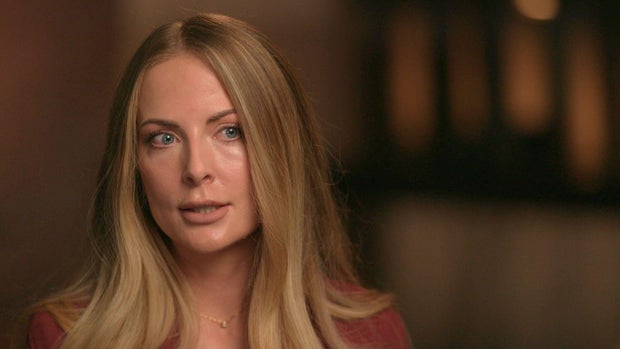 Emily Hanoka
60 Minutes
Emily Hanoka
60 Minutes
For more than a decade, air traffic controllers warned the Federal Aviation Administration that the tempo of passenger jets and beehive of Army, police and hospital helicopters near DCA was a recipe for disaster.
The NTSB confirms, between "2021 and 2024"… "85" near mid-air collisions between helicopters and commercial aircraft at dca were reported to the FAA.
And 60 Minutes has obtained documents that reveal just one day before last year's fatal crash, two separate passenger jets had to take sudden action to avoid colliding with Army helicopters.
Emily Hanoka: The warning signs were all there. Controllers formed local safety councils and every time that a controller made these safety reports, another controller was compiling data to back up the recommendation. And many recommendations were made, and they never went too far.
DCA is unique. It's owned by the federal government, and the number of daily flights is ultimately determined by Congress. Since 2000, lawmakers added at least 50 flights to the already congested airport and approved another 10 in 2024.
Emily Hanoka: Some hours are overloaded, to the point where it's over the capacity that the airport can handle.
Sharyn Alfonsi: Was there pressure to get more planes in and out?
Emily Hanoka: Yeah,um, there was definitely a pressure. If you do not move planes, you will gridlock the airport.
DCA moves 25 million passengers a year, 10 million more than its intended capacity. Its location near the heart of D.C. makes it popular, but also problematic.
Restricted air space near the airport shields the White House, the U.S. Capitol and other government buildings, for years funnelling planes and helicopters into the same narrow corridor over the Potomac.
And Hanoka showed us, on her map of the airspace, why the tarmac is just as tricky. There are only three short runways at DCA and none are parallel.
Sharyn Alfonsi: And so if a plane's coming in, because these runways intersect, everything is connected.
Emily Hanoka: Everything is connected. There is no independent operation at DCA.
DCA's main runway, runway one, is the busiest in the country with over 800 flights a day, roughly one every minute. To make it work, Hanoka says, air traffic controllers often relied on what they called a "squeeze play."
Emily Hanoka: A squeeze play is when everything is dependent on an aircraft rolling, an aircraft slowing, and you know it's gonna be a very close operation.
Sharyn Alfonsi: So they're really just, one's going up, and one's going in at the same time.
Emily Hanoka: And that is a really common operation.
Two airplanes, on one runway, within seconds of each other.
Sharyn Alfonsi: Is that normal at other airports?
Emily Hanoka: No. So you'll get new controllers come in, so they've transferred from other facilities and they'll look at the operation and say, "Absolutely not." And they'll withdraw from training. And that, when I was there, was about 50%.
Sharyn Alfonsi: Fifty percent?
Emily Hanoka: About half of the people that walked in the building to train would say, "Absolutely not."
A year after the crash, nearly one-third of the controller positions in the DCA tower are unfilled.
Emily Hanoka: It was surprising walking into that work environment, how close aircraft were.
Sharyn Alfonsi: Is it just kind of accepted there?
Emily Hanoka: Yeah. This is what has to happen, in order to make this airspace work. And it did work. It worked until it didn't.
In January, the NTSB determined the mid-air collision of Flight 5342 and the Black Hawk helicopter was preventable.
In its 388-page report, investigators didn't identify a single cause of the accident, rather, they called out "systemic failures," including ignored warning signs about risks and a "helicopter route" that was designed so poorly that in some parts of the sky, it allowed for just "75 ft of vertical separation" between helicopters and passenger jets.
Tim Lilley: I flew these routes hundreds of times.
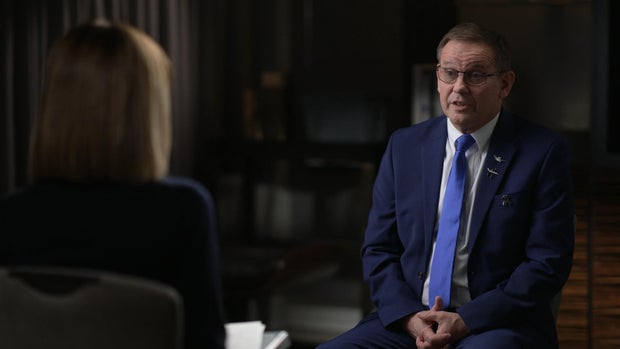 Tim Lilley
60 Minutes
Tim Lilley
60 Minutes
During his 20 years in the Army, Tim Lilley flew Black Hawk helicopters, often, down the Potomac River near DCA. The night of the crash, investigators say the Black Hawk crew was relying on what's called visual separation, literally just looking out the window to avoid nearby passenger jets.
Tim Lilley: To apply visual separation, the pilot has to positively identify the other aircraft.
Sharyn Alfonsi: And say that's the plane you're talking about.
Tim Lilley: That's the plane. And he has to maintain constant surveillance on that aircraft, which is impossible under these conditions.
"Impossible," he says, because the crew was likely wearing night-vision goggles, which Lilley says limit what a pilot can see.
Sharyn Alfonsi: Help people out with this at home, because I think we've all watched enough movies where you see somebody put on night vision goggles and they can see everything. But that's not the case.
Tim Lilley: Especially under these conditions, that's not the case. So when you have a lot of bright lights, like you do in, you know, Washington, D.C. area, everything gets washed out through the goggles.
The NTSB built this simulation to show what those Black Hawk pilots saw—or rather, what they couldn't see…
That green circle indicates the pilots view wearing night vision goggles.
That purple circle is the American airlines jet they were supposed to be looking out for. You can see how it's hard to distinguish between an airliner and ground lights.
Night vision goggles also limit peripheral vision. So the crew, on a training mission, didn't see Flight 5342, until it was too late.
Tim Lilley: The proper way to fly that is constantly scanning, always moving your head, side to side, because your field of view is limited with goggles.
Sharyn Alfonsi: But why is that kind of training happening in this airspace, where it's so busy?
Tim Lilley: The military would say. "This is where our mission is. This is where we need to train." And to some degree, I agree with that. But those training environments, they should be nowhere near commercial airliners.
Tim Lilley is now advocating for changes to make the skies safer. His son, Sam, shared his love of aviation and in the cruelest twist of fate, was the first officer on American Airlines Flight 5342. one of the 67 killed in the crash.
Tim Lilley: And I never thought to warn him about the helicopters because I just didn't realize how far the safety margins had slipped since I had flown those routes.
Jennifer Homendy: This was a system that failed the people. On the aircraft, on the helicopter, in the air traffic control tower.
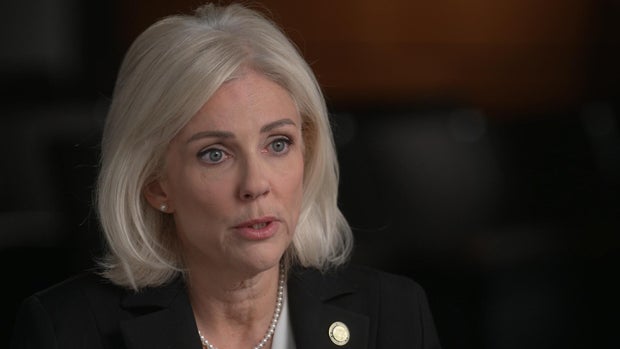 Jennifer Homendy is the chairwoman of the NTSB
60 Minutes
Jennifer Homendy is the chairwoman of the NTSB
60 Minutes
Jennifer Homendy is the chairwoman of the NTSB. After a year-long investigation, the agency suggested 50 safety recommendations to prevent similar accidents.
Sharyn Alfonsi: If everybody knows those close calls are dangerous then why didn't anybody step in and say, "We have to lighten the load here."
Jennifer Homendy: The air traffic control tower the entire time was saying, "We have a real safety problem here," and nobody was listening. It was like somebody was asleep at the switch or didn't wanna act. It is a bureaucratic nightmare
Immediately after the accident, the FAA moved some helicopter routes away from DCA and ended the use of visual separation. Earlier this month it expanded that ban to busy airports across the country.
In a statement to 60 Minutes, Transportation Secretary Sean Duffy said he's helped secure more than $12 billion to, quote, "aggressively overhaul our air traffic control system."
But the problems at DCA continue. Since the crash, 60 Minutes has learned at least four times, aircraft and helicopters have gotten too close, triggering safety reports
Some of the families of Flight 5342 are now fixtures on Capitol Hill, advocating for aircraft surveillance technology that might have saved their loved ones.
Jennifer Homendy says if the FAA and lawmakers don't move quickly on safety legislation, they are clearing the path for another disaster.
Sharyn Alfonsi: I imagine most of them fly in and out of DCA.
Jennifer Homendy: They do.
Sharyn Alfonsi: So what would you say if they were listening?
Jennifer Homendy: I'd say why do we always have to wait until people die to take action?
Produced by Andrew Bast. Associate producer, Jessica Kegu. Broadcast associate, Erin DuCharme. Edited by Thomas Xenakis.
In: