A few weeks ago, we lost a giant in the world of filmmaking. Celebrated documentarian Frederick Wiseman died February 16 at age 96, leaving behind a truly extraordinary body of work. David Pogue spoke with Wiseman last year about his life and legacy:
A Frederick Wiseman documentary doesn't have a film score. There's no narration. No text identifying the people or places. No re-enactments. Not even interviews! They often depict meetings, phone calls, and conversations. And these movies are up to six hours long.
Not the ingredients you might expect for masterpieces. At a retrospective last year at New York's Lincoln Center, one moviegoer, Ainsley, characterized the appeal of Wiseman's films this way: "He got out of the way and just let things happen as they are."
In 2016, Wiseman was awarded an honorary Oscar. In accepting his honor, he said, "It's as important to document kindness, civility, and generosity of spirit as it is to show cruelty, banality, and indifference."
Wiseman told us last year he didn't like the term "documentaries" very much: "No. I like 'movies' better. It's simpler. Maybe because when I grew up, documentaries were supposed to be good for you. And I thought what used to be called a documentary could be as funny, as sad, as tragic as a fiction film."
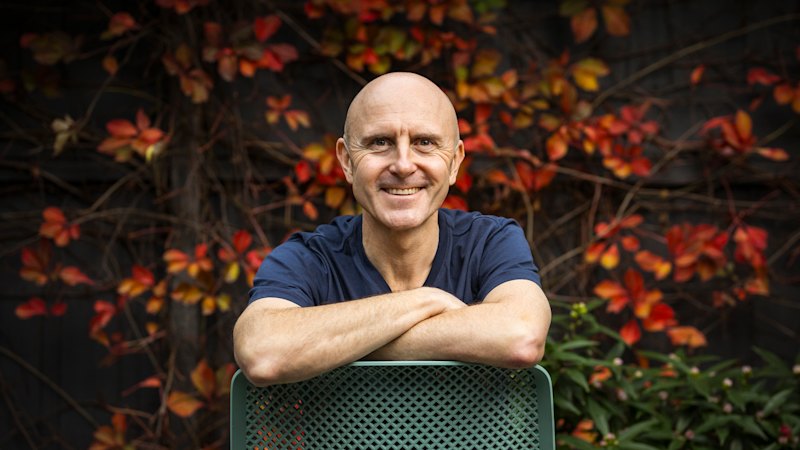
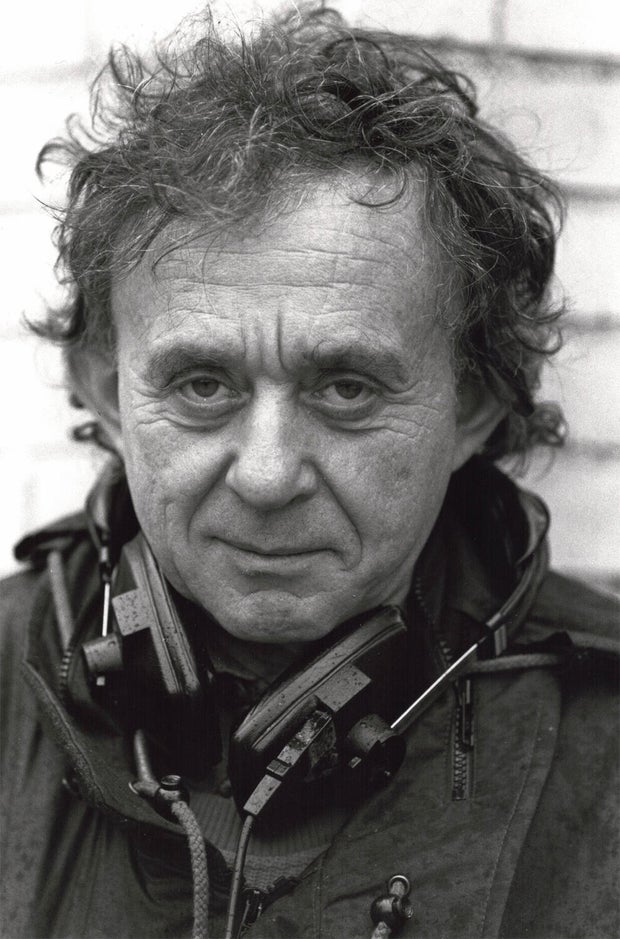 Documentary filmmaker Frederick Wiseman.
Zipporah Films
Documentary filmmaker Frederick Wiseman.
Zipporah Films
In his 96 years, he made 44 documentaries without ever telling you who's speaking, what you're seeing, or how to feel about it. "You have to answer it yourself," he said. "My job as an editor is to provide you with enough information in the context of the film so that you're stimulated to pose that question, and you can answer it yourself."
Wiseman grew up in Boston, and went to Williams College and Yale Law School. Then in 1966, he filmed an inside look at a state prison for the criminally insane. He called his movie "Titicut Follies." It caused a sensation — and changed his life.
He filmed prisoners – some half naked – and guards being pretty abusive. And no one told Wiseman to turn off the cameras. "No," he said. "Once they gave me permission, I had access to everything."
But "Titicut Follies" was so shocking, and politically embarrassing, that a Massachusetts court banned it.
Years passed. "And then in the mid-'80s, I saw an article that said, 'Titicut Follies Judge Dead.' I don't say that I was displeased with that news!" Wiseman laughed. "I brought a new action in front of a new judge. And ultimately it was cleared."
Wiseman's movies go behind the scenes of institutions: a high school, a hospital, a police department, a welfare office, a domestic-abuse shelter. Four of his early films Wiseman described as some of the most depressing films ever made. "There are aspects of some of the early movies that are depressing," he said. "There are also aspects that are extremely funny, in my view. I mean, if you have a sick sense of humor!"
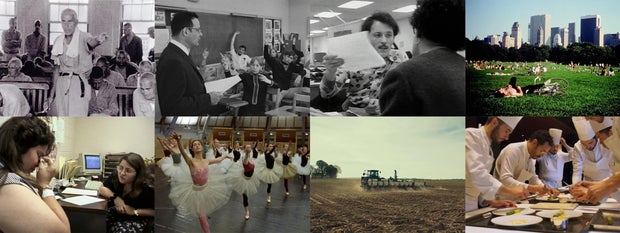 Just a sampling of Frederick Wiseman's vast filmography. Top row: "Titicut Follies," "High School," "Welfare," and "Central Park." Bottom row: "Domestic Violence," "La Danse," "Monrovia, Indiana," and "Menus-Plaisirs - Les Troisgros."
Zipporah Films
Just a sampling of Frederick Wiseman's vast filmography. Top row: "Titicut Follies," "High School," "Welfare," and "Central Park." Bottom row: "Domestic Violence," "La Danse," "Monrovia, Indiana," and "Menus-Plaisirs - Les Troisgros."
Zipporah Films
For all his movies, Wiseman served as his own soundman. He also did no research before filming. "Shooting the movie is all chance," he said. "You never know what people are gonna say and do, which is one of the reasons I have to shoot a lot of film. And for most of films it's 100-150 hours."
Does the presence of a film crew subtly affect the way people behave? "Well, that's the eternal question," he said. "I don't think people are good enough actors to suddenly change their behavior."
After shooting those 150 hours of footage, Wiseman would spend eight to ten months alone in the editing room where, as he freely admitted, he shaped the story. "The notion that these movies are 'The Truth' is completely phony," he said. "It's one person's version. It's my version of a welfare center. Somebody else spending any time in a welfare center would make a completely different movie."
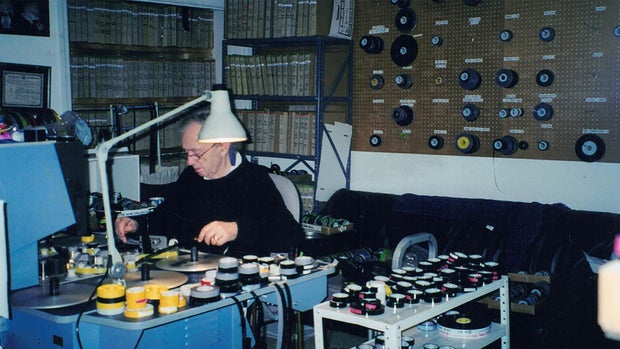 Frederick Wiseman in the editing room.
Zipporah Films
Frederick Wiseman in the editing room.
Zipporah Films
Over the years, Wiseman was occasionally asked to make a trim or two, and he always refused. He said, "It may be pretentious of me, but I think when I find a form for the material, that's the movie. They're not isolated sequences."
In 1971, "60 Minutes" wanted to air his film "Basic Training" – if he'd cut out 30 minutes to fit the time slot. "And I said no, because it wouldn't be the same movie," he said. "So, it wasn't shown."
What does he think his reputation is with these people? "I hope they'd say, 'He's a very nice guy, but he protects his movies,'" Wiseman said.
Wiseman's movies were never what you'd call theatrical blockbusters. They might play in 60 ot 70 theaters. But they did play on television. "PBS has shown everything," he said. "PBS has helped me in every single film I made."
But did they ever say, "Come on, Fred, six hours is too long for this one"? "Well, they said it once or twice, but I said, 'No.' And I won!" Wiseman said.
Over the decades, his movies seemed to become more optimistic. For example, his 2020 movie "City Hall" showed how hard the staff of Boston's mayor worked to improve city life. But Wiseman wouldn't admit to any kind of shift – no trendline from darker to brighter. "It's totally random," he said. "When I'm looking for subjects, you know, it's a question of what interests me at the moment."
His last movie, "Menus-Plaisirs – Les Troisgros," about a fine-dining restaurant in the French countryside, came out in 2023. You can watch all of his movies, for free, on Kanopy.com; you just need a library card.
Meanwhile, they still teach Wiseman in film schools; they still put on Wiseman festivals; and when we visited his home in Cambridge, Massachusetts, his shelves were lined with awards.
"I mean, I obviously like the fact that the films were recognized, and that I get awards, or critics write intelligent reviews," he said. "But the satisfaction is not that; the satisfaction is the work. I love working. And I love making movies. And I never get tired of sitting in front of the editing machine."
For more info:
- Zipporah Films
- Photo courtesy of Brearley Collection, Boston Public Library
Story produced by Robert Marston. Editor: Emanuele Secci.