
 1 month ago
51
1 month ago
51
At 85 years old, this western swamp tortoise, dubbed ‘C12’, is one of the oldest of Perth Zoo’s residents – and one of the most important for West Australian conservation efforts.
The species was believed to be extinct until a young boy uncovered one in his backyard in the Swan Valley in the 1950s and brought it along to a wildlife show at the Perth Town Hall.
It had only been recorded once before, in the 1800s, when a specimen was sent to the Vienna Museum in Austria, lodged as a new species and promptly forgotten about until the wildlife show, more than 100 years later.
By the late 1980s, Perth Zoo had commenced a breeding program to boost numbers and in 1991 ‘C12’ made his debut.
To this day, he continues to play a significant role, siring 142 hatchlings and counting.
Now part of the zoo’s overarching native species breeding program, ‘C12’ has helped contribute to more than 1300 western swamp tortoises being bred.
Almost all have been released into the wild, but numbers remain critically low.
Perth Zoo’s science program leader Dr Harriet Mills said that was because the species was naturally only found in a small area on the northern Swan Coastal Plains, including in the Ellenbrook Nature Reserve.
“They have quite specific habitat. They require these wetlands with specific hydrology and geology with a clay-based structure,” she said.
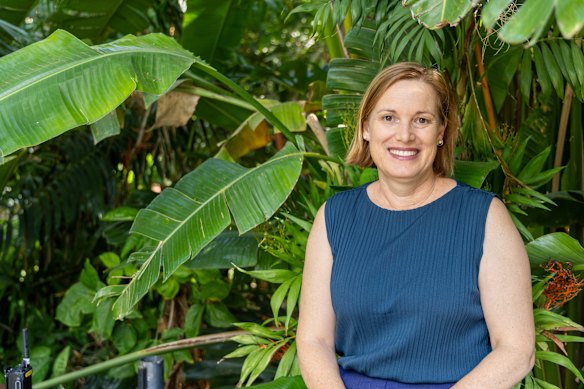
“They were probably restricted and just evolved in that very specific habitat over many thousands of years – just one of those quirks of evolution.”
Because they need a specific habitat to thrive, urban development is a real concern, Mills said.
The Ellenbrook Nature Reserve is protected, but keeping it that way is not yet a guarantee.
The region is now also one of WA’s fastest-growing residential development areas, supported by the new Metronet line and increasing demand for space for new homes in the midst of a housing crisis.
“We can have influence over whether the reserve remains protected but unfortunately, we don’t have that much control,” Mills said.
The concerns over development is one reason the zoo’s program has introduced new populations of the tortoise into different regions of the state, further from the city, including at sites in the Moore River Nature Reserve in the Wheatbelt, and Scott National Park in the South West.
At the latter, 117 western swamp tortoises have been released.
Perth Zoo currently has 49 ponds housing their resident tortoises for breeding, and also runs a program out of Monarto Zoo in South Australia.
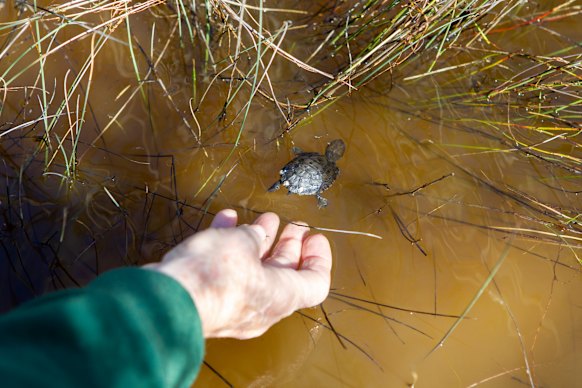
It’s not just tortoises that Perth Zoo’s native species breeding program is focused on – another critically endangered critter housed just next door to the tortoise behind the scenes is also receiving VIP treatment.
The numbat, WA’s fauna emblem, has an estimated population of between 2000 and 3000.
The zoo’s breeding program has resulted in the release of 325 captive-bred numbats since its inception in the early 1990s, contributing to a rise in population numbers from just 300 in the late 1970s.
“It’s still not out of the woods, but much more secure,” Mills said.
“Usually, we have around five or six breeding pairs at the zoo each year and we’re doing a release in late spring, early summer.
“Rather than putting all our eggs being all in one basket, we spread them out a little bit.
“We think of numbats as being a south-west animal in the Wandoo and Jarrah forest, but if you look at their former distribution, it actually went right across most of southern Australia into western New South Wales.”
Perth Zoo has translocated populations across WA, much like with the western swamp tortoise, and also sent numbats to the Australian Wildlife Conservancy in Sydney and to their Mount Gibson Sanctuary in WA, as well as to similar sanctuaries in South Australia and NSW.
“We are developing our captive breeding techniques to allow us to have insurance populations and be able to breed in captivity if we need to, going into the future,” Mills said.
Part of that insurance will come from new funding for the zoo’s native species breeding program, handed down by the state government in its 2026-27 budget.
The $4.1 million commitment over the next two years will largely be used to replace the existing numbat breeding facility.
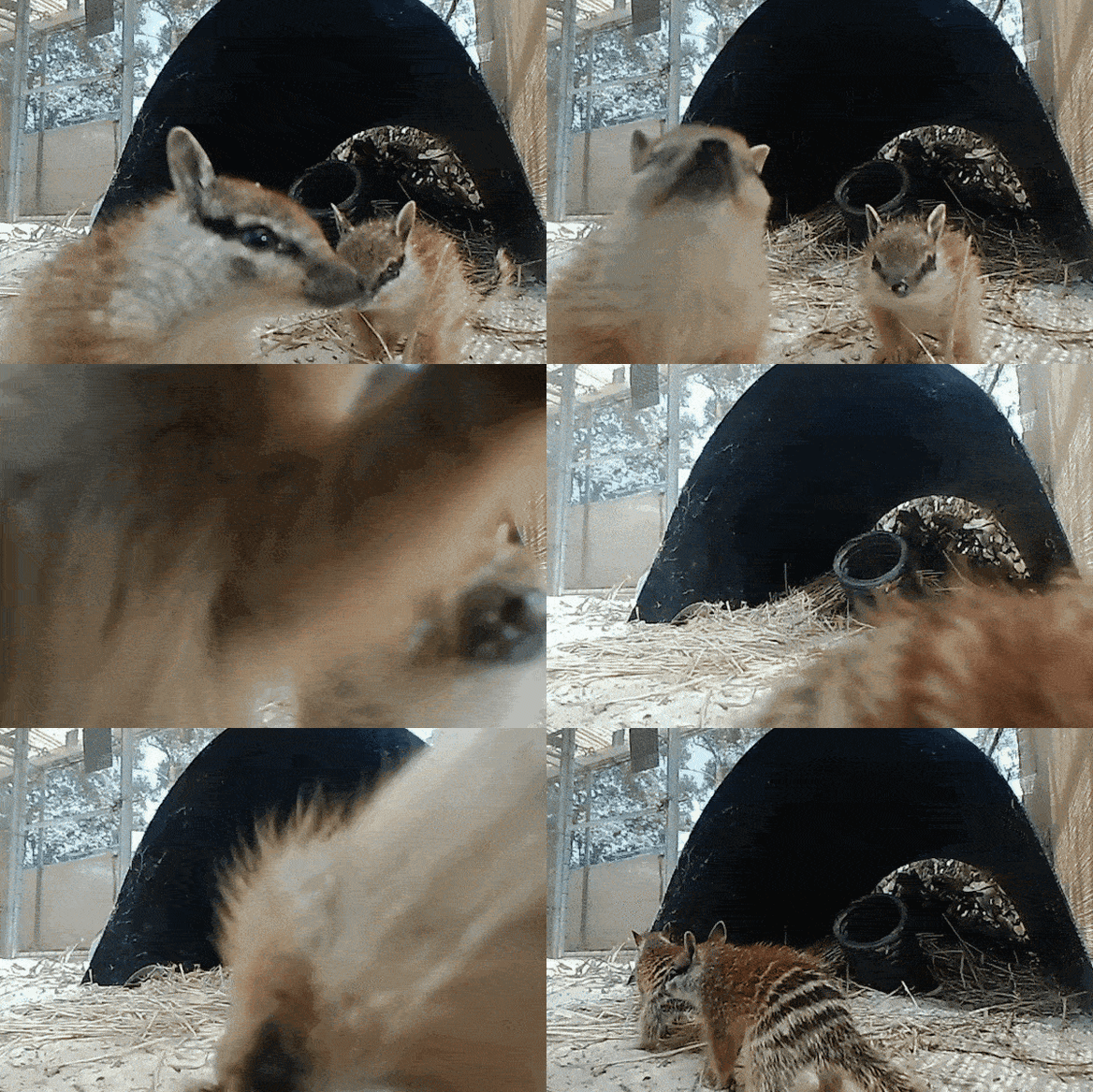
“We are quite limited in our capacity with just 24 enclosures because numbats have four young,” Mills said.
“We separate them out from their mother, so with having just 24 enclosures – half of those are for the adults, then we need the extra space to be able to separate the young off, so we’re basically limited to how many we can breed each year.
“That gives us 10 to 20 animals each year for release, which is quite a small number, relatively speaking.
“If we were able to have another facility, we can manage that a lot more easily, and it can increase our capacity to breed, and therefore release animals.”
For Mills, her favourite part of the job is being part of those release efforts.
“There’s so much work here that goes on round the clock year by year, but it’s all with the intent of actually getting the animals back out to the wild,” she said.
“Occasionally, I get to go out to release a numbat or a western swamp tortoise. That’s definitely the most satisfying thing.”
In the future, the zoo is looking at what it can do to promote its native species breeding program more effectively.
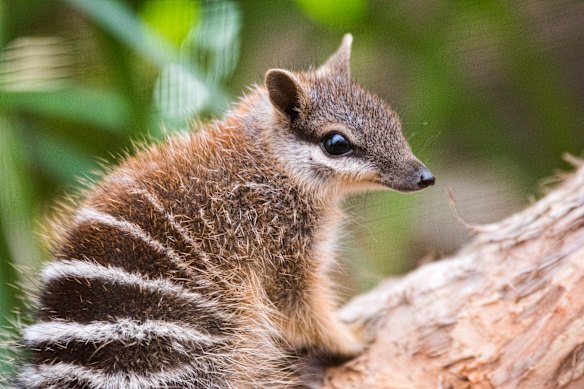
“Everything is behind the scenes, and something that we’re really conscious of is the fact that people don’t really understand the scope of what we do,” Mills said.
“Part of the master plan for the zoo is to look at what opportunities there might be for making that a little bit more visible to the public.”

















































