 2 months ago
53
2 months ago
53
1 hour ago
Faisal IslamEconomics editor

 Getty Images
The energy shock from the Iran war will hit the UK the hardest of the world's advanced economies, the International Monetary Fund (IMF) has forecast.
In its latest World Economic Outlook, the IMF cut its estimate for UK growth this year to 0.8%, from the 1.3% prediction made in January before hostilities began.
The Fund said the downgrade was due to the war, fewer interest rate cuts, and the expectation that the impact of higher energy prices would linger into next year.
The UK's downgrade of half a percentage point is the largest of the world's advanced economies, with the UK now earmarked to have middling growth this year compared to its peers.
The IMF suggested the UK, as a net importer of energy, remained sensitive to rapid rises in energy prices.
However, it expects the UK to then recover, to again become the fastest growing European economy next year in the smaller G7 group of advanced economies, albeit at a slightly slower rate of growth of 1.3%.
The government has a key target to be the fastest growing economy in the G7 by the end of this parliament.
The UK is also forecast to have the joint highest inflation in the G7 this year, of 3.2%, and next, of 2.4%. alongside the US in 2026 and Italy in 2027.
The IMF said UK inflation was expected to pick up "temporarily" this year and head towards 4%, but then return to the Bank of England's target rate of 2% by the end of 2027 as the impact of higher energy prices fades and a worsening jobs market leads to slower wage growth.
Responding to the IMF's forecast, Chancellor Rachel Reeves said: "The war in Iran is not our war, but it will come at a cost to the UK. These are not costs I wanted, but they are costs we will have to respond to.
"We entered this conflict in a stronger position because of the choices this government took to build economic stability, but there is more to do."
But shadow chancellor Sir Mel Stride said Reeves had "no one to blame but herself" for the size of the IMF's downgrade, after increases to employers' National Insurance and business rates.
"Her 'plan' to keep costs down has left us with the highest inflation in the G7, with businesses closing and the cost of living skyrocketing," he added.
Liberal Democrat Treasury spokesperson Daisy Cooper said the downgrade was an "indictment of Trump's idiotic war and all those who cheered it on - including Reform and the Conservatives".
"[Prime Minister Sir Keir] Starmer's latest flurry of stern words directed at the US President are worthless if there is no plan to protect people from Trump's economic vandalism," she said.
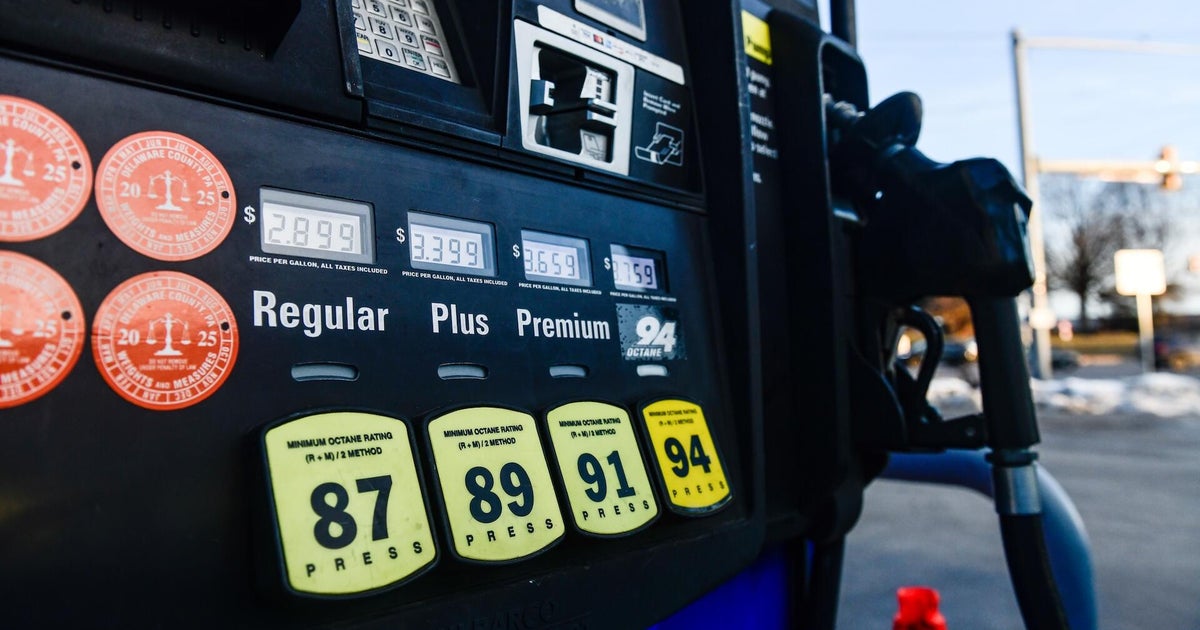
The government has also been urged to step in and help people through measures such as cutting fuel duty to help keep pump prices down.
But IMF chief economist Pierre-Olivier Gourinchas said countries including the UK should be "very cautious" about introducing assistance programmes.
He told the BBC that despite government work to rebuild financial buffers the UK had much less room to move now, due to the war.
"There isn't really a lot of room to go and spend in order to support households and businesses," he said.
If the UK were to bring in support measures, he said it should "stay within the envelope" of current government spending.
Inflation in the UK was 3% in the year to February, which is higher than the Bank of England's target. Some analysts believe the Bank could raise interest rates later this year.
However, in its outlook, the IMF cautioned central banks against raising interest rates too prematurely.
"Reacting strongly to flexible commodity prices, when supply constraints are present only in the related sectors, brings down inflation fast but risks a recession later," it said.
The IMF has put in a significant level of caution on its forecast given the uncertainty of events in the Gulf. Its numbers rely on a relatively fast resolution to the conflict by the second half of the year.
The Fund pointed out that before the war it had expected to upgrade economic prospects, as US President Donald Trump's trade tariffs were now lower than planned, and China, Europe and Canada had simply traded more with each other to make up for US declines.
But now, the IMF said "the global economy is threatened with being thrown off course".
The economies of many Gulf nations such as Iran, Iraq, Qatar and Bahrain are expected to contract this year.
In more severe scenarios, with the oil price averaging $110 a barrel and $125 next year, and energy prices and interest rates continuing to rise, a global recession would be a "close call".