 3 months ago
19
3 months ago
19
Opinion
October 27, 2025 — 11.59am
October 27, 2025 — 11.59am
Donald Trump loves a big deal and it looks like he might get one after trade negotiators from the US and China agreed the framework for a trade truce over the weekend. Any deal that defuses tensions between the two economic superpowers is a good deal for the rest of the world, but is it a good deal for America?
US Treasury Secretary Scott Bessent described the outcome of the negotiations with a Chinese team headed by Vice Commerce Minister Li Chenggang as “a very successful framework” for Trump and Xi Jinping to discuss when they meet in South Korea on Thursday. Li said they had reached a “preliminary consensus” on possible solutions to the trade confrontation after “candid and in-depth discussions”.
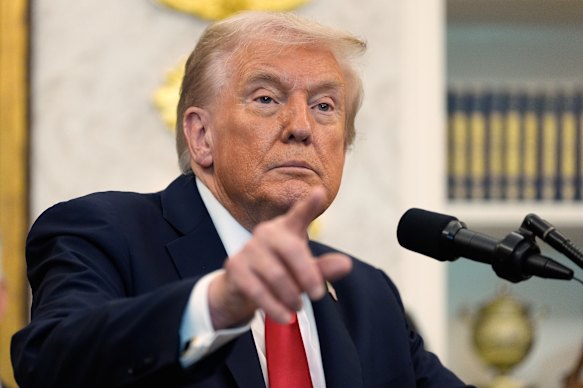
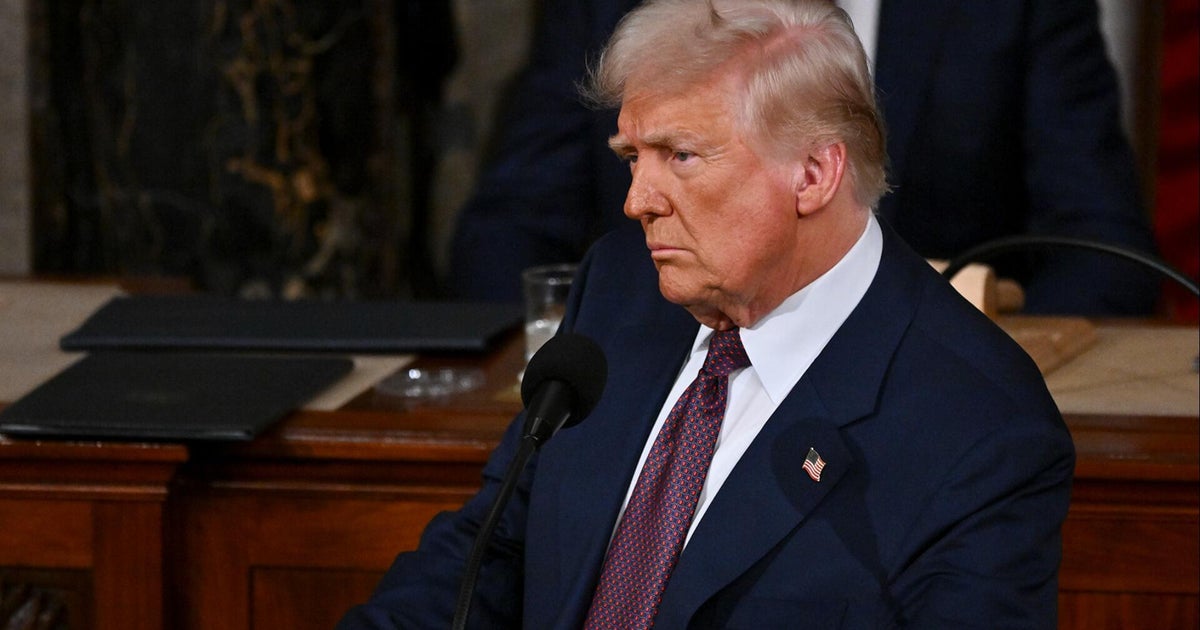
Donald Trump doesn’t have the leverage in talks with China. Credit: AP
The negotiators entered the talks with Trump threatening another 100 percentage point increase in US tariffs on imports from China after China tightened its export restrictions on rare earths and rare earth magnets. But Trump, after initial angrily calling those restrictions a “moral disgrace” and warning of the super tariffs in response, then softened his tone, saying: “The USA wants to help China, not hurt it!!!”
While the framework still needs to be approved by Trump and Xi, it now appears likely that the countries will roll forward the trade truce struck in May that was, after a 90-day extension in August, set to expire on November 10.
From what both sides have said about the negotiations, they covered an extension of the suspension of tit-for-tat reciprocal tariffs, a deferral of the imposition of China’s rare earth export controls and o-operation on fentanyl (where China’s is a source of pre-cursor chemicals). They also canvassed China’s purchases of US soybeans and other agricultural products, America’s levies on Chinese ships docking at US ports and China’s retaliation to those levies with fees of its own on US-owned or financed ships entering its ports.
Loading
The two hot-button issues among those issues of dispute are rare earths and soybeans.
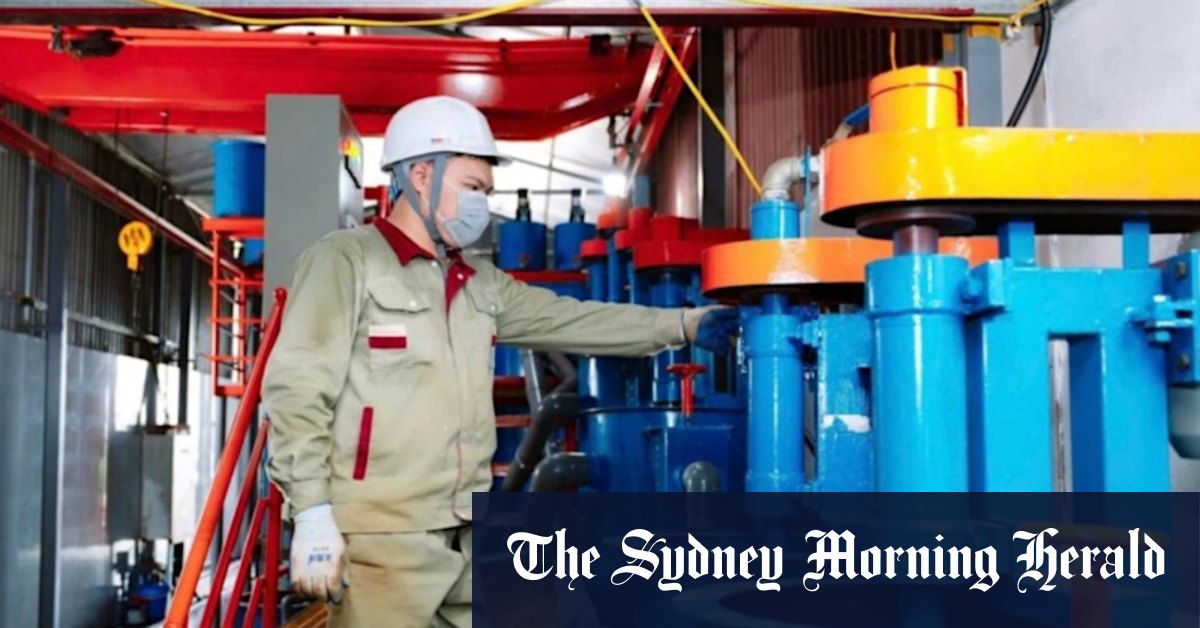
China shocked the US when it announced this month that it would tighten and extend its export controls on rare earths and rare earth magnets, which are vital to the manufacturing of everything from smartphones to automobiles to missiles.
China’s new export licensing regime would restrict shipments anywhere in the world that contained even traces of its rare earths which, given its dominance of their production and processing, could effectively give it the power to shut down the rest of the world’s advanced manufacturing. The reach of the controls would ensure the US couldn’t gain access to rare earths via third parties.
It was China’s counter to Trump’s tariffs, the US restrictions of semiconductor export to China and the power of the US dollar in global trade and finance (an extremely potent one) that gave it enormous leverage in the trade negotiations.
According to Bessent, China might defer the introduction of its tighter export controls for a year “while they re-examine it”. It would, of course, retain the option of reintroducing them at any point should the relationship with the US flare up again.
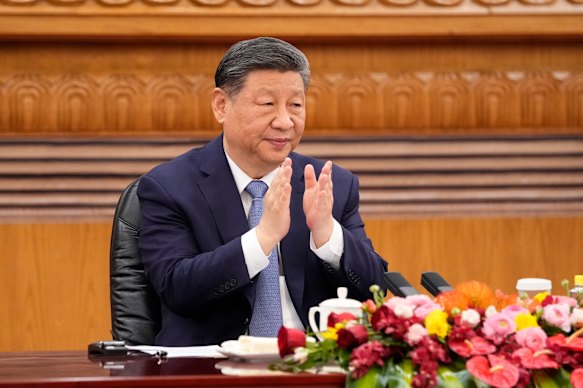
Chinese President Xi Jinping. His country has flexed its biggest trade muscle against the US.Credit: Getty Images
What would the US gain in return for China not (yet) deploying the most powerful trade weapon in it its armoury?
Again according to Bessent, China’s negotiators have agreed to make “substantial” purchases of US soybeans.
Ever since Trump’s first trade war, in 2018-19, China has been reducing its purchases of soybeans from American farmers.
Loading
The US once accounted for about half China’s soybean imports. Last year it was less than 20 per cent and in the latest harvest season not a single bean has been bought. Instead, more than 90 per cent of China’s imports are now from Brazil, along with some recent purchases from Argentina.
That – particularly the purchases from Argentina while the Trump administration is spending tens of billions of dollars to try to prop up the Argentinian peso in an attempt to bolster the political fortunes of Trump’s friend and political fellow-traveller, Javier Milei – has caused a bitter backlash from US soybean producers.
A resumption of the US-China soybean trade might help placate those Midwestern farmers, who form a core political constituency for Trump, although it is unlikely that the US will ever regain the share of China’s market that it had before Trump started his trade wars.
China has essentially locked up all the soybeans it needs for this year and a significant proportion of next year’s needs and, in any case, is unlikely to restore any level of dependence on the US for an essential element of its food chain.
In 2020, after the US and China signed their “phase one” trade deal that ended the first of Trump’s trade wars, there was an initial surge in China’s soybean purchases from the US. But it quickly fell away and China failed to meet the $US200 billion commitment it made to buy not just soybeans, but other American products.
It bought less than 60 per cent of what it had committed to and less than it had imported from America before the trade war started.
Still, if buying some soybeans from the US, deferring implementation of its rare earths export controls, and co-operating on trying to stem the fentanyl trade buys it relief from US tariffs – including the 20 per cent surcharge related to its role in the fentanyl supply chain – means the shipping charges are abolished and China achieves some relaxation of the US restrictions on semiconductors exports, Xi would consider it a win.
Trump, of course, is more concerned about being able to say he’s done a deal rather than focusing on its quality.
Along with the negotiations with China, the US unveiled framework deals with Vietnam, Malaysia, Thailand and Cambodia, under which many of their exports to the US would be exempt from Trump’s reciprocal tariffs in exchange for preferential market access for US industrial and agricultural products.
No details were released on which exports from the South-East Asian countries would be excluded from the US tariffs, which are 19 per cent for Malaysia, Thailand and Cambodia and 20 per cent for Vietnam.
The leverage in these negotiations is, as the US seems to have belatedly realised, quite lopsided.
Ironically, had Trump not, in 2017, withdrawn the US from the Trans-Pacific Partnership free trade agreement that the Obama administration had signed in 2016, but not yet ratified, America would have had open access to the Vietnam and Malaysia markets years ago.
Assuming Xi and Trump sign the deal their negotiators agreed, some of the trade tensions and frictions will ease, which would be positive for both their economies and the global trade environment. But Trump is unpredictable and petulant, as demonstrated by his additional 10 per cent tariff on Canada in response to an advertisement that simply reproduced snippets of Ronald Reagan’s compelling arguments against tariffs.
Loading
China has, however, flexed its biggest trade muscle and the alacrity which Trump and his administration switched from talking tough to saying nice things about Xi and China showed just how powerful that dominance of rare earths is.
It will take years, if not decades, for the US to insulate itself against that threat.
Meanwhile, Xi can trump the American president’s threats of extreme tariff rates with something far more effective and less damaging to his own economy than Trump’s tariffs.
Exports of rare earths and rare earth magnets aren’t massive revenue generators, whereas tariffs represent a big increase in US domestic taxes, harm trade competitiveness and increase the inflation rate. They are damaging to the US economy and its citizens.
The leverage in these negotiations is, as the US seems to have belatedly realised, quite lopsided.
The Business Briefing newsletter delivers major stories, exclusive coverage and expert opinion. Sign up to get it every weekday morning.
Most Viewed in Business
Loading