 2 months ago
28
2 months ago
28
″Right now it feels like I’m very close to the end,” Kim Novak says in a low, quavering voice. The retired actress, now 93, is the subject of an intimate new documentary, Kim Novak’s Vertigo (for which an Australian release date has yet to be announced), in which she pores over old memorabilia in her woodsy Oregon home. Since the death of her second husband, Robert Malloy, in 2020, she has lived there alone, surrounded by her own headily evocative paintings and bewitched by memories.
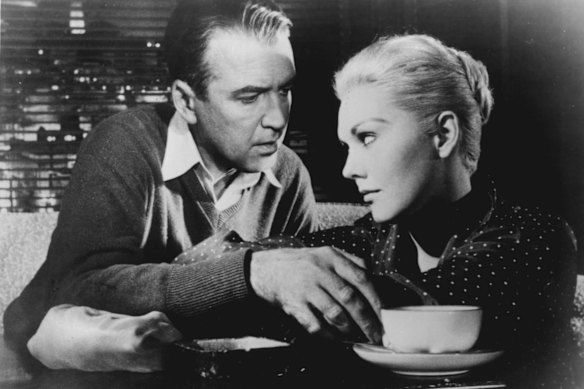
Her attic is a film buff’s paradise. Somewhere up there, packed away, is the grey suit Edith Head designed for her most famous character, Madeleine Elster in Vertigo. In the film, James Stewart’s Scottie is hired to surveil Madeleine, which turns into obsessive stalking. After she has apparently fallen to her death, he meets her doppelgänger, Judy Barton (also Novak), and insists she don the same outfit, to make her over in the dead woman’s image. (What he doesn’t realise is that Judy was posing as Madeleine all along, to fake a suicide.)
Watching Novak unbox this totemic garment in the present day is painfully revealing. She breaks down and uses it to mop her tears. Such is the power of Alfred Hitchcock’s film, the potency of her styling in it, and the centrality of Madeleine/Judy to her fame – indeed, Vertigo functions as the ultimate comment on her entire career. “I think I always resented being made over,” Novak says of her original transformation into a star, “which is why I was so right for Vertigo, because it’s all about that.”
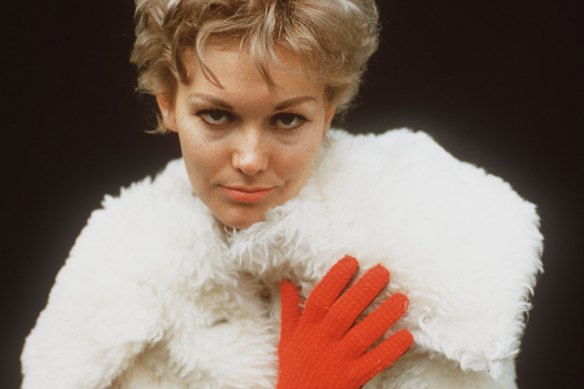
It’s hard to believe that Novak wasn’t even Hitchcock’s first choice for that film. Vera Miles was – the rather more austere blonde he had just used in The Wrong Man (1956). Miles appalled him by becoming pregnant and turning him down. Her loss was Novak’s gain – and cinema’s.
This was 1957, and Novak was 24. Four years earlier, she had arrived in town from the Midwest with no greater repute than the nickname “Miss Deepfreeze”, which she gained from a modelling job in her last summer of college, showing off freezers at trade fairs.
For her to ascend so rapidly to leading-lady status was all down to the sculpting, ownership and bullying sway of the Columbia Pictures mogul Harry Cohn, who seized upon her as a successor to his favourite, the fading Rita Hayworth, and a rival to 20th Century Fox’s premier lust object of the day, Marilyn Monroe.
There were problems. Novak was no longer the natural blonde she had been at 13; she came to Hollywood packing more curves than Cohn thought were desirable; and her name was Marilyn Novak. All of this had to change.
Having enforced a crash diet and dyed her hair, Cohn cast her as the face that turned the heads of older male stars – most significantly as 18-year-old beauty queen Madge in Picnic (1955), opposite William Holden.
This adaptation of William Inge’s sultry, Kansas-set mood piece would be the star-maker, a huge success. But Novak was terrified while making it, in awe of Holden and of her irritable director, Joshua Logan, and deeply insecure about her own acting prowess. At 22, she was at least closer in age to her character as written than Holden, who was 15 years too old and knew it. Novak’s rabbit-in-the-headlights quality, though, is precisely what makes her Madge rather affecting. She’s awkward and introverted, light years away from a Hayworth vamp.
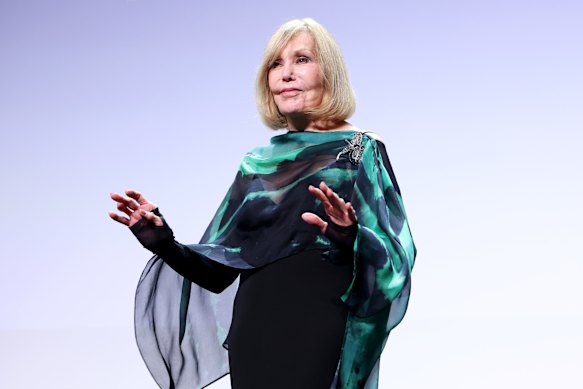
During her professional peak, which was little more than a decade long, Novak would be associated on screen with Frank Sinatra and Dean Martin. But it was their Rat Pack amigo Sammy Davis Jr whom she knew best. They embarked on a scandalous off-screen romance that nearly capsized the careers of both.
It all started at the nightclub Chez Paree in 1957, just after Novak had finished shooting Vertigo. Davis was performing; Novak was seated at a table by the stage, and dazzled by his charisma. He didn’t dare speak to her in public – such was the paranoia and entrenched racism of the Jim Crow era. Instead, it took Tony Curtis to act as Cupid, spontaneously throwing a party and inviting them both along.
“They spent the evening together – deep in thought, deep in talk,” Curtis would later recall. “I could see right from the beginning that they were getting along in an intense way, and that was the beginning of the relationship.”
Both knew it would be bad if their powermongers within the industry found out – especially Cohn. The fling had to be conducted sub rosa or not at all. Davis would have his personal assistant, Arthur Silber, drive him over to Novak’s house while huddled under blankets on the back seat, to avoid the attention of paparazzi and studio snoops. Later he secretly rented a beach house in Malibu to keep the liaison going.
As Novak would reflect: “It was a very dangerous relationship then – a white woman and a black man, no matter his status – it simply didn’t mix publicly. I was suddenly in the eye of a hurricane. My agent told me my career would be over if I continued to see Sammy. Some of my friends wouldn’t even return my telephone calls.”
Unfortunately, the gossip rags were quick to pick up on their attachment and went into overdrive. “Which top female movie star (KN) is seriously dating which big-name entertainer (SD)?” asked newspaper columnist Dorothy Kilgallen. Two days later, she followed up with this: “Studio bosses now know about KN’s affair with SD and have turned lavender over their platinum blonde.” (“Lavender” is a reference to the trademark colour foisted on Novak by Columbia’s publicity department, despite the fact that she hated it.)
The next few months were the scariest period of Davis’ life. He was hoping to break into films as successfully as Martin and Sinatra had done – a dream that would tragically elude him, with the likes of Cohn, who had deep connections to organised crime, on the warpath.
On New Year’s Day 1958, a gossip story in the Chicago Sun-Times hit newsstands, alleging not only that the couple had spent Christmas together – requiring Davis to renege on a stint performing at the Sands Hotel, much to Sinatra’s displeasure – but also claimed they had sought a marriage licence.
Public horror back then at this instance of miscegenation can’t be overestimated. Nor can the recoil of Hollywood, which for decades afterwards would put an interracial relationship on screen only to present it as a crisis or taboo – as in Guess Who’s Coming to Dinner (1967). Even black newspapers got in on the act, denouncing Davis as a “never-ending source of embarrassment”.
“Cohn blew his top,” said Irv Kupcinet, the columnist responsible, who got a vitriolic earful from the mogul as soon as the piece appeared.
In early 1958, Cohn instructed either the racketeer John Roselli or Mob boss Mickey Cohen – accounts vary here – to threaten Davis with physical harm if he didn’t marry a black woman within two days. Specifically, the threat involved breaking his legs and putting out his good eye. A singer/dancer named Loray White was hastily propositioned by Davis, who had previously dated her, in Las Vegas. Cohn would pay her a handsome sum to agree to this arrangement, and barely over a year later, they divorced.
During this period of high drama, a jittery and helpless Novak backed away. She would herself become engaged to director Richard Quine in 1959, without tying the knot, and then married the British actor Richard Johnson, her co-star in The Amorous Adventures of Moll Flanders (1965) – another short marriage that ended the following year. Easily her most important relationship was with the horse doctor Robert Malloy, whom she met in 1974 and married in 1976. They would be together for 44 years until his death in 2020.
Twice, long after their romance, Davis and Novak would be reunited in public. They took to the dance floor at an Oscar night party in 1979, described by those who saw it as a moment of public defiance. And Novak would visit Davis on his deathbed in 1990, when he was in the final throes of laryngeal cancer at Cedars-Sinai Medical Centre in Los Angeles.
The true depths of their relationship remain unknown – and no added light is shed upon it by Novak’s new documentary, which doesn’t mention Davis once. There’s little on her relationship with Alfred Hitchcock, whom she has always defended as a mentor – even though the exactitude of his vision for Vertigo makes her seem like Exhibit A for his supposedly cruel coercion of beautiful actresses.
Perhaps less surprisingly, there’s nothing on the brouhaha when the Oscar-winning 2011 French film The Artist recycled music from Vertigo, causing Novak to take out a full-page advert in the industry publication Variety, headed by the words “I want to report a rape”. Her explanation for the extremity of the remark was that she had experienced rape herself in her youth, and never reported it.
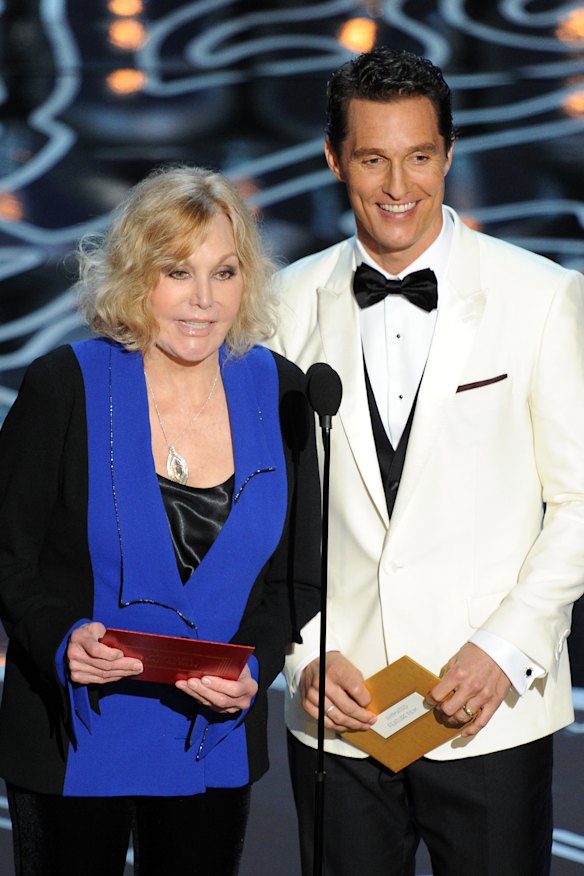
She last sparked public controversy in 2014, when she appeared at the Oscars on stage with actor Matthew McConaughey. “Kim should sue her plastic surgeon!” tweeted prospective presidential candidate Donald Trump about her appearance. Alas, he was far from alone. With all the unkind commentary this sparked, causing her to refuse to leave her house for days, it’s no wonder she is now inclined to hide away in Oregon, raising llamas and keeping her mental health under control. (She was diagnosed with bipolar disorder in 2001, a condition she says she inherited from her father.)
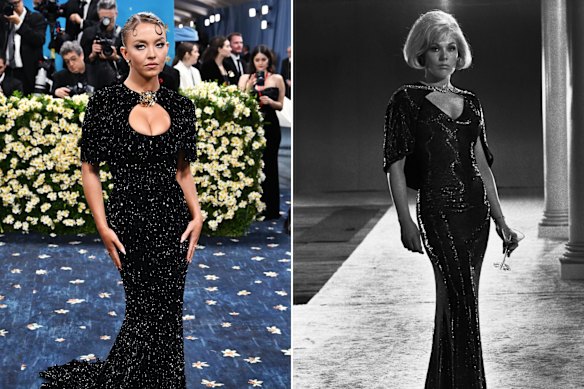
Novak’s dealings with the industry are as fractious now as they ever were. A fresh feud is potentially brewing over a forthcoming Netflix dramatisation of the Novak/Davis affair, entitled Scandalous!, because of reports that Sydney Sweeney is set to star. (The putative director will be Sweeney’s Euphoria co-star Colman Domingo, with British actor David Jonsson set to play Davis.) Novak has just described Sweeney as “totally wrong to play me”, partly because she “sticks out so much above the waist”.
“I never would have approved,” she added. Novak herself hasn’t acted since having a testy time on the Mike Figgis romantic mystery Liebestraum (1991) – a film about cycles of love and death, which conjured her like an incantation. For all the emotional candour this one-and-done Hitchcock blonde displays, the secrets she still guards could probably fill a library.
The Telegraph, London