 3 months ago
39
3 months ago
39
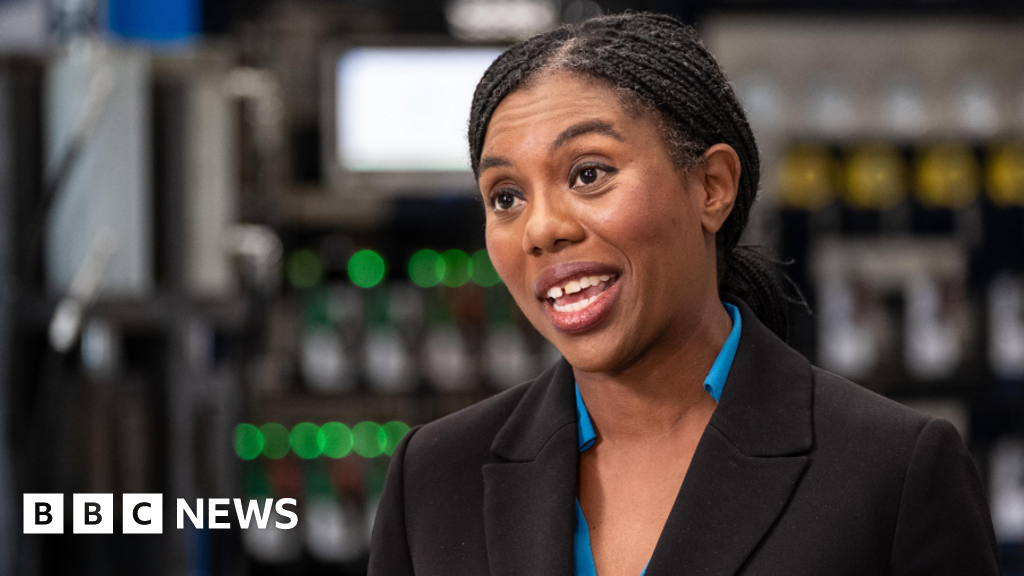
In the weeks after she was narrowly elected by her colleagues as the federal Liberal Party’s first female leader, Sussan Ley sounded full of the optimism that often comes with fresh starts.
She promised to be a new leader, with a new tone, new team and new agenda. She wanted to move her party to the so-called sensible centre. She would win back Australian women, young people, cities and multicultural communities. She was going to listen to her colleagues, and forge a cohesive and consultative party room process that catered to a range of views.
Those many promises made for a mighty assignment. Nine months later, they’re mostly unfulfilled.
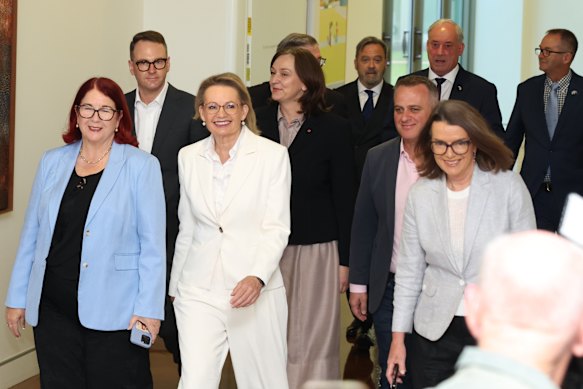
With the opposition sinking in the polls and the Coalition fractured, Ley has been turfed, this time defeated 34 to 17.
The numbers turned against her in the demoralised and divided Liberal party room she was trying to resuscitate after the disastrous May election.
The reality is that Ley laid out ambitions and, largely, did not deliver. The question is whether it was because of her own shortcomings and a few bad calls – or the plain fact that many of her colleagues never planned to give her a chance. She took over as the norms of conservative politics were falling apart, and the Liberal Party was reckoning with its very purpose – a complicated backdrop for any leader, let alone the first woman.
Even the colleagues who knifed Ley admit she was dealt a difficult hand. “This is not solely her fault,” Senator James Paterson said after quitting Ley’s frontbench on Thursday. “This is collective responsibility.”
Paterson conceded she had been undercut by sniping, but maintained there was clear need for a new leader. “Newspoll shows she is at -39 personal approval rating. That is the worst performance of an opposition leader in 23 years,” he said.
In the corporate world, they would call Ley’s predicament the “glass cliff” – a phenomenon where women are set up to fail, installed in positions of power right when their organisations are on the edge of collapse.
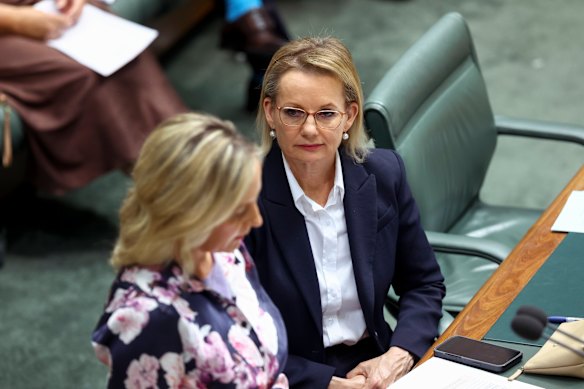
That simple frame doesn’t capture the whole picture: the scrappy regional MP who fought for the job and won it fairly in a tight contest against the Right faction’s Angus Taylor. Still, such a short stint for the Liberals’ first female leader is regrettable. It will not reflect well on a party that already has a poor reputation among many Australian women.
Some of Ley’s supporters leave this chapter feeling Ley’s gender played a part in this outcome and the way she was undermined from the start. “Gender probably plays a bigger role in politics than any of us would like to admit. That’s the reality,” said Liberal Senator Maria Kovacic.
“Sussan is a trailblazer. She has led in extraordinarily difficult circumstances and, in truth, hasn’t been given a fair go.”
Other MPs say being a female leader had nothing to do with it – some even think Ley was given extra leeway for that fact. “Political leaders are judged on their performance, not on their gender,” Paterson said.
Ley had not been earmarked as a future leader. She’s spent 25 years in Parliament but her time as a minister – in health, aged care and environment – became best known for the travel entitlements scandal that forced her resign. Her performance as Dutton’s deputy last term left no legacy: she said she wanted to win back teal seats but made no inroads; she was shadow minister for women as women deserted the party.
And she has been something of a shape-shifter. On some of the issues Ley once spoke strongly about – advocating for Palestine and banning live sheep exports – she has gone quiet. She was not strongly aligned with a faction; while recently painted as moderate, she spent more time in the centre-right.
But when her time came last May, Ley pitched for one of politics’ toughest jobs.
She did not start on the front foot – but not for lack of trying. Within three weeks of her election in May, and days of her mother dying, the Nationals abandoned the Coalition for the first short split.
Ley stared down the Nationals’ outburst and made some early shifts from Peter Dutton’s way of doing things. Her frontbench appointments signalled a new and more centrist direction. Her office proactively engaged with the press. She made a point of addressing the National Press Club, where she opened her speech with an Acknowledgement of Country, and then toured remote Indigenous communities.
With a series of set piece speeches, Ley made the case for lower personal income taxes, budget repair, intergenerational fairness and a strong defence force. Behind closed doors, she stressed the importance of solidarity and discipline to her colleagues.
There were signs voters could warm to the 64-year-old grandmother, who had arrived at university with a baby in tow and ran a family farm before politics. Ley’s early personal polling was positive as she introduced herself to Australians afresh, vowing to fight for women in violent situations and disclosing her own experience of coercive control.
But things soon unravelled. Ley’s pleas for unity were drowned out by internal debate as the vexed issues of climate action and immigration continued to divide the Coalition. MPs were spooked as right-wing minor party One Nation started stalking them in the polls.
Two frontbenchers were lost over immigration. The saga generated by the conservative star Senator Jacinta Nampijinpa Price’s comments on Indian migrants stretched out longer than it should – it took eight days to come to a head with Price’s sacking in September – but eventually offered Ley a flashpoint to assert authority.
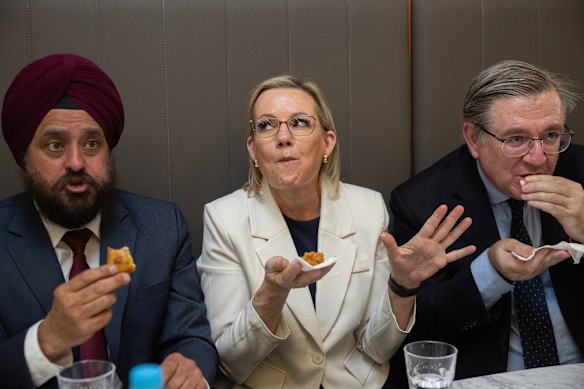
Images of the opposition leader and her frontbenchers touring Sydney’s Little India were a sign of the more inclusive leadership she wanted to project.
Then the resignation of ambitious MP Andrew Hastie over migration policy a month later undermined this and seeded the first round of leadership speculation. When Hastie’s supporters said privately they would give Ley until the next year to prove herself, she was clearly on borrowed time.
Unshackled from frontbench discipline, Hastie and Price pushed for a showdown over climate policy, as did the Nationals and other right faction MPs. They won: the Coalition abandoned net zero as a policy position. The shambles of the debate exposed Ley as a leader with tenuous authority and loose conviction.
It could have been a moment for Ley to steer the Liberals towards the position she thought best served the party, but she never articulated her own views. There are Liberal MPs who still think Ley could have salvaged the climate target had she spoken up in favour. Instead, Moderates who started with majority support for net zero lost their grip on the debate.
Ley embraced the Nationals’ policy – a move at odds with her stated ambition of reaching young people or city voters at the heart of her post-election pitch.
When she was asked how this would go down with climate-concerned Australians in the seats that have turned teal, Ley did not appear to care. When she was asked if she still believed in pulling the Liberals to the “sensible centre”, Ley would not repeat the words.
In her effort to be consultative, she had ceded to the party’s loudest conservative voices. In her bid to stay in the job, she was now beholden to her backbench.
Ley tried to avoid a repeat of that episode by fast-tracking the Liberals’ immigration policy late last year. But as of this week, it still had not seen daylight – nor have other key policies, such as anything that might have appealed directly to women.
Her vow to build a policy platform from scratch was a noble attempt to keep MPs in the tent and all options open after a shattering election loss. In practice, it has meant unhappy MPs have had little to talk about aside from themselves.
There have been other own goals along the way.
A lot of Ley’s oxygen has been consumed by infighting, but she also wasted capital seeking short-term wins that seemed shallow and went nowhere: attacking the prime minister over his Joy Division T-shirt, for example, and demanding Kevin Rudd resign as US ambassador after the prime minister’s largely successful meeting with Donald Trump.
These calls undermined confidence in Ley’s political judgment. All the while polls showed the Coalition’s primary vote slipping, One Nation’s numbers were soaring, and Ley’s personal polling was in sharp decline.
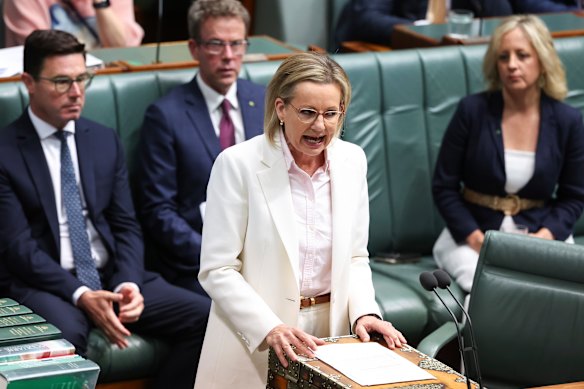
Ley’s response to December’s Bondi attack was pivotal. The opposition leader kept colleagues onside as she poured all her energy into advocating for the Jewish community, which helped push Labor into calling a royal commission and undermined Prime Minister Anthony Albanese.
This did not translate into an uptick in Coalition support, however, and Ley’s overreach ultimately set the scene for this week’s downfall. She demanded parliament come back immediately to pass new laws, and when she got what she wanted, hit the reality that emergency legislation is no straightforward task.
This became the most fatal in her series of short-sighted calls: the Nationals refused to vote for the Bondi bill because it was too rushed; the fallout split the Coalition; and the messy saga spurred Friday’s leadership challenge.
The Nationals leader, David Littleproud, bears significant responsibility for the dysfunctional dynamic that has embarrassed the Coalition and damaged Ley with its repeated break-ups and make-ups. Many of Ley’s colleagues backed her throughout, furious with Littleproud’s interventions. Still, criticisms that Ley did not pick up the phone or communicate at crucial moments added to the harm.
Through all this, Ley has fronted up and faced the music: in parliament, on radio and on breakfast television. She held her nerve as colleagues openly speculated moving against her – a credit to her own grit and determination.
But after nine months, Australians still don’t have a great sense of what Ley really stood for outside her own self-preservation.
Did she have a chance? Leading the Liberals to a centrist policy platform that met her checklist required having authority over a unified party and loyal frontbench. Ley never had any of that.