 4 hours ago
2
4 hours ago
2
Dan Diamond
Updated July 12, 2026 — 11:04pm,first published 5:37pm
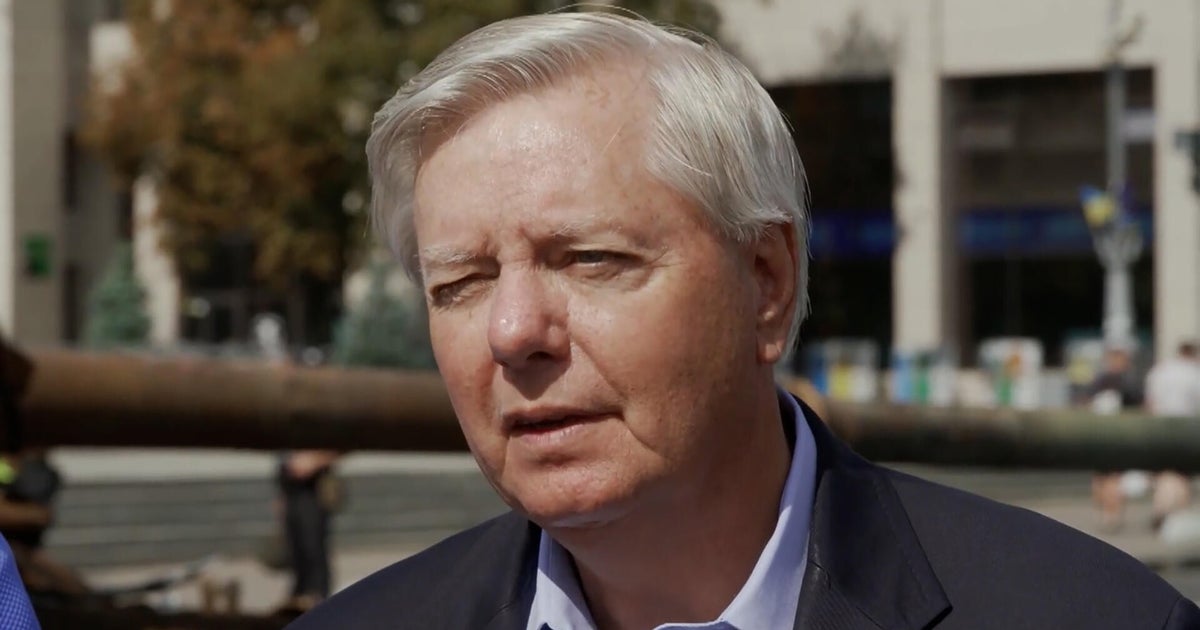
Washington: Lindsey Graham, a long-time Republican senator from South Carolina, died on Saturday night (US time), his office said in a statement early on Sunday morning.
Graham, a leading GOP foreign policy voice, was running for re-election this year. He had been a staunch ally of President Donald Trump on most matters but had broken with the president on some issues.
Graham’s death narrows Republicans’ majority in the Senate, where they had held a 53-47 edge. Under South Carolina law, the state’s Republican governor can make an immediate appointment to fill Graham’s seat for the remainder of his term, which expires in January.
The governor, Henry McMaster, said in a statement that Graham was “the fiercest of fighters for South Carolina and America – and a loyal and steadfast friend”.
In a social media post, Trump praised Graham as a “true American Patriot” and said details on funeral arrangements would follow.
A US senator since 2002, Graham has been a prominent figure in US politics for decades, particularly on foreign policy matters, and he travelled frequently to conflict zones, including Iraq and Ukraine. He competed unsuccessfully for the Republican nomination in the 2016 presidential election.
Graham, whose 71st birthday was on Thursday, recently returned from Ukraine after meeting with President Volodymyr Zelensky. Graham told reporters in Kyiv on Friday that a bipartisan group of senators had reached an agreement with the White House to impose new sanctions on Russia in an effort to end that country’s long-running war with Ukraine.
In its statement early on Sunday, Graham’s office said only that the senator had “passed away from a brief and sudden illness”. The statement said that Graham’s family appreciates prayers and asks for privacy.
Emergency medical responders worked to stabilise a man at Graham’s home on Saturday night and transport him to a hospital, according to police scanner audio obtained by The Washington Post and eyewitnesses.
Emergency medical services received a call around 8.30pm for a person suffering chest pains at a Capitol Hill home owned by Graham, according to the audio. About 25 minutes later, emergency personnel said that CPR was in progress and that a man at the house was suffering from cardiac arrest.
A person who lives on Graham’s street shared photos of an older man being taken from Graham’s home by a wheeled stretcher and loaded into an ambulance around 9.30pm. The man was then taken to George Washington University Hospital.
Even before Graham’s death, Republicans in the Senate were facing the expected absence of one member. The office of Senator Mitch McConnell has said the 84-year-old lawmaker has been hospitalised since last month but has shared few other updates on his condition.
Among possible successors to Graham in South Carolina, businessman Mark Lynch was runner-up in last month’s Senate GOP primary, with Graham receiving about 57 per cent of the vote and Lynch about 29 per cent. Other GOP candidates for the seat included Paul Dans, who served in the first Trump administration and helped devise the Heritage Foundation’s “Project 2025” agenda that has influenced the president’s second term.
Democrats have nominated Annie Andrews, a pediatrician, for the seat.
After arriving in the Senate in 2003, Graham emerged as one of the nation’s most prominent Republican lawmakers, serving as a key negotiator on foreign policy, defence, immigration and health care bills. At the time of his death, he led the Senate’s Budget Committee and the appropriations subcommittee that oversees foreign policy spending. He also served as a key member of the Foreign Relations Committee.
Graham was chairman of the Judiciary Committee during Trump’s first administration and played a key role in confirming conservative judges and remaking the federal courts. He presided over the controversial October 2020 confirmation of Supreme Court Justice Amy Coney Barrett, which came three weeks before that year’s presidential election.
He launched his presidential campaign in June 2015 but failed to gain support in polls, facing scrutiny over his conservative bona fides and his personal life. At the time, the never-married Graham promised a “rotating first lady” if elected president.
He ended that campaign in December 2015, before any votes were cast. Graham subsequently endorsed former Florida governor Jeb Bush and later Senator Ted Cruz, saying he thought Trump was unfit to serve as president.
After Trump won the GOP nomination, Graham said he chose to vote for third-party candidate Evan McMullin.
But Graham emerged as a key Senate supporter of Trump during his first administration, defending the president’s conduct and policies. He also argued that Trump should not be impeached after he was accused of inciting the January 6, 2021, attack on the Capitol.
“This was an impeachment effort driven by passion and hatred against President Trump,” Graham said after Trump was acquitted in February 2021.
The Washington Post
Get a note directly from our foreign correspondents on what’s making headlines around the world. Sign up for our weekly What in the World newsletter.