3 months ago
25
3 months ago
25

February 25, 2026 — 5:01am
The NSW government has not prioritised the best type of residential development to deal with Sydney’s housing shortage and should follow Victoria’s blueprint to fix the crisis, a leading think tank says.
Analysis by the Grattan Institute shows the most feasible housing option across Sydney’s established suburbs is three-storey townhouses and other forms of “gentle” density.
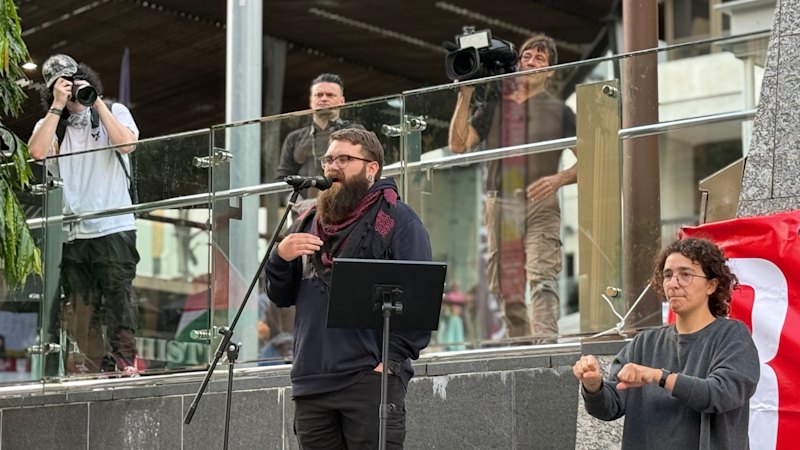
But that is “precisely the housing typology that NSW has not allowed enough of” under recent planning reforms, said Brendan Coates, a Grattan Institute economist and co-author of the research.
“The missing piece of the puzzle in Sydney is that it forbids a lot of the gentle density now allowed in Melbourne,” he said. “Our work shows gentle density like townhouses most likely to be commercially feasible to build in the current market.”
Premier Chris Minns has introduced the most ambitious reforms to improve housing affordability that NSW has seen in a generation.
The changes include the Transport Oriented Development (TOD) program which allows taller apartment buildings near transport hubs, along with a Low and Mid-Rise Housing Policy at 171 areas across the state. The new low- and mid-rise rules apply to 138 sites in Sydney, or about 9 per cent of the city’s residential land. Dual occupancies have been made legal to build in low-density zoned districts, but gentle density remains illegal in many areas.
Coates says NSW reforms fall short of those in Victoria because in Melbourne, three-storey townhouses are permitted in most residentially zoned land.
“We’re using the same methodology to assess what’s happening in Melbourne and Sydney, and we’re finding there is now scope for a lot more housing in Melbourne than Sydney following their reforms,” he said.
Grattan estimates that an 800-square-metre site in suburban Melbourne can now accommodate five or more townhouses, but similar sites in Sydney are often limited to just two homes.
Minister for Planning and Public Spaces Paul Scully said all housing types, including three-storey terraces and apartments, are permitted in low and mid-rise areas.
“Around a quarter of all NSW approvals are for townhouses, semis and terraces,” he said. “NSW is leading the nation in housing approvals and the number of homes currently under construction.
“These results reflect the Minns Labor government’s Low and Mid-rise Housing Policy which scrapped restrictive policies and regulations that had run rampant, effectively banning many housing types across NSW, to create the ‘missing middle’.”
Scully said the government had led “the largest rezoning in NSW’s history via the Transport Oriented Development Program, which already has a pipeline of almost 18,000 homes.”
The Grattan research shows there are more than 400,000 sites in Greater Sydney where it would be commercially feasible to build gentle density developments of up to three storeys, such as townhouses, if NSW were to follow Victoria and permit these housing forms. This includes 37,000 feasible sites for gentle development in the Northern Beaches Council area, 37,000 sites in Canterbury Bankstown, 19,000 sites in Parramatta and 18,000 sites in Ku-ring-gai.
“Premier Minns should follow [Victorian] Premier Allan’s lead and allow terraces and low-rise flats in all areas currently zoned for low-density, as long as they meet reasonable set-back, height and site coverage requirements,” the Grattan research note said.
The analysis also identified a “a feasibility gap” for mid-rise apartments in Sydney (those between four and eight storeys) due to the cost of sinking basements, reinforced concrete and lifts, along with more stringent building regulations for taller buildings, including fire safety.
Start the day with a summary of the day’s most important and interesting stories, analysis and insights. Sign up for our Morning Edition newsletter.