 3 months ago
44
3 months ago
44
For four decades, the Brisbane Entertainment Centre car parks have been the bane of concertgoers at Boondall – their foot on the brake, wondering when and if they will finally make it out of purgatory.
Now, as the Entertainment Centre edges towards retirement, those vast car parks could become the foundation of an entirely new community.
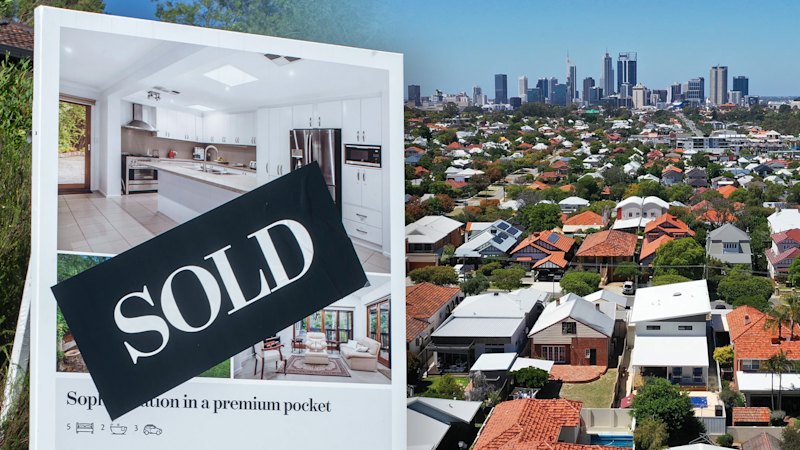
Last month, Deputy Premier Jarrod Bleijie announced the government’s Land Activation Program, through Economic Development Queensland, which would make excess government-owned land available for housing.
Bleijie put out the call to the private sector to take the initiative and identify underutilised government-owned land that could be developed into housing.
Urban Economics associate director Joshua Binkley says Boondall stands out as a prime site that would have would-be developers knocking down EDQ’s door.
But Binkley says there is more to the site’s potential than just housing.
“A big focus at the moment is on housing and a lot of people would look at Boondall and say, well, that’s a potential site to provide that housing,” he says.
“But housing is not the only development sites like this could achieve. If you think of places like Brisbane Technology Park [at Eight Mile Plains], which was a slow burn over a long period of time, it’s very successful and it provides jobs close to where people live.
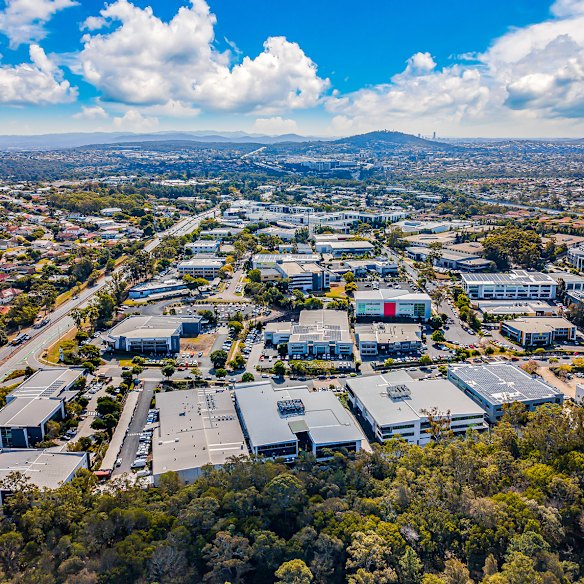
“Top of my head, it works out to about 300 jobs per hectare mostly through private capital, investing and delivering in stages.
“The developable area of Boondall, once you take away all the environmental constraints, could probably support something very similar.”
As of this week, EDQ is yet to receive any LAP proposals from the private sector.
But urban planner Ben Weaver, a director at planning firm URPS, says that will only be a matter of time.
In a previous role at Ethos Urban, Weaver studied the site’s potential and helped develop a conceptual Boondall master plan.
“Public land assets will have to play a bigger role in meeting housing needs and our growth needs, so it’s an obvious candidate for that,” he says.
“Especially given the Gabba Arena will come online around the time of the Olympics, and begs the question as to what utility will be put to the existing Entertainment Centre.”
For developers, the 64-hectare site is a generational opportunity.
Colliers urban planning director Kerry Riethmuller says it is not often a site of Boondall’s size becomes available in a single land parcel, let alone one serviced by two train stations and a major motorway.
“Whilst it’s got quite a few constraints from a development point of view, from flooding to vegetation, it certainly still is a lot of land that you could do something interesting with,” she says.
The Brisbane Entertainment Centre is expected to host Olympic and Paralympic competition in 2032, but that event – slated at this stage to be European handball – is expected to be the venue’s swansong.
After that, and all going to plan, the privately built Gabba Arena would take the crown as Brisbane’s premier indoor sport and entertainment venue.
That will leave Boondall ripe for the taking.
Whatever happens, Rietthmuller says she can not imagine an outcome in which the Entertainment Centre survives in its current form.
“There’s going to be a lot of interest, there’s going to be a lot of ideas,” she says.
“It’s a bit like the old Toombul shopping centre site – everyone in the industry, everyone around it, everyone’s got an opinion about what could happen there.
“And I think it’s exciting, because it’s so rare that you get an opportunity of that scale to be able to do something that you can really create a community from the ground up.”
Most development would be at the southern end of the site, Riethmuller says, preserving the bush and wetlands between the Entertainment Centre and the Gateway Motorway to the north.
“Areas that are already cleared, that are flood-free, that aren’t affected by the heavy environmental kind of layer that sits over some of the site.
“When you look at an aerial [image], it kind of jumps out to you about where it is going to be the more intensively developed because it’s already been cleared, and hasn’t had regrowth growing back over the past 40 years.”
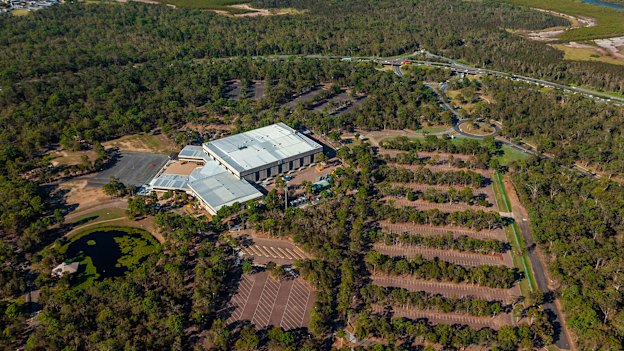
In other words, the expansive car parks in which literally millions of Entertainment Centre patrons have been stuck in traffic since it opened 40 years ago last month.
That would leave the area to the north of the site, between the Entertainment Centre and Gateway Motorway, in need of protection in any development.
“So many people value that – it doesn’t have to be an either/or,” she said.
Weaver says the site’s natural assets could be one of the biggest drawcards for would-be residents. Those assets would also constrain the developable area of the site to between 20 and 27 hectares, he says, which could deliver up to 2500 homes with a mixture of densities.
It was that principle that guided his work on the conceptual master plan.
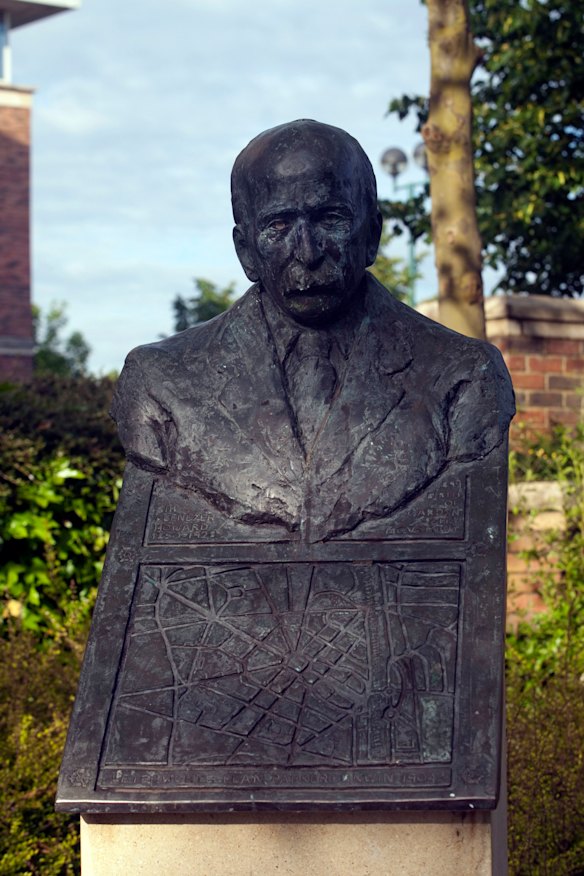
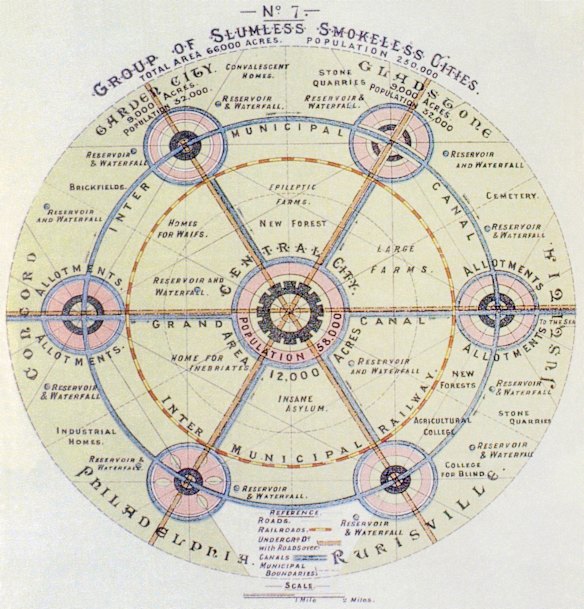
“This notion of Brisbane’s first subtropical garden suburb came to mind, adopting principles that were first established by the garden city movement in the UK,” he says.
Pioneered by British urban planner Ebenezer Howard, that movement promoted satellite communities, separated by green belts, surrounding a central city to combine the benefits of urban and rural living.
“It’s designed to create a mixed and balanced community, with access to employment, a good level of services and amenities, with diverse and beautifully designed homes and apartments at scale, all nestled close to the natural environment,” Weaver says.
“In this case, the concept would be a subtropical garden suburb, exemplifying innovation, resilience and inclusion. Being close to the Boondall wetlands, it celebrates and respects the natural environment there and, if it’s carefully designed and managed, it can achieve climate resilience and deliver on those principles.
“It’s about access to green space and nature – blending the best of the urban environment with the wilderness of the wetlands and open forest.”
Medium-density housing near two train stations would be an irresistible prospect, Riethmuller says, and she envisages a mixture of townhouses and five-storey units on the site.
“You want to make sure that when you get off the train at 10 o’clock at night, or 5 o’clock in the morning, that you’re going to feel safe because there’s people around and they’re doing things,” she says.
“It’s your cafes and your restaurants – where you have that casual surveillance of spaces. People can have places they can go for a run, and they feel safe.”
While Olympic competition should close the Brisbane Entertainment Centre’s curtain for good, there is still hope sporting facilities will remain at the site.
Alongside the arena was a well-utilised indoor sports centre, which Rierthmuller and Weaver both say could – and possibly should – remain as a local amenity.
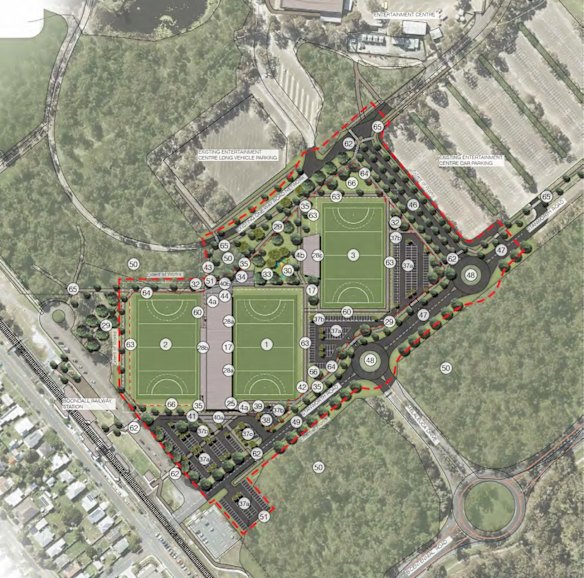
And in 2024, Hockey Queensland developed a proposal for a new $58.25 million major hockey facility, with 1500 seats across three fields, to service the northern suburbs.
Since then, the Gold Coast Hockey Centre has been selected as the 2032 Olympic competition venue, and Hockey Queensland was devoting its attention to that facility.
Newly minted HQ chief executive Rebecca Randazzo declined to comment, but Reithmuller says the 2024 idea has merit.
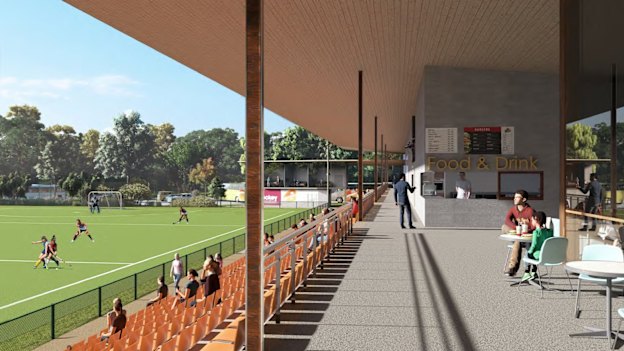
“My daughter used to play hockey a lot, so I have been out to their facility at Colmslie and I can understand why they’re keen,” she says.
“It’s such a growing sport as well but, like a lot of sports, they’re keen to try and get some improved facilities, particularly in the lead-up to the Olympics.
“When land becomes more scarce, you ought to be smart about how you use these sites that have lots of really great infrastructure and are well located, so there’s nothing saying that you couldn’t accommodate a range of those sorts of things.”
Legends Global president and chief executive Harvey Lister, who has managed in the centre since it opened in 1986, says what happens next will be a decision for the state government.
“It’s 40 years since we opened the Brisbane Entertainment Centre and we’ve had over 19 million people through the venue since then,” he says.
“Considering the original design was for an Olympics gymnastic centre, we are proud of the incredible list of artists and shows, as well as the community sports, that have played there.”
Whatever happens, Weaver says it is vital the state government not leave it up to the private sector to run the table.
“There are a number of models there that could be deployed, but the government can play an important role in leading a new vision for the site, given its scale, potential utility and how it then meets a range of other objectives, including supporting lasting legacy post-2032,” he says.
Comment has been sought from the Queensland government.