
If you had a television set in the 1950s, there's a better-than-even chance that each week you were watching comic Sid Caesar. "I don't think there's anybody comparable now, and I don't think there's ever been anyone comparable," said writer David Margolick, the author of "When Caesar Was King: How Sid Caesar Reinvented American Comedy."
And he was! As many as 20 million people tuned into Caesar's live weekly variety series, "Your Show of Shows." "If you had a store that was open on Saturday night, or you were staging live shows on Broadway, you were very unhappy with 'Your Show of Shows,' and you complained to NBC about it," Margolick said. "The whole culture really changed."
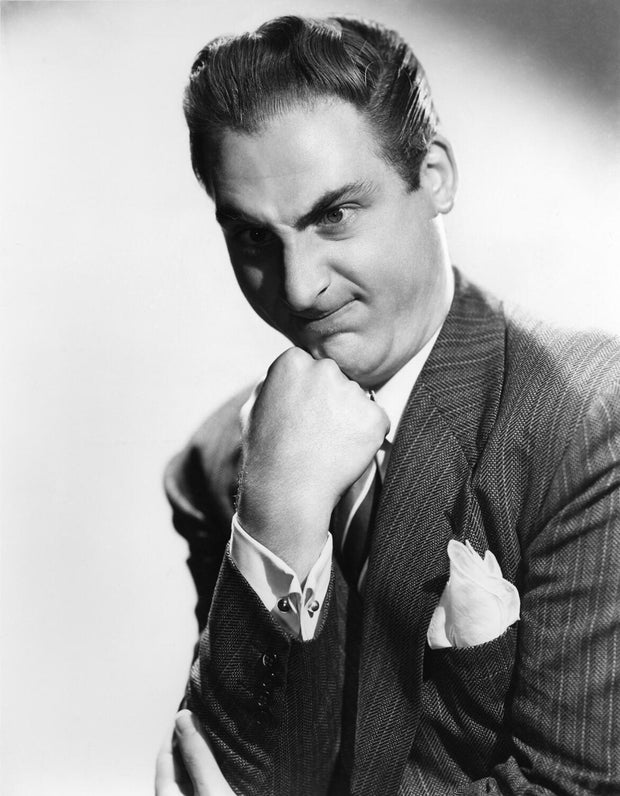 A portrait of comedian, musician and television pioneer Sid Caesar c. 1952.
James Kriegsmann/Michael Ochs Archives/Getty Images
A portrait of comedian, musician and television pioneer Sid Caesar c. 1952.
James Kriegsmann/Michael Ochs Archives/Getty Images
And get a load of Caesar's writing staff: Mel Brooks, Carl Reiner, Larry Gelbart, Woody Allen and Neil Simon all wrote sketches for "Your Show of Shows," or, later, for "Caesar's Hour."
In 2001 Neil Simon told "Sunday Morning," "He picked maybe the best group of writers, I think, that ever appeared on one show together. Almost everyone who came out of that show went on to write theater and films and television, and be successful in all of them."
But while much has been said about Caesar's writers, all these future legends, Caesar's talent has not really been appreciated. "Sid Caesar has become his writer's room, and in a way, he's been eclipsed by his disciples," Margolick said.
Which is why it's time to put the spotlight back on the guy who brought them together.
Stand-up comedian and actor Robert Klein was nine years old in 1951, when his family got their first TV, and watched "Your Shows of Shows." "Sid Caesar, when he did a sketch, he was 100 percent in that moment," Klein said. "He was totally committed to it. ... You know, acting to me basically is pretending you're someone else. In that sense, he was certainly a great actor."
He called Caesar's show much classier than the program starring the other early TV comedy superstar, Milton Berle, who was all schtick. "Berle had already worn out a little," Klein said. "This was spectacular. This was a Broadway revue brought to television. It was more sophisticated. And one could say intelligent in its silliness."
With Caesar and his costars, including the great Imogene Coca, you got parodies of Hollywood classics like "From Here to Eternity" … a pantomimed marital spat to the score of Beethoven's Fifth … and a range of sharply-drawn characters opposite writer/straight man Carl Reiner.
Caesar was also an accomplished saxophonist. "There's music in everything he did, and not only musical sketches; there's a kind of rhythm," Klein said.
We talked with Margolick at the legendary restaurant Barney Greengrass on Manhattan's Upper West Side. "Barney Greengrass represents a milestone in Sid Caesar's career," Margolick said. "He told me, when I interviewed him, that when he knew he could come to Barney Greengrass and have as much sturgeon as he damn-well pleased, even though it was $5 a pound, he knew that he had really arrived."
A rare pleasure for a man who didn't seem terribly happy. He was, according to Margolick, an angry man: "He often talked about his childhood. Caesar was the fourth and final, and maybe unwanted, son of an unhappy marriage."
Caesar's parents ran a luncheonette in Yonkers, New York, where young Sid learned to mimic the accents of the European immigrants who ate there.
But 39 episodes a season took its toll. "Caesar started drinking early, and became an alcoholic," Margolick said. "And when the alcoholism and the strain of the show kept him up, he started taking pills to knock himself out at night."
 Schocken Books
And tastes had changed. When Caesar debuted on the small screen, television set owners were disproportionately wealthier and more educated. "So inexorably, television spread into areas where Caesar's comedy was not going to be as appealing," said Margolick. "And when the audience became less highbrow, people thought that Caesar was talking down to them, and they actually resented him."
The death knell was sounded by bandleader Lawrence Welk over on ABC; Welk drowned him in the ratings with his champagne music, despite Caesar's best efforts (and even a wicked parody of Welk). "It's amazing to watch Sid with his fangs exposed," Margolick said.
Caesar's reign had lasted less than a decade. A later generation knew him primarily as the guy who played the coach in the movie "Grease." "This is a great pity, that that's the only thing that people know," Margolick said. "Caesar was really through by the early '60s. He was barely 40, and the comic community tried to keep him going."
Sid Caesar eventually got sober. He died in February 2014 at the age of 91.
Here's what the man himself said on "Sunday Morning" in 2001: "When I finally became friends with myself, that's when I could enjoy life. Everything became easier."
From the archives: Sid Caesar, the king of TV comedy by CBS Sunday Morning on YouTube
READ AN EXCERPT: "When Caesar Was King" by David Margolick
For more info:
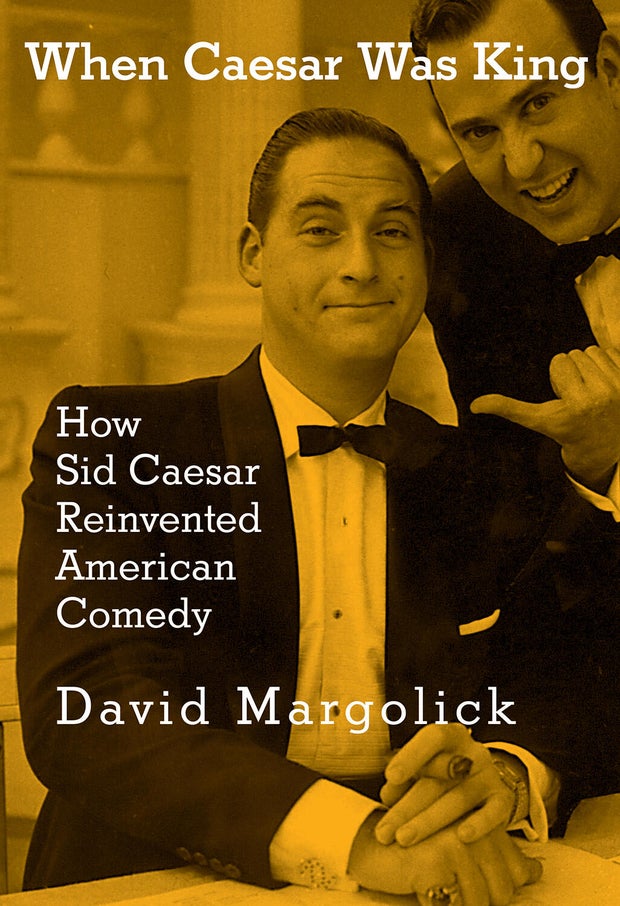
- "When Caesar Was King: How Sid Caesar Reinvented American Comedy" by David Margolick (Schocken), in Hardcover, eBook and Audio formats, available via Amazon, Barnes & Noble and Bookshop.org
- David Margolick on Instagram
- Robert Klein (Official site)
- Thanks to Barney Greengrass, New York City
Story produced by Jay Kernis. Editor: Jason Schmidt.
Hail Caesar! How Sid Caesar reinvented comedy for TV
Hail Caesar! How Sid Caesar reinvented comedy for TV
(08:29)